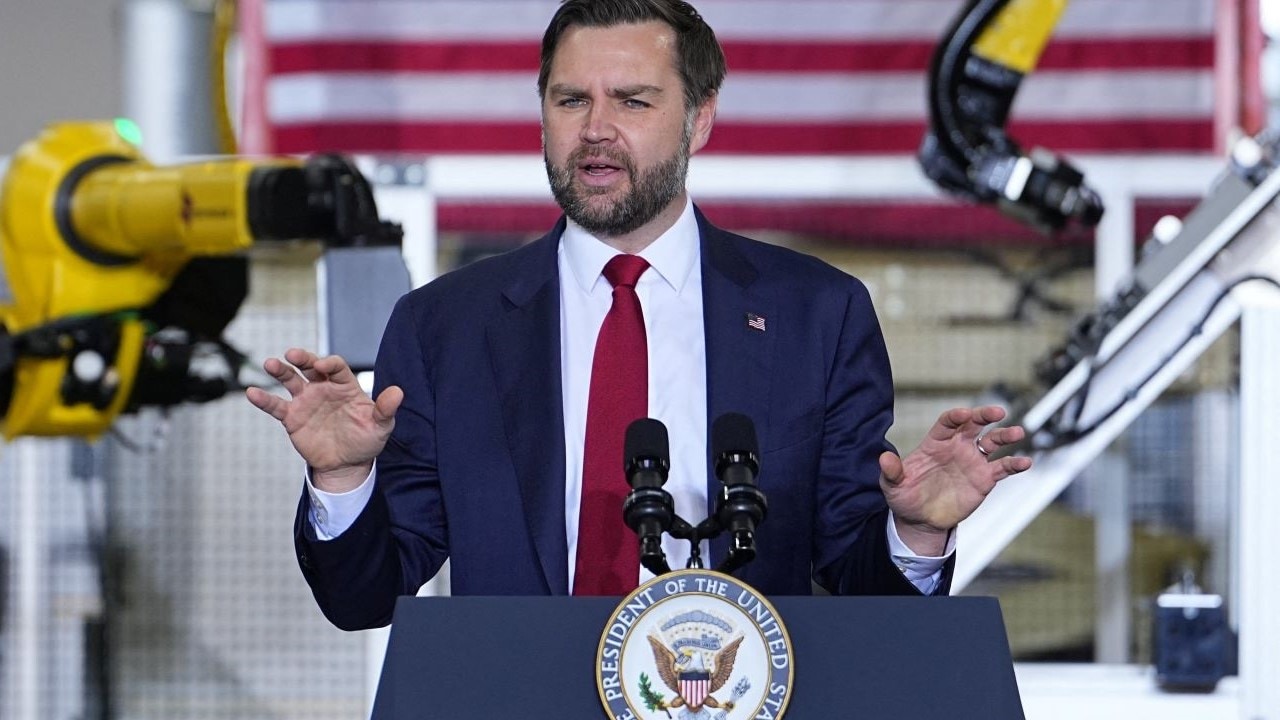
The media is obsessed with a semantic technicality. They are chasing the ghost of a "misunderstanding" regarding whether the proposed 21-day ceasefire in the Middle East was ever meant to include Hezbollah in Lebanon. JD Vance says it wasn't. The Biden administration says it was. The pundits are debating who lied to whom.
They are all missing the point. Whether or not the paper included Lebanon is irrelevant because the very concept of a "comprehensive ceasefire" in this geography is a geopolitical fiction designed for domestic consumption, not for tactical reality.
The Myth of the Monolithic Ceasefire
Modern diplomacy treats war like a light switch. You flip it off, and the room goes dark. But the conflict between Israel, Hamas, and Hezbollah isn't a single circuit; it’s a decaying power grid with multiple independent generators.
To suggest that a deal struck in Gaza would automatically translate to the Blue Line in Lebanon is more than just optimistic—it is a fundamental misreading of how proxy warfare operates. Hezbollah does not take orders from Hamas. Hamas does not take orders from the Lebanese government. Yet, the Western diplomatic core continues to push for "global" solutions to hyper-local blood feuds.
When JD Vance claims the US did not agree that a ceasefire would cover Lebanon, he isn't just defending a political stance; he is inadvertently pointing out the structural collapse of American mediation. If the mediators cannot even agree on the scope of the map, the map doesn't exist.
Why the "Lebanon Add-On" was Doomed
The "lazy consensus" among the D.C. elite is that de-escalation is a contagious disease—that if you stop the bleeding in the south, the north will miraculously scab over. This ignores the reality of Strategic Decoupling.
- The Sovereignty Paradox: Lebanon is a failed state where the official government has zero authority over its most powerful military force. Agreeing to a ceasefire with "Lebanon" is like signing a contract with a ghost to stop a squatter from burning down the house.
- The 1701 Failure: We have already seen the blueprint for a Lebanon ceasefire. It’s called UN Security Council Resolution 1701. It was supposed to keep Hezbollah north of the Litani River. It failed because it relied on "monitoring" rather than "enforcement."
- The Asymmetric Incentive: Hezbollah’s entire brand is "Resistance." A ceasefire that doesn't resolve the underlying territorial disputes (like Shebaa Farms) or the regional Iranian agenda is merely a reload period.
I’ve watched analysts waste decades trying to bundle these conflicts. They do it because it looks better on a press release. It’s easier to sell a "Regional Peace Plan" than it is to admit you are fighting five separate fires with one bucket of water.
The Cost of Diplomatic Ambiguity
The Biden administration’s push for a ceasefire that implicitly included Lebanon was a gamble on ambiguity. They hoped that by being vague, they could get everyone to stop shooting long enough to figure out a real plan.
Vague diplomacy is dangerous diplomacy.
When you leave the terms of a ceasefire open to interpretation, you invite both sides to test the boundaries. Israel sees an opportunity to continue degrading Hezbollah’s infrastructure while "complying" with a Gaza pause. Hezbollah sees an opportunity to regroup while claiming the "Zionist entity" is violating the spirit of the deal.
The result? More bodies. More rockets. More "urgent" meetings in New York that accomplish nothing.
The Contrarian Reality: Conflict is Selective
We need to stop asking "When will the ceasefire happen?" and start asking "Who benefits from the chaos of a partial pause?"
If JD Vance is correct—that the US didn't explicitly cover Lebanon—then the administration was essentially trying to sell a car without an engine and hoping the downhill slope would keep it moving. If the administration is correct and Vance is "misremembering," then the US has lost the ability to communicate its own foreign policy to its own leadership. Both options are terrifying.
The reality is that Israel cannot afford a ceasefire in Lebanon right now. Not while 60,000 of its citizens are displaced from the north. Any deal that doesn't physically push Hezbollah back is a political death sentence for the Israeli government. Conversely, Hezbollah cannot stop firing without looking like they’ve abandoned the "Palestinian cause."
These are two irreconcilable goals. A piece of paper from the UN won't fix that.
Stop Chasing the "Total Solution"
The obsession with a "total" ceasefire is a byproduct of the 24-hour news cycle’s need for a clean narrative. It doesn't exist.
Real progress in this region has historically been incremental, ugly, and often unspoken. The Abraham Accords worked because they didn't try to solve the "Palestinian Problem" first; they bypassed it. The current attempt to solve the "Middle East Problem" through a single ceasefire document is the inverse of that success. It is a return to the failed "linkage" theory—the idea that everything is connected, and therefore nothing can be solved unless everything is solved.
Imagine a scenario where we stop trying to "agree" on ceasefires and start enforcing "zones of consequence." If a rocket comes from X, Y happens to Z. No meetings. No drafts. Just predictable, kinetic math. It’s brutal, it’s unpopular, and it’s the only thing these actors actually respect.
The Intellectual Dishonesty of "De-escalation"
"De-escalation" has become a buzzword used to mask a lack of strategy. When someone tells you they are working for de-escalation, they are usually just trying to buy time until the next election or the next budget cycle.
In the context of Lebanon, de-escalation is a myth. You are either moving toward a buffer zone or you are moving toward a full-scale ground invasion. There is no middle ground where everyone just decides to be friends because a diplomat in a $3,000 suit held a press conference.
The JD Vance "revelation" isn't a scandal about a specific deal. It is a glaring spotlight on the fact that the US is currently operating without a unified, coherent objective. We are reacting to headlines rather than shaping the terrain.
If we keep trying to "include" Lebanon in deals that Hezbollah hasn't signed and Israel hasn't vetted, we aren't peacemakers. We are just the people providing the targets.
Stop looking for the ceasefire. It’s not in the fine print. It’s not in the "misunderstandings" between Vance and the White House. It’s not coming at all until one side decides the cost of the status quo is higher than the cost of a concession.
Until then, every "deal" is just a countdown to the next explosion.