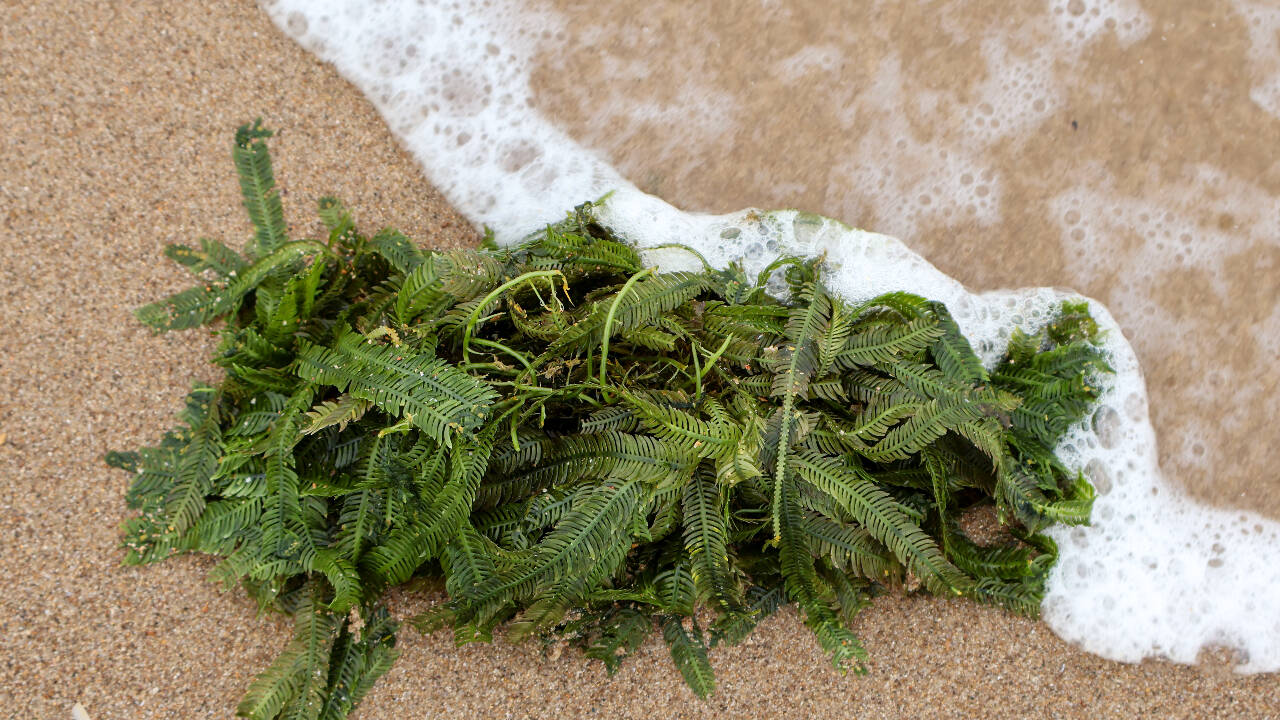
Everyone loves a good monster story. The public narrative surrounding Caulerpa taxifolia—the so-called "killer algae"—is a masterclass in pseudo-scientific fear-mongering. We have all heard the bedtime story: a single, rogue aquarium plant, dumped by a careless hobbyist in the Mediterranean or later in a California lagoon, went on a warpath to destroy marine ecosystems.
It makes for fantastic headlines. It shifts blame away from the actual architects of ecological instability. It provides a clean, singular target for regulators to harass.
The truth is significantly more inconvenient. Caulerpa taxifolia was not a biological bomb. It was a symptom of a sick system. By focusing our rage on a hardy green plant, we ignored the structural collapse of the habitats it occupied.
The Myth of the Unstoppable Invader
The prevailing consensus claims this specific clone of Caulerpa was uniquely aggressive because it was bred for cold tolerance in an aquarium setting. The story goes that this "super-weed" outcompeted native sea grasses because it lacked natural predators.
Let's look at the facts. Caulerpa taxifolia thrives where nutrients are excessive and competition is dead. This is not an invader conquering a pristine, thriving garden; it is a scavenger colonizing a graveyard. In almost every site where this algae gained a foothold, the local environment was already suffering from heavy pollution, nitrogen loading from agricultural runoff, or overfishing that decimated the herbivores which would otherwise keep the algae in check.
Calling it a "killer" implies it is an active predator. It is not. It is a filter. It grows where the environment has been pre-softened by human arrogance. We dumped chemicals into the water, depleted the populations of organisms that maintain equilibrium, and then acted surprised when a resilient, opportunistic species moved in to occupy the void.
Why We Scapegoat Biology
Regulatory agencies love invasive species narratives because they are actionable. You can point at a weed, you can spend millions on chemical eradication, and you can report "progress" to the public. You cannot easily report the successful management of complex, diffuse nitrogen pollution or the difficult political work of restricting coastal development.
I have spent years watching policy makers burn through massive budgets trying to hand-pluck invasive species from the seabed while the industrial runoff continues to pour into the water just a few miles away. It is a shell game. You spend the money, you look busy, and you ensure the underlying environmental decline remains untouched.
Imagine a scenario where we spent the same amount of effort cleaning up the coastal inputs as we did hunting for stray strands of Caulerpa. We would see native species return, not because we killed the competition, but because we restored the habitat to a point where native flora could actually compete again.
The Precision of Adaptation
The panic over Caulerpa relies on a fundamental misunderstanding of evolutionary strategy. This plant is a master of fragmentation. If you break it, it grows back from the pieces. Most management efforts during the early 2000s attempts actually accelerated its spread because they treated it like a terrestrial weed, pulling it up or disturbing the sediment.
When you fragment a clonal organism that propagates via vegetative growth, you are essentially cloning it for the surrounding area. We were not destroying the invader; we were farming it.
This highlights the failure of top-down biological management. You cannot out-think an organism that has evolved to exploit disturbance by using bureaucratic force. You must out-compete it with a healthy, functioning ecosystem.
Real Solutions Require Real Pain
If you want to stop opportunistic algae from taking over, stop blaming the algae. Start looking at the water chemistry.
- Fix the Nutrient Load: The biggest driver of algal dominance is nitrogen and phosphorus saturation. If your local water body is suffering from outbreaks, track the input. It is usually agricultural runoff or failing wastewater infrastructure.
- Restore Herbivory: If you remove the fish and the grazers that eat the algae, the algae wins. It is basic biology. Protecting local herbivore populations is infinitely more effective than spraying chemicals that further degrade the water quality.
- Stop the Mechanical Disturbance: In many cases, the best intervention is isolation, not eradication. Ripping up the seafloor to remove every last bit of algae often destroys the remaining native cover and creates more open, nutrient-rich space for the algae to recolonize.
My contrarian take comes with a cost: it requires us to admit that we are the architects of the "invasions" we despise. It is much easier to print "Killer Algae" on a poster and demand more funding for eradication squads than it is to challenge the industrial practices that make these environments perfect for opportunists.
We are not victims of an invasive plant. We are victims of our own inability to manage the health of our water. The plant is just doing what it evolved to do: survive in the ruins we left behind.
Stop treating the symptoms and start dealing with the toxicity. Otherwise, the next "super-weed" is already waiting in the wings, and no amount of hand-plucking will save you when the water is already dead.