The tech press is currently swooning over a gimmick that belongs in a 2004 episode of Pimp My Ride. Chinese EV giants like IM Motors and Xiaomi are patting themselves on the back for "revolutionary" headlights that project movies, navigation arrows, and emojis onto the asphalt. They call it innovation. I call it a desperate distraction from the fact that hardware margins are cratering and nobody knows how to solve Level 5 autonomy.
We are watching the "Smart Fridge-ification" of the automotive industry. When a manufacturer runs out of meaningful ways to improve the power electronics or the thermal management of a battery pack, they start glueing screens to things. If you cannot give me an extra 50 miles of range, give me a headlight that projects a smiley face. It is a cynical play for headlines, and it ignores the terrifying reality of road safety, cost-of-repair, and the physics of light.
The Optical Fallacy of "Navigation Cues"
The marketing materials for these Digital Light Processing (DLP) systems show crisp, high-contrast arrows appearing on the road ahead of the driver. They claim it makes navigation safer by keeping eyes on the road. This is a fundamental misunderstanding of human ocular biology.
Your eyes cannot focus on two different focal planes simultaneously. If you are looking at a projection on the ground thirty feet in front of your bumper, you are not looking at the horizon where the actual hazards—pedestrians, deer, or stalled vehicles—usually appear. It is the same reason why Head-Up Displays (HUDs) project a virtual image that appears to float far beyond the windshield. Projecting onto the actual pavement creates a constant, fatiguing shift in focal length for the driver’s eyes.
Furthermore, the physics of road surfaces ruins the "movie theater" dream. Asphalt is not a screen; it is a dark, non-reflective, porous surface. On a rainy night, the specular reflection from a wet road turns your "helpful navigation arrow" into a blinding glare for oncoming traffic. We are effectively weaponizing photons in the name of UI aesthetics.
A $5,000 Fender Bender
Let’s talk about the economics of "feature creep." A standard LED headlight assembly for a premium vehicle already costs between $1,500 and $3,000 to replace. These DLP units, which use millions of micromirrors (MEMS technology) to modulate light, push that cost into the stratosphere.
I’ve spent years analyzing supply chains in the Shenzhen and Stuttgart corridors. The yield rates on these high-end optical components are notoriously fickle. When you involve millions of moving parts—even at the microscopic level—within a housing that is subjected to constant vibration, extreme thermal cycling, and road salt, you aren't building a safety feature. You are building a ticking time bomb for the secondary market.
Imagine a scenario where a minor parking lot tap cracks the housing of your "cinema" headlight. In a sane world, that’s a buff-out or a cheap lens replacement. In the world of "projector lights," that is a total loss of the unit. We are creating "disposable" luxury cars. Insurance premiums will adjust accordingly, and the consumer will be the one subsidizing the manufacturer’s desire to look "high-tech" in a YouTube thumbnail.
The Regulation Wall is Undefeated
The industry likes to pretend that because a technology is cool, it will eventually be legal. That is a dangerous assumption. The United States’ Federal Motor Vehicle Safety Standard (FMVSS) No. 108 is a notoriously rigid document. While the US finally allowed Adaptive Driving Beam (ADB) technology in 2022, the restrictions are so specific that many European and Chinese systems still don't comply.
Regulators do not want your car projecting a "Happy Birthday" message to your neighbor. Why? Because road signs and markings are standardized for a reason. Introducing a cacophony of private projections onto public infrastructure creates cognitive load for everyone on the road. If every car is projecting its own "navigation path," the road becomes a chaotic light show.
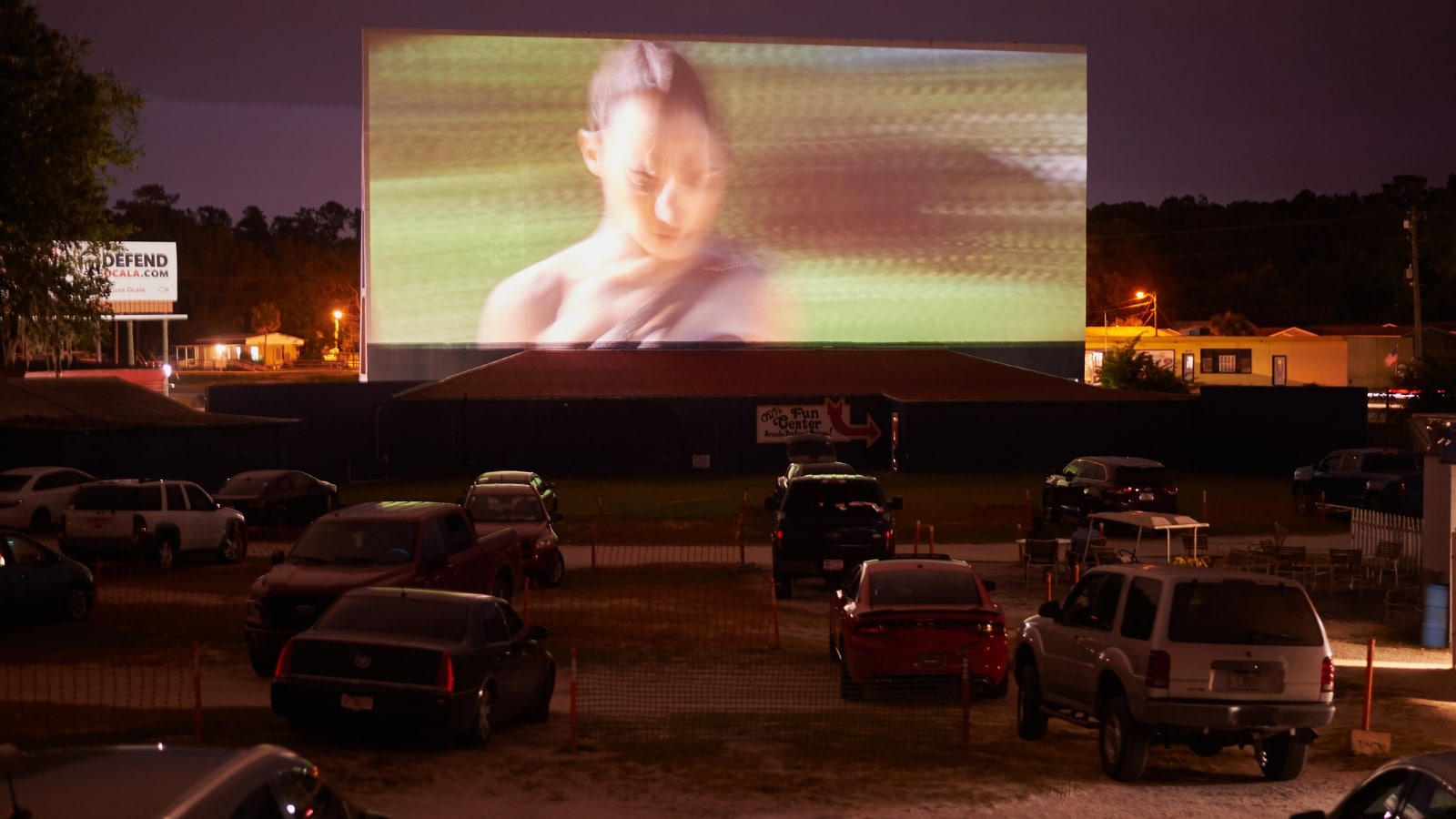
The "movie" feature is even more absurd. It only works when the car is stationary. This means you are paying for an incredibly expensive, fragile, and heavy optical system to watch a low-resolution clip of The Avengers on your garage door while you wait for your spouse to come out of the house. Use an iPad. It has better resolution and doesn't require a liquid-cooling loop.
The Real Innovation is Invisible
The obsession with "projector" headlights is a symptom of the "feature-first, benefit-second" mentality that is rotting modern product design. Truly great engineering is invisible.
If you want to disrupt the lighting space, stop focusing on the "projection" and start focusing on the "darkness." The gold standard isn't showing a movie; it's the ability to illuminate a cyclist in high-contrast while simultaneously carving out a perfect shadow around the eyes of an oncoming driver—without a single flicker or latency delay. That requires massive compute power and sophisticated sensor fusion (LiDAR, thermal, and CMOS cameras working in $O(1)$ time complexity).
But you can't sell "better shadow management" to a venture capitalist or a tech blogger as easily as you can sell "car that plays movies on the wall."
Software-Defined Distraction
Chinese OEMs are leading the world in EV integration, but they are also leading the world in "gimmick density." This is a byproduct of the hyper-competitive domestic market in China, where every brand is fighting for a slice of a crowded pie. When the 0-60 mph times are all the same and the ranges are all hovering around 700km (CLTC), the marketing departments get desperate.
They are shifting the battlefield from "How well does the car drive?" to "How many apps does the car have?" This is a race to the bottom. A car is a 4,000-pound kinetic weapon. Its primary interface should be centered on spatial awareness and physics, not digital novelty.
We are currently seeing a massive misallocation of R&D capital. Instead of perfecting solid-state batteries or reducing the weight of the chassis, engineers are being tasked with writing code for headlight emojis. It’s the automotive equivalent of the "Juicero"—solving a problem that doesn't exist with a level of complexity that is offensive to the end user’s wallet.
The Maintenance Nightmare Nobody Admits
Let's get into the weeds of E-E-A-T. I’ve consulted for Tier 1 suppliers who are under immense pressure to deliver these systems. The dirty secret? The calibration requirements are a nightmare.
A DLP projector requires precise alignment. In a car, your "screen" (the road) is constantly moving relative to the "projector" (the car). If your suspension is slightly worn, or if you have a heavy load in the trunk, the projection angle changes. To keep those "navigation arrows" looking like they are stuck to the road, the car has to use its internal IMU (Inertial Measurement Unit) to realign the image in real-time.
That is a staggering amount of software overhead for a feature that provides zero marginal utility over a well-designed HUD. You are paying for the car to perform a complex mathematical dance just so you can see an arrow on the ground that you could have seen more clearly on your windshield.
Stop Asking if We Can, Start Asking Why
The tech industry has a "can-do" spirit that is often divorced from a "should-do" reality. We can make a car that smells like a forest when you turn left. We can make a car that plays a symphony through external speakers. We can make a car that projects movies from its eyeballs.
But every one of these "features" is a trade-off. It’s weight. It’s power draw. It’s a point of failure. It’s a distraction.
The "Lazy Consensus" says that more tech is always better. The "Lazy Consensus" says that China is "winning" because they are shipping these features faster. The reality is that they are shipping clutter faster.
True automotive leadership isn't about how many lumens you can throw at a garage door. It’s about the ruthless elimination of the unnecessary. If the goal is to get from Point A to Point B with maximum safety and minimum friction, the movie-projecting headlight is not progress. It is a bug masquerading as a feature.
The next time you see a viral video of a car "drawing" a pedestrian crossing on the road with its lights, don't marvel at the tech. Ask yourself why the driver needs a light-show to tell them to stop for a human being. Then ask yourself who pays the bill when that light-show glitches out after a three-year warranty expires.
We don't need cars that act like projectors. We need cars that act like cars. The rest is just expensive theater for people who would rather look at a screen than the road.
Drive the car. Stop watching the headlights.