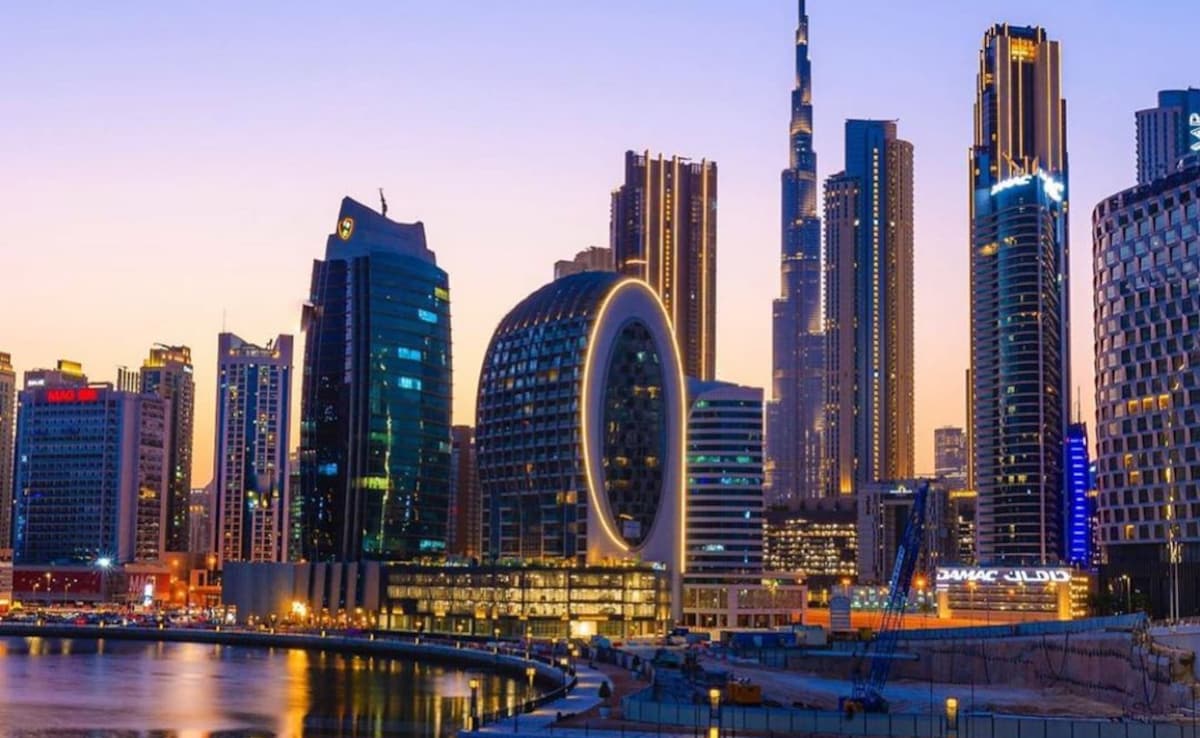
The myth of Dubai as a permanent "safe haven" is currently being dismantled by the fundamental laws of risk-adjusted returns. While the city-state has historically functioned as a neutral liquidity sink for global wealth, the escalating kinetic conflict in the Middle East has introduced a "Geopolitical Risk Premium" that now exceeds the tax advantages of residency. Wealthy expatriates are not simply "fleeing" due to fear; they are executing a rational exit strategy based on the degradation of two critical assets: physical security and global mobility.
The Calculus of Exit: A Structural Breakdown
The decision for a High-Net-Worth Individual (HNWI) to liquidate a Dubai-based position is governed by a specific cost-benefit function. For years, the delta between the 0% personal income tax rate in the UAE and the 37–50% rates in Western jurisdictions was wide enough to ignore regional volatility. That delta is narrowing as the cost of "staying" rises.
We can categorize the drivers of this capital flight into three distinct pillars of destabilization:
1. The Erosion of Logistics and Hub Dominance
Dubai’s value proposition is built almost entirely on its status as a global transit hub. If Emirates Airline or FlyDubai face persistent airspace closures or increased insurance premiums (War Risk Surcharges), the "connectivity yield" of the city drops.
- Airspace Constriction: As regional corridors close due to missile activity or naval escalations, flight paths become longer and more expensive. This increases the operational cost for regional headquarters.
- Supply Chain Latency: Dubai imports over 80% of its food. Any disruption to the Strait of Hormuz or the Jebel Ali Port operations triggers immediate inflationary pressure, eroding the "cost of living" advantage for the wealthy's support ecosystems (staff, services, luxury goods).
2. The Weaponization of Residency
Wealthy individuals often hold "Golden Visas" or residency permits that are predicated on real estate investment. When the risk of kinetic impact (drone strikes or regional spillover) increases, the liquidity of these underlying assets evaporates.
The real estate market in Dubai is notoriously cyclical and highly sensitive to sentiment. Unlike London or New York, where institutional "dry powder" supports price floors during crises, Dubai’s secondary market is dominated by individual retail investors and flighty HNWIs. This creates a Liquidity Trap: everyone tries to sell at the same time, but the buyer pool—primarily other foreigners—has already paused deployments.
3. The Shift from Neutrality to Liability
Historically, the UAE maintained a "Zero Problems" foreign policy. However, as regional powers are forced to pick sides or offer logistical support to global superpowers, the perception of Dubai as a neutral "Switzerland of the Sand" fades. For a Russian oligarch, a Chinese tech founder, or a European hedge fund manager, the risk is no longer just "the war"—it is the potential for secondary sanctions or being caught in the crossfire of international diplomatic maneuvering.
Quantifying the Cost of Departure
Exiting Dubai is not as simple as booking a flight. It involves a massive destruction of "sunk cost" capital. The wealthy are currently paying premiums in three specific areas to accelerate their departure:
- Asset Fire-Sales: To achieve immediate liquidity, sellers are accepting 15–25% discounts on off-plan and luxury secondary properties. This is a "volatility tax" paid to ensure capital is moved into USD or EUR-denominated offshore accounts before any potential currency peg instability or banking freezes.
- Repatriation Logistics: The cost of moving high-value physical assets (art, vehicles, gold) out of the region has spiked. Private charter demand has outstripped supply, leading to a 40% increase in short-notice relocation fees.
- Alternative Residency Arbitrage: The "fleeing" demographic is moving toward Mediterranean Europe (Greece, Portugal, Spain) or Southeast Asia (Singapore, Thailand). These jurisdictions are currently raising their entry prices for "Investment Migration" programs. By delaying, an individual faces the risk of being "priced out" of the next safe haven.
The Mechanism of the "Wealth Vacuum"
When a critical mass of HNWIs departs, it triggers a feedback loop known as the Service Economy Collapse. Dubai’s economy is a tertiary-sector powerhouse. It relies on the spending power of the top 1% to fund the lifestyle of the remaining 99%.
- Step 1: The Luxury Spending Halt. High-end retail, fine dining, and private education see immediate revenue drops.
- Step 2: Operational Downsizing. Families leave, taking their household staff and office support with them.
- Step 3: Real Estate Contagion. As luxury rentals sit empty, developers lose the cash flow required to finish massive infrastructure projects.
- Step 4: Infrastructure Stagnation. Government revenue from "fees" (Knowledge fees, Innovation fees, Salik) declines, leading to a reduction in the quality of public services.
Redefining the "Safe Haven" Framework
The current exodus proves that the traditional definition of a safe haven is flawed. Investors have historically focused on Fiscal Safety (low taxes). They are now rediscovering the importance of Structural Safety (geographic distance from conflict zones and sovereign self-sufficiency).
The transition of capital from Dubai to Western or "Deep South" jurisdictions (like Uruguay or Mauritius) is a pivot from yield-seeking to preservation-seeking. In a world of high-interest rates and global instability, a 0% tax rate is a poor hedge against a missile defense failure.
Strategic Execution for Capital Protection
For those still exposed to the Dubai market, the window for an orderly exit is narrowing. The strategy must shift from "wait and see" to "hedged liquidation."
- De-leverage Real Estate Immediately: Shift from physical property holdings to REITs or liquid equities that are not tethered to Gulf infrastructure.
- Diversify Custodial Jurisdictions: Ensure that assets are not held solely within the DIFC (Dubai International Financial Centre). While the legal framework is robust, it remains geographically vulnerable.
- Convert Dirham (AED) Surplus: While the peg to the USD remains strong, the cost of maintaining that peg increases as capital flees. Moving into direct USD or Gold holdings eliminates the "Peg-Break" tail risk.
The long-term viability of the Dubai model depends on its ability to remain "invisible" in regional conflicts. The moment it becomes a headline in a tactical briefing, its status as a financial hub begins to decay. The current migration of wealth is not a temporary trend; it is a fundamental re-weighting of global portfolios away from high-risk, high-reward frontier hubs toward established, defended centers of power.
Begin the process of transitioning "Life-Cycle Capital" out of the Gulf and into jurisdictions with independent food and energy security. The "tax" you pay in a Western democracy is increasingly looking like an insurance premium for the continued existence of your principal.