Foreign policy commentators love historical analogies almost as much as they love declaring those analogies dead on arrival.
Every time three strongmen sit in the same room, the pundit class rushes to opine that a summit between Xi Jinping, Vladimir Putin, and Donald Trump in Shenzhen is "no Yalta 2.0." Their argument is predictable. They point out that in February 1945, the Allies had already won the war on the ground, whereas today’s great powers are locked in an unresolved economic and technological cold war. They remind us that Washington, Beijing, and Moscow lack the ideological alignment or the clear territorial lines drawn across bombed-out Europe. If you liked this piece, you might want to check out: this related article.
That consensus is lazy. Worse, it is dangerously blind to how modern power actually carves up the world.
By obsessing over why Shenzhen does not look like a Crimean resort palace in 1945, mainstream analysts miss the reality right in front of them. A trilateral summit in China’s premier hardware and silicon hub is not failing to be Yalta. It is functioning as something far more consequential: the formal liquidation of the post-Cold War rules-based order in favor of a transactional, sphere-of-influence cartel. For another look on this development, see the latest update from NPR.
The Pedantic Trap of Historical Literalism
When conventional analysts dismiss the Yalta comparison, they hide behind strict historical literalism. They treat geopolitics like a museum exhibit where every artifact must match the original label.
In 1945, Franklin D. Roosevelt, Winston Churchill, and Joseph Stalin met to formalize realities dictated by tank divisions. The Red Army occupied Eastern Europe; Western forces held France and Italy. The ink on the Yalta communiqué merely ratified facts already written in blood and steel. Critics of the "Yalta 2.0" label argue that because neither China nor the United States has militarily conquered the other, and because Russia is bogged down in attritional warfare, no grand bargain is possible.
This view fundamentally misunderstands what constitutes "territory" in the third decade of the twenty-first century.
You do not need an armored division in Taipei, Kyiv, or Brussels to establish a sphere of influence today. You need control over subsea fiber-optic cables, semiconductor fabrication nodes, rare earth refining, and sovereign debt restructuring. In the years I spent advising cross-border infrastructure funds and sitting across from state-backed negotiators in East Asia and Eastern Europe, I watched Western diplomats lose entire regions while waiting for a traditional military invasion that never came. They looked for tanks while Beijing bought the ports and Moscow weaponized the energy grids.
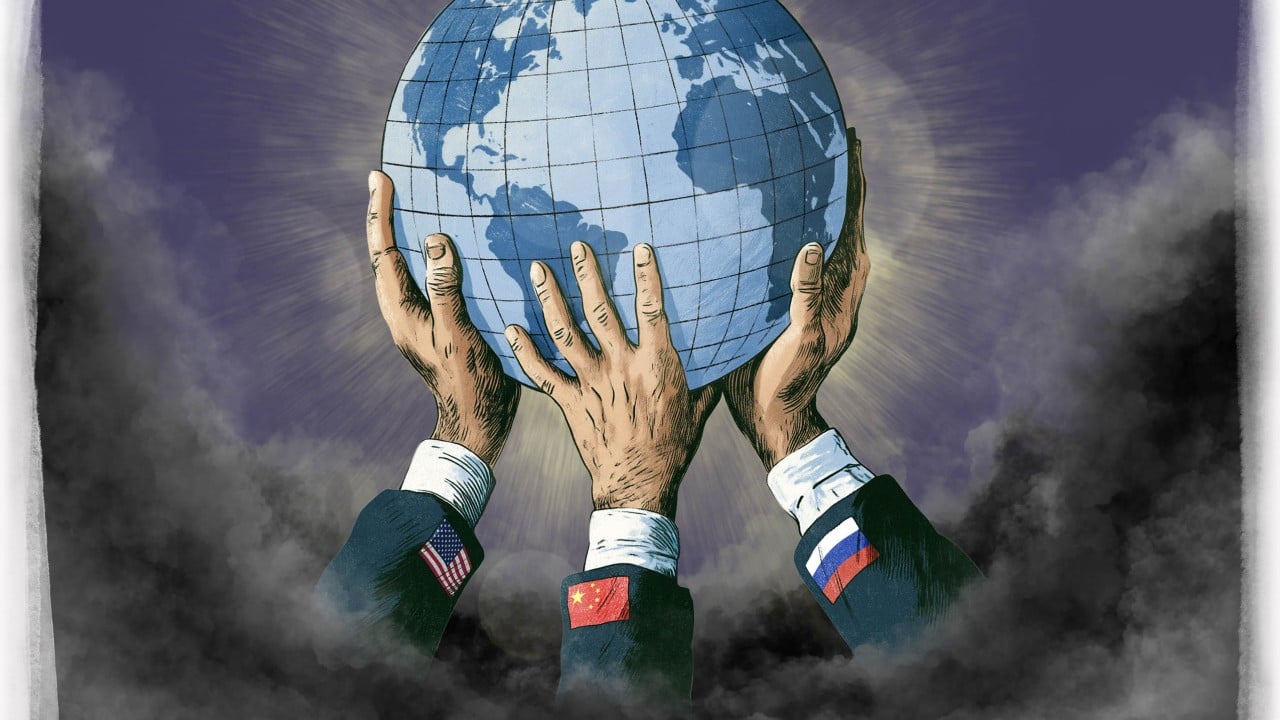
If you define Yalta strictly as three men drawing pencil lines on a paper map of Europe, then no, Shenzhen is not Yalta. If you define Yalta as three hegemonic powers deciding the fate of smaller nations over their heads to prevent direct Great Power collision, Shenzhen is Yalta on steroids.
Why Shenzhen Matters More Than the Communiqué
Look at the venue. Diplomatic locations are never accidental.
Yalta was chosen because Stalin refused to travel far from his military command and wanted his guests to see the devastation inflicted on the Soviet Union. Hosting a trilateral summit in Shenzhen sends a signal just as blunt, though the message is economic rather than martial.
Forty-five years ago, Shenzhen was a collection of fishing villages across the border from British-ruled Hong Kong. Today, it is the nervous system of global hardware manufacturing, autonomous systems, and telecommunications. Bringing the American president and the Russian president to Shenzhen places both men inside the physical monument to China’s industrial dominance.
- For Xi Jinping, Shenzhen validates the state-capitalist model. It tells the Global South that the future is built in China, not debated in Washington or Brussels.
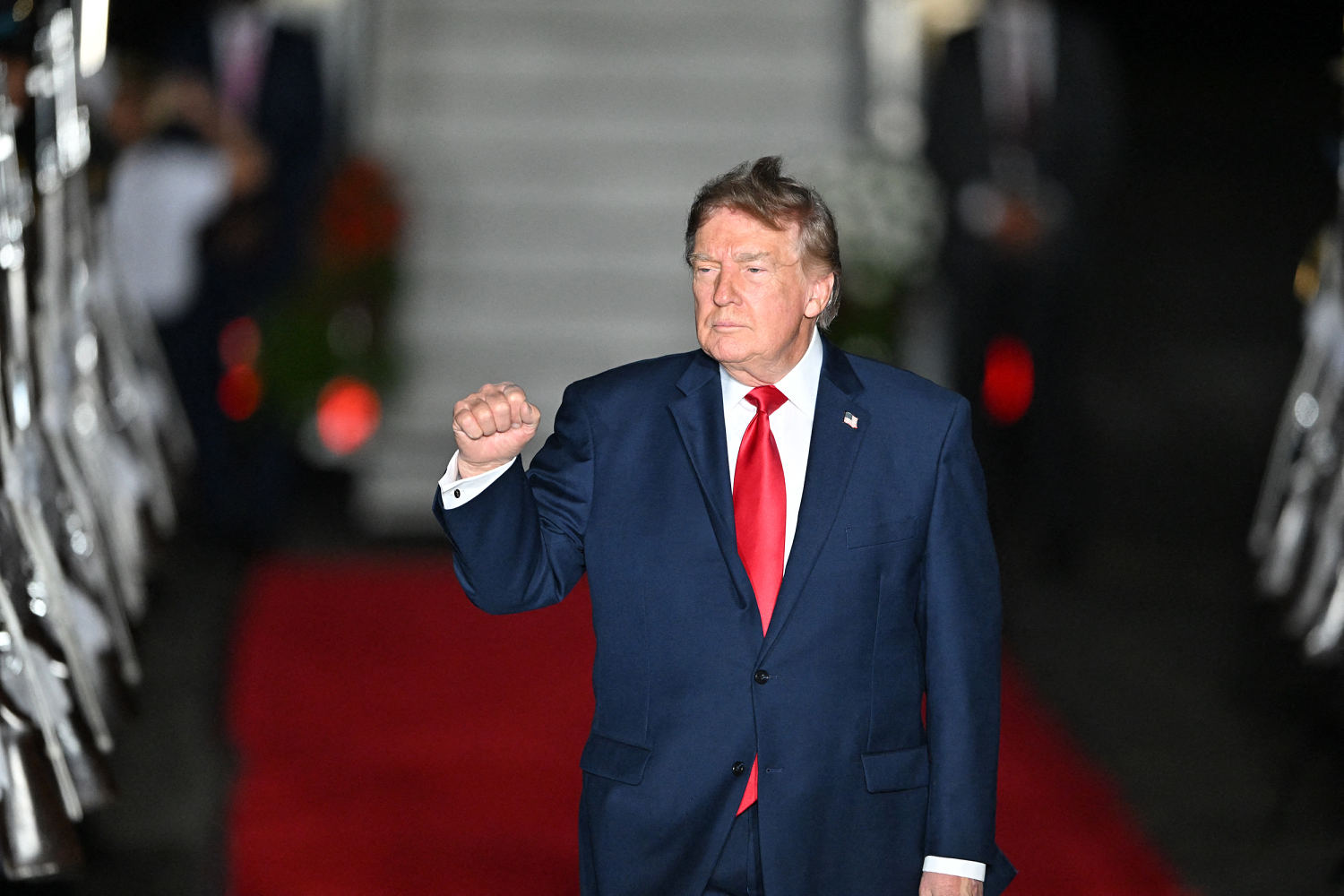
- For Donald Trump, the location appeals directly to a worldview rooted in balance sheets, trade deficits, and bilateral deal-making. Trump has never cared for multilateral forums like Davos or the UN General Assembly. He respects physical output, factories, and men who wield absolute authority over their domestic turf.
- For Vladimir Putin, standing in Shenzhen alongside the leaders of the world’s two largest economies shatters years of Western diplomatic isolation. It confirms his core thesis: that middle powers and European allies are vassals, and only sovereign empires get a seat at the adult table.
Mainstream commentary treats the absence of a formal treaty as proof that nothing happened. That is amateur hour. Great power cartels rarely publish their price-fixing agreements. The mere fact of the meeting establishes the precedent that European security, Indo-Pacific shipping lanes, and global supply chains are negotiable commodities traded among three capitals.
Dismantling the "Unbridgeable Divide" Myth
The second pillar of the conventional argument is that the United States, China, and Russia have irreconcilable interests that prevent any durable division of the world. Pundits point to Taiwan, Ukraine, tariff walls, and export controls as proof that Washington and Beijing are locked in an existential struggle that cannot be bargained away.
Again, this confuses public rhetoric with executive instinct.
Ideologues in Washington think tanks view the competition with China as a zero-sum clash between democracy and autocracy. Trump does not. His foreign policy doctrine, stripped of campaign slogans, is pure mercantilist realism. He views alliances not as sacred covenants, but as expensive service contracts where the United States is perpetually underpaid. Under that framework, everything has a clearing price.
Consider the mechanics of a transactional tripolar arrangement:
- Eastern Europe as a Bargaining Chip: Washington wants off the hook for endless European security guarantees and reconstruction bills. Moscow wants formal recognition of its territorial buffer and relief from secondary financial sanctions. A deal that freezes conflict lines in exchange for Russian economic reintegration—and perhaps a tacit agreement from Moscow to cool its military-technical transfers to Iran or North Korea—is completely logical to a deal-maker, even if it induces apoplexy in Warsaw and Berlin.
- The Indo-Pacific Economic Truce: Beijing faces severe structural headwinds—a deflating property sector, demographic contraction, and local government debt. Xi needs stable export markets and access to high-end capital. Washington wants massive agricultural and energy purchases, supply chain onshore commitments, and fentanyl precursor enforcement. Trading tariff relief and relaxed tech restrictions for Chinese industrial investment in the American Midwest is not fantasy; it is the exact template of the Phase One trade architecture, scaled up.
- The Exclusion of Middle Powers: Notice who is not in the room in Shenzhen. There is no seat for the European Union. No seat for Japan. No seat for India. Just as Churchill fought desperately at Yalta to preserve a shred of British imperial relevance while Roosevelt and Stalin quietly sidelined London, today’s middle powers are watching their agency evaporate in real time.
Realist scholars from Hans Morgenthau to John Mearsheimer have long argued that great powers naturally gravitate toward spheres of influence when the costs of hegemony outstrip domestic capacity. The United States is running multi-trillion-dollar deficits with a stretched defense industrial base. Russia has cannibalized its civilian economy for wartime production. China is managing a delicate transition from investment-led growth to high-tech self-reliance. None of the three wants a kinetic war that ruins their domestic balance sheets. A quiet cartel is the rational exit ramp.
Answering the Questions Nobody Wants to Ask
When readers search for the meaning behind a Xi-Putin-Trump summit, they usually ask whether this means World War III is averted or if democracy is dead. Both questions miss the mark.
Does a trilateral summit mean peace is guaranteed?
No. Cartels are inherently unstable because every member cheats the moment the market shifts. Yalta itself did not prevent the Cold War; within three years, Stalin had blockaded Berlin and the Iron Curtain had slammed shut. A Shenzhen understanding buys time and lowers the immediate temperature, but it also guarantees future friction over the gray zones—the Arctic, space, artificial intelligence governance, and African mineral corridors—where boundaries cannot be neatly drawn.
Why wouldn't the U.S. Congress or the "Deep State" block a grand bargain?
Because executive authority over foreign policy, tariffs, sanctions waivers, and troop deployments is vast. A president does not need Senate ratification of a formal treaty to halt offensive weapons shipments, pause freedom-of-navigation patrols, or issue Treasury licenses that gut sanctions enforcement. By the time legislative guardrails catch up, the facts on the ground have already changed.
What happens to American allies if Yalta 2.0 is real?
They face a brutal binary choice: rapid, expensive strategic autonomy or quiet accommodation with their regional hegemon. For Europe, it means actually funding the defense architectures they have talked about for thirty years without an American backstop. For Tokyo, Seoul, and Canberra, it means hedging bets—maintaining security ties with Washington while refusing to decouple economically from Beijing.
The Strategic Blind Spot in My Own Thesis
Intellectual honesty requires admitting where a contrarian thesis can break.
The biggest flaw in predicting a durable "Yalta 2.0" is domestic political volatility inside the United States. Stalin and Mao ruled for decades; Xi and Putin have effectively eliminated term limits and succession threats. An American president operates on a four-year clock, constrained by midterm elections, bond market vigilantes, and a deeply polarized electorate.
Xi and Putin know this. From their perspective, cutting a sweeping strategic deal with a U.S. administration is like signing a long-term lease with a tenant who might be evicted in forty-eight months. Why surrender permanent strategic leverage—such as control over rare earth processing or forward military bases—in exchange for American promises that a successor in the Oval Office could tear up with a single executive order?
This asymmetry of time horizons is the single strongest argument against a permanent grand bargain. Beijing and Moscow play multi-decade games; Washington plays in election cycles. Any agreement reached in Shenzhen will inevitably suffer from a massive trust discount because neither China nor Russia believes the United States can bind its future self.
How Strategists and Investors Must Position Now
If you run a multinational supply chain, manage institutional capital, or advise policy leaders, waiting for a formal "Yalta 2.0" treaty to be signed is a recipe for getting wiped out. You have to price in the reality of a fractured, sphere-of-influence world today.
Stop building models based on global efficiency and start building for regional redundancy.
- Audit your chokepoints immediately. If your manufacturing relies on single-source components crossing the Taiwan Strait or energy inputs tied to Russian-influenced transit corridors, you are carrying unhedged geopolitical tail risk. Dual-shore your critical operations into politically aligned blocs—North America and Latin America for Western markets, Southeast Asia and mainland hubs for Asian demand.
- Watch capital flows, not press conferences. Ignore the lofty language about "mutual respect" or "strategic competition" that emerges from summit briefings. Track sovereign wealth fund allocations, bilateral currency swap lines, and semiconductor equipment export licenses. Those numbers tell you who actually conceded what behind closed doors.
- Prepare for aggressive industrial policy. In a tripolar cartel, free trade is a corpse. Every major bloc will subsidize domestic champions, weaponize tariffs, and restrict foreign ownership of data and infrastructure. Align your capital expenditures with state-backed priorities—grid modernization, defense tech, critical mineral refining, and localized AI compute.
The pundits telling you that Shenzhen is not Yalta 2.0 are looking in the rearview mirror while the road ahead collapses. They are waiting for three men to sign a piece of paper dividing the map, completely missing the fact that the map has already been redrawn in silicon, tariffs, and silent handshakes. By the time the commentators realize the old world order was auctioned off in Shenzhen, the new landlords will already be collecting rent.