Billionaires don't pay taxes like you do. While you watch income tax slice your paycheck every month, the ultra-wealthy are sitting on mountains of unsold stock, watching their net worth skyrocket while paying next to nothing in income taxes.
In California, this economic disconnect has reached a boiling point. Two French-born economists at UC Berkeley, Gabriel Zucman and Emmanuel Saez, have spent years proving that the current tax system is fundamentally broken. Now, their academic theories have mutated into a high-stakes political war.
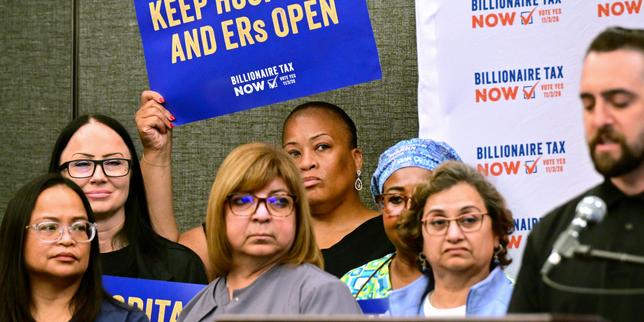
The November 2026 ballot features a radical initiative, the One-Time Wealth Tax for State-Funded Health Care Programs Initiative. It aims to levy a one-time 5% tax on the worldwide net worth of California residents holding more than $1 billion in assets. Driven by Saez's data and sponsored by the SEIU United Healthcare Workers West union, this measure wants to pull $100 billion out of Silicon Valley's elite to fund public healthcare, education, and food assistance.
But can you actually tax the ultra-rich without watching them pack their bags and flee?
The Math Behind the Golden State's Golden Elite
To understand why Zucman and Saez are targeting California, you have to look at the jaw-dropping concentration of wealth in the state. California holds just 12% of the United States population, but it commands a massive 28% of all American billionaire wealth.
The AI boom turned a massive wealth gap into an absolute chasm. Between 2023 and 2025, California billionaire wealth exploded by 144%, comfortably clearing the $2 trillion mark. That is roughly half of the entire state's annual GDP. For comparison, the real wealth of California's billionaire class—roughly 0.0002% of the population—multiplied by 30 between 1982 and 2025. During that exact same period, the average real family income in California only doubled.
Yet, under current laws, these billionaires pay an average of just 0.2% of their total wealth in California income tax. The system only taxes realized income, meaning capital gains that occur when an asset is sold. If Mark Zuckerberg or Larry Page never sells their stock, their wealth grows untaxed. When they need cash, they don't draw a massive salary; they borrow millions against their stock portfolios at microscopic interest rates. It is a legal, highly effective way to completely bypass standard income tax brackets.
The Academic Duet Rewriting Capitalist Rules
Zucman and Saez aren't traditional ivory-tower academics. They are data crusaders. Working alongside French economist Thomas Piketty, they spent decades reconstructing historical tax data to show how wealth concentration naturally feeds on itself if left unchecked.
Saez, who directs the Center for Equitable Growth at UC Berkeley, specializes in tax policy and public finance. Zucman has focused heavily on corporate tax evasion and hidden offshore wealth. Together, they have advised national political heavyweights like Senators Bernie Sanders and Elizabeth Warren on federal wealth tax proposals.
Their core argument is simple: when wealth becomes too concentrated, democracies quietly decay into oligarchies. They argue that a wealth tax isn't just a mechanism to generate state revenue; it's a vital tool to restore economic progressivity and curb dangerous levels of political influence.
The Threat of Billionaire Flight
The most common objection to taxing wealth is that capital is highly mobile. Critics argue that if you pass a 5% wealth tax, Silicon Valley's finest will simply move to zero-income-tax states like Nevada or Texas.
There's already evidence of this happening. The proposed initiative set a retroactive residency cut-off date of January 1, 2026. Anyone holding California residency after that date would face the tax if the measure passes this November. Ahead of that deadline, prominent figures like Peter Thiel, Travis Kalanick, and Google co-founders Larry Page and Sergey Brin reportedly began scaling back their official ties to the state. Real estate agents on the Nevada side of Lake Tahoe reported a noticeable spike in luxury lakefront home sales as wealthy Californians sought out new primary residences.
The California Legislative Analyst's Office weighed in with a mixed assessment. They confirmed the tax would successfully generate tens of billions of dollars in short-term revenue. However, they warned it would simultaneously trigger a permanent drop in future state income tax revenue as high earners leave.
Conservative think tanks like the Hoover Institution take the warning much further, predicting the net economic effect will be negative to the tune of $25 billion due to departing taxpayers.
Silicon Valley Strikes Back
The tech elite isn't taking this ballot measure lying down. Opponents, organized under groups like Building a Better California—co-founded by Sergey Brin and Eric Schmidt—are fighting fire with fire.
Instead of just running standard attack ads, the opposition is attempting to introduce three separate counter-questions on the same November 2026 ballot. These measures are designed to preemptively dismantle or cripple the wealth tax if it passes. One counter-proposal seeks a constitutional amendment to ban retroactive taxation entirely, which would effectively nullify the initiative's January 1, 2026 residency benchmark. Another proposal aims to restrict how the state can spend revenues raised from special taxes, while a third demands stricter audit requirements to tie up the funds in bureaucratic red tape.
Surprisingly, the opposition isn't just coming from corporate boardrooms. Several prominent Democrats running to succeed Gavin Newsom in the 2026 gubernatorial race have publicly broken ranks to oppose the tax. Candidates like Katie Porter, Xavier Becerra, Antonio Villaraigosa, and Matt Mahan have expressed concern that the measure could permanently damage California’s reputation as an innovation hub.
Is a Wealth Tax Actually Workable?
If you look at history, wealth taxes have a spotty track record. Several European nations introduced wealth taxes in the late 20th century, only to repeal them after facing massive administrative nightmares, rampant valuation disputes, and capital flight.
But Saez and Zucman argue that those European frameworks failed because they were riddled with loopholes and exemptions. The California proposal intentionally targets worldwide net worth and excludes directly held physical real estate to bypass traditional valuation traps, though it does tax real estate held through business entities.
Furthermore, Saez notes that a 5% tax spread out over five years—effectively 1% annually—is remarkably modest compared to the 7.5% average annual inflation-adjusted growth rate of billionaire wealth. Even after paying the state, California’s billionaires would still see their fortunes expand by roughly 6.5% per year.
For the everyday voter, the decision comes down to a fundamental philosophical question: do you trust the state to use $100 billion effectively to fix crumbling healthcare and education systems, or do you believe that squeezing the golden geese will inevitably force them to fly away, taking the state's economic engine with them?
If you want to track how this battle unfolds ahead of the November vote, keep a close eye on the fundraising numbers for both the SEIU-backed campaign and the Brin-Schmidt opposition groups. The amount of cash poured into this single ballot fight will likely shatter historical records for state-level political spending.