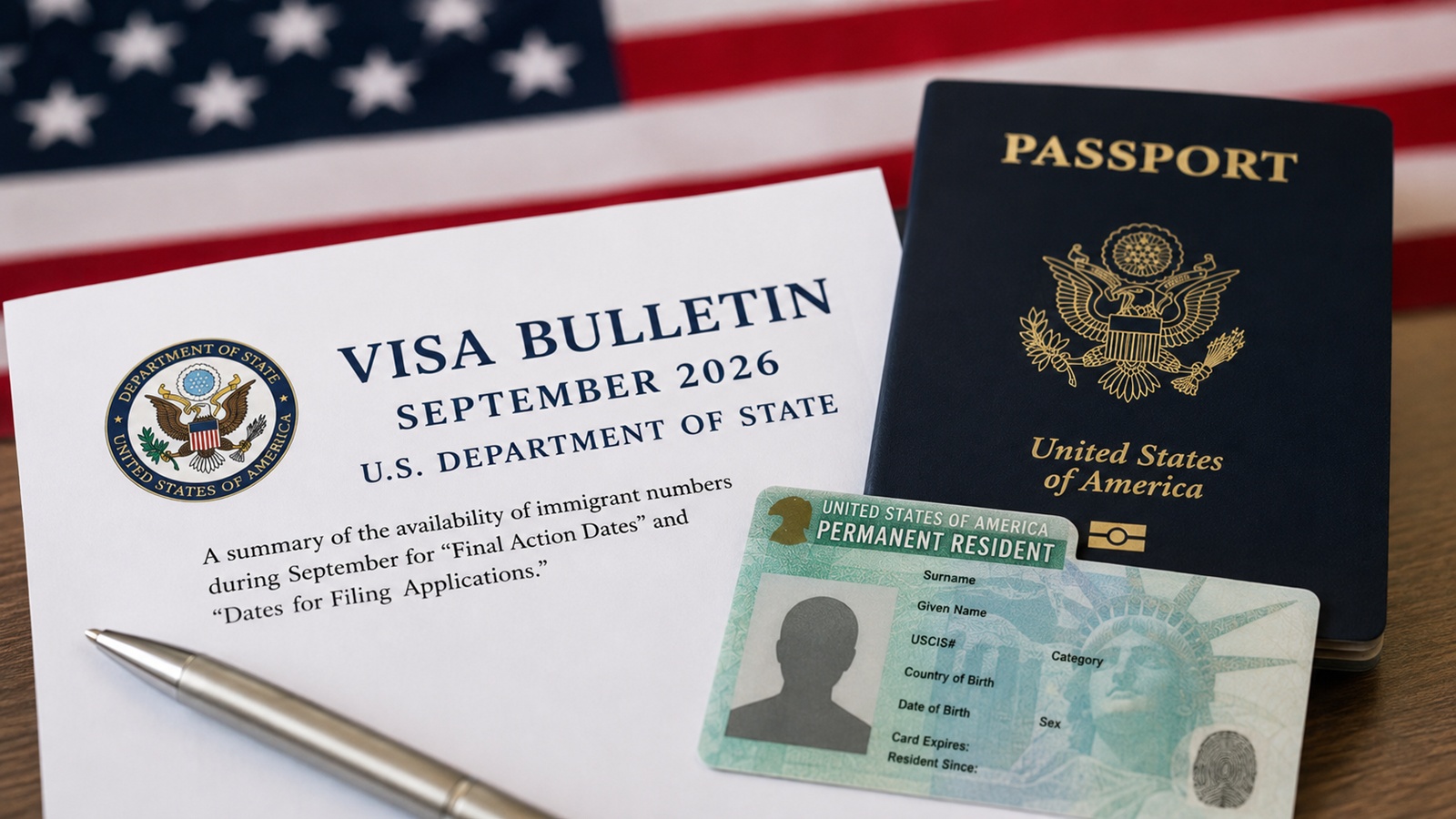
The coffee gets cold. It always gets cold while you are checking the date.
Aurore stares at a glowing monitor in a quiet kitchen at 2:00 AM. Her husband is asleep down the hall, breathing the steady, innocent breath of a man who believes tomorrow will look remarkably like today. It won't. Or rather, it will—and that is the terror. If you enjoyed this article, you might want to read: this related article.
For the thousandth time, she reads the numbers on a newly published federal visa bulletin.
For Indian families navigating the labyrinth of United States immigration, the calendar does not move forward. It bends, stretches, and occasionally snaps. The September visa bulletin arrived with a strange, lurching rhythm this year. Family-sponsored categories saw sudden, sharp leaps—forward movements that felt like winning a lottery you forgot you entered. Yet, pinned right beside those crumbs of hope, the employment-based categories remained frozen. Cemented in place. Immovable. For another angle on this event, check out the recent update from TIME.
Let us be honest about what a visa bulletin actually is. It looks like a government spreadsheet, a dry matrix of letters and dates meant for bean-counters and immigration lawyers. But to millions living inside the system, it is a weather report. It tells you whether you can buy a house, whether your teenager can get an in-state tuition discount, or whether you should pack your life into cardboard boxes because your legal right to exist here has quietly expired.
Consider a hypothetical family we will call the Sharmas. They arrived in Ohio twelve years ago with two suitcases, a toddler, and an H-1B visa stamped with an expiration date that felt safely distant. The father, a structural engineer, spent his days designing bridges that would stand for a century while his own future hung from a thread thinner than a spider's silk.
Twelve years.
In that time, the toddler grew into a teenager who speaks with a Midwestern accent, loves baseball, and has never seen the country on her passport except through grainy video calls with grandparents who are growing older too fast. When the child asks, "Mom, can we go to India for summer vacation?", the answer is never a simple yes or no. It is a complex calculus of visa stamping risks, administrative processing backlogs, and the silent dread of getting stuck abroad because a consulate door was slammed shut.
This is the invisible tax of the green card backlog. It is not just financial, though the legal fees mount into the thousands. It is temporal. It is the theft of peace of mind.
When the September bulletin dropped, the family-sponsored categories—the paths to reunite parents, siblings, and adult children—lurched ahead by months, sometimes years. For someone waiting to bring an aging mother across the ocean to help raise a newborn, that movement is oxygen. It is a heart starting up again after a long pause.
Yet, look closer at the employment-based categories, particularly EB-2 and EB-3 for applicants born in India. The dates barely twitch. They stand like stone monuments to legislative neglect.
Why? Because of a relic of mid-20th-century policy called the per-country cap. It restricts the percentage of green cards that can go to any single nation, treating a nation of 1.4 billion people the same as a nation of three hundred thousand. The math is brutal. The demand vastly outstrips the supply, creating a queue so long that actuarial tables suggest many applicants will reach retirement age before their priority date ever becomes current.
We have built a system that rewards patience with punishment.
Think about what it means to live in perpetual impermanence. You do not plant perennial flowers because you might not be here to see them bloom. You do not change jobs, even when a toxic workplace drains your spirit, because untangling your visa sponsorship from your employer feels like jumping off a cliff without a parachute. You live your life in pencil, never ink.
And then September arrives. The government agency updates its charts. The internet lights up with frantic forum posts, spreadsheets maintained by sleepless engineers, and YouTube live streams breaking down every microscopic shift in the numbers. Grown adults weep over a spreadsheet cell moving forward by thirty days.
To an outsider, it looks absurd. Why care so much about a piece of paper?
Because that piece of paper is belonging. It is the right to stay when the wind blows cold. It is the ability to look your child in the eye and promise that their home will not be suddenly yanked away because a bureaucrat in Washington shuffled a stack of papers.
The September bulletin tells two distinct stories. One is a story of unexpected grace for families trying to bridge physical oceans to hold one another again. The other is a story of profound stagnation, a quiet crisis affecting hundreds of thousands of professionals who contribute to the American economy every single day while standing on shifting sands.
Aurore finally closes her laptop. The kitchen is dark again. Outside her window, the suburban street is quiet, lined with mailboxes and oak trees that do not care about priority dates or bureaucratic caps.
She walks back down the hall, pausing at her daughter's doorway to listen to the rhythm of the night. She does not know what the October bulletin will bring. Nobody does. She only knows that tomorrow, the coffee will be hot, the calendar will turn, and the waiting will begin all over again.