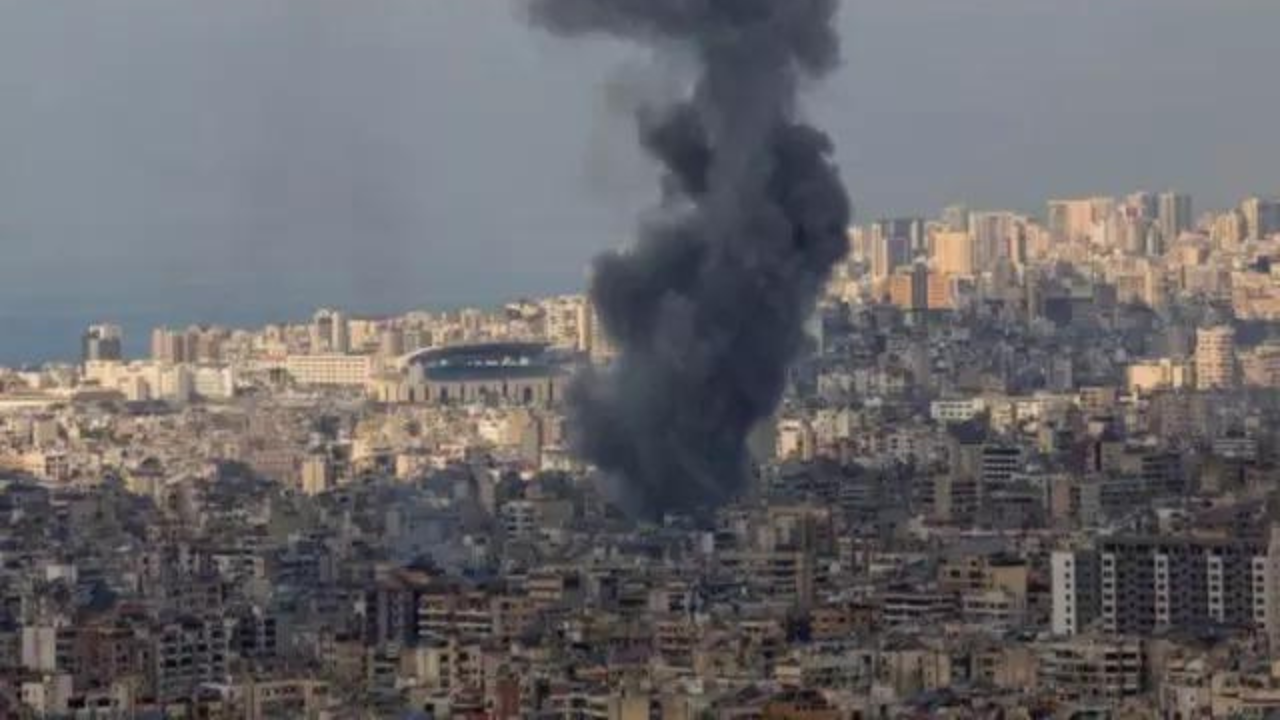
The siren sounds before the explosion, but the psychological toll of the warning often outweighs the physical impact of the strike itself. This is the current reality along the Blue Line, the volatile boundary between Israel and Lebanon, where a single fatality and four injuries in a recent wave of strikes tell only a fraction of the story. While headlines focus on the immediate casualty count, the real story lies in the systematic transformation of southern Lebanon into a "dead zone" through precise military pressure and the strategic use of evacuation mandates.
These warnings are not merely humanitarian gestures. They are tactical tools designed to clear the battlefield of civilian interference, allowing for more aggressive kinetic operations while simultaneously serving as a mechanism of displacement. When the Israeli military issues a directive for residents to flee, it is signaling a shift in the rules of engagement for that specific coordinate.
The Infrastructure of a Border Conflict
The recent strikes, which resulted in the death of one individual and the hospitalization of four others, occurred within a broader framework of escalating cross-border exchanges. To understand why these specific casualties matter, one must look at the targets. These are rarely random. They are calculated strikes against what the Israel Defense Forces (IDF) identify as operational nodes—observation posts, weapons caches, or the private residences of mid-level commanders.
The "evacuation warning" has become a standardized prelude to these engagements. By issuing a notice via social media, radio broadcasts, or SMS, the military creates a legal and ethical buffer. If civilians remain, they are categorized—rightly or wrongly—as having accepted the risk of proximity to a military target. This creates a terrifying dilemma for the local population: stay and risk becoming "collateral damage," or leave and face the indefinite loss of property and livelihood.
The Geography of Displacement
The geography of southern Lebanon is defined by its rugged terrain and ancient olive groves. These features, once the pride of the local economy, have been repurposed into a theater of war. The villages targeted in the latest strikes are not just clusters of homes; they are the front line of a geopolitical struggle that extends far beyond the Levant.
When a strike hits a village like Houla or Kfar Kila, the ripple effect is felt in Beirut and Tel Aviv. The intent is to make the cost of hosting militant infrastructure prohibitively high for the local population. It is a strategy of attrition, where the goal is not necessarily to seize territory, but to render it uninhabitable for the adversary.
The Failure of International Mediation
For months, diplomats from the United States and France have shuffled between capitals, attempting to broker a deal that would push Hezbollah forces north of the Litani River. These efforts have largely stalled. The reason is simple: neither side sees a benefit in a permanent ceasefire that does not address their core security anxieties.
The current conflict is characterized by a "low-intensity" label that feels like a cruel joke to those on the ground. A low-intensity conflict still involves the exchange of anti-tank missiles, heavy artillery, and kamikaze drones. The "rules of the game" that previously governed these exchanges—where a strike on one side was met with a proportional response on the other—have eroded. We are now in a period of "calibrated escalation," where each side tests how far they can push the boundary before triggering a full-scale regional war.
The Role of Precision Munitions
One of the most overlooked factors in this conflict is the reliance on precision-guided munitions (PGMs). These weapons are sold to the public as a way to minimize civilian deaths. In reality, they allow for a much higher frequency of strikes in densely populated areas.
The strike that killed one person and wounded four was likely a precision hit. In the logic of modern warfare, the fact that only five people were hit in a residential area is viewed as a "success" of targeting technology. However, this clinical view ignores the reality that a single death can radicalize a family, a neighborhood, or an entire village. The precision of the weapon does not negate the political fallout of its use.
Economic Devastation as a Silent Weapon
While the kinetic strikes grab the headlines, the economic destruction in southern Lebanon is the more potent long-term threat. Agriculture is the lifeblood of this region. Phosphorous shells, frequently used for screening movements or clearing brush, have scorched thousands of acres of farmland.
- Olive Harvesters: Entire seasons have been lost because it is too dangerous to enter the groves.
- Tobacco Farming: A secondary staple of the southern economy, now largely abandoned.
- Tourism: The guesthouses and restaurants that once thrived along the Litani are empty.
This is not accidental. By destroying the economic viability of the south, the pressure on Hezbollah increases. If the people have nothing left to return to, the militant group loses its local support base. Or, conversely, it becomes the only entity capable of providing relief, further entrenching its power. It is a high-stakes gamble with no clear winner.
The Intelligence Gap
A veteran analyst knows that what isn't being hit is often more important than what is. The IDF has a deep bank of targets in Lebanon, built over nearly two decades since the 2006 war. Many of these targets remain untouched. The decision to strike a specific building, killing one person, is often a message sent to the leadership of the opposing side. It says, "We know where you are, and we can reach you when we choose."
On the other side, the Lebanese resistance utilizes a network of tunnels and hardened positions that are largely immune to standard aerial bombardment. This creates a stalemate where the only way to achieve a "decisive" victory would be a ground invasion—a prospect that neither side truly wants, given the catastrophic costs involved.
The Escalation Ladder
Every strike is a rung on the escalation ladder. When Israel issues an evacuation warning, it is moving up a rung. When Hezbollah responds with a deeper rocket strike into the Galilee, it moves up another. The danger is that the ladder eventually ends, and the only remaining option is total mobilization.
The casualty figures from the recent strikes—1 dead, 4 wounded—are low by the standards of the Gaza conflict, but they are significant in the context of the Lebanon-Israel border. They represent a steady drumbeat of violence that is slowly but surely desensitizing the international community to the prospect of a second front.
The Reality of the "Safe Zone"
There is no such thing as a safe zone in a conflict defined by drone surveillance and long-range artillery. Even when an evacuation warning is issued, the routes out are often under observation. Civilians fleeing the south are not just moving toward safety; they are moving toward a future of uncertainty in overcrowded shelters in Tyre or Beirut.
The Lebanese state, currently grappling with a historic financial collapse, is in no position to support these displaced thousands. This vacuum is filled by NGOs and political factions, further fracturing the country’s social fabric. The strikes may target physical structures, but the damage is done to the state's very ability to function.
The Intelligence Dilemma
Israel's intelligence community faces a daunting task: identifying military targets within a civilian population that is often sympathetic to the resistance. This leads to a reliance on signals intelligence (SIGINT) and human intelligence (HUMINT) that is not always perfect. A warning may be issued for a building that is believed to house a commander, but if that commander moved ten minutes prior, the resulting strike only serves to alienate the population and provide a propaganda victory for the adversary.
The precision of modern warfare is often an illusion. You can hit a specific window from three miles away, but if the intelligence telling you which window to hit is flawed, the precision is meaningless.
A Border Reimagined
The border between Israel and Lebanon is being redrawn, not by treaty, but by fire. The buffer zone that once existed in theory is now being created in practice. By the time a formal ceasefire is ever signed, the demographic and physical reality of the south will have changed so fundamentally that "returning to the status quo" will be impossible.
The evacuation warnings will continue. The strikes will continue. And the casualties will continue to be counted in ones and fives, until the day they are counted in hundreds. The real reason this conflict persists is that both sides have decided that the cost of fighting is currently lower than the cost of a compromise that would leave them vulnerable.
To move forward, the focus must shift from the immediate body count to the structural reasons why these borders remain on a knife-edge. Until the underlying issues of sovereignty, security, and displacement are addressed, the evacuation sirens will remain the primary soundtrack of life in the south.
Watch the flight paths of the reconnaissance drones. They tell a story that the official press releases never will. The frequency of these flights, and the specific sectors they loiter over, are the most reliable indicators of where the next "warning" will be issued.