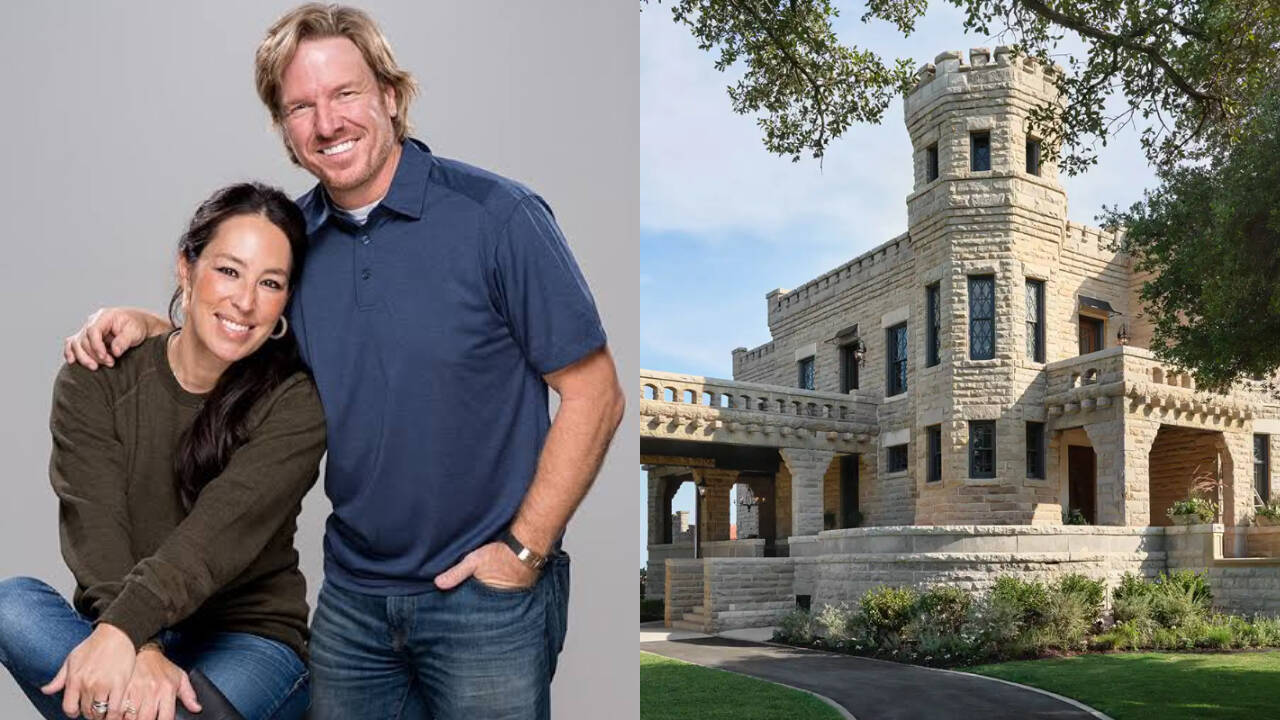
Every real estate journalist in America recently lost their minds over a stone fortress in central Texas. Chip and Joanna Gaines completed their multi-year vanity project on the historic Grand Avenue castle in Waco, slapped a two point seven million dollar price tag on it, and watched the internet erupt in predictable applause. The headlines practically wrote themselves. Magic touch. Historic triumph. Another architectural orphan rescued by the high priests of modern rustic chic.
Except the entire narrative is a financial fairy tale designed for daytime television ratings.
Let us clear the air immediately. That castle is not a brilliant investment. It is a monument to sunk costs, architectural compromise, and the dangerous illusion that celebrity stardust can override local market fundamentals. Anyone celebrating this sale as a masterclass in real estate acumen is either willfully blind or has never tried to unload an over-improved white elephant in a secondary Texas market.
For years, the lazy consensus of lifestyle media has taught the public a comforting lie: take any structurally distressed building, inject a heavy dose of sentimental nostalgia, coat everything in neutral tones or exposed wood, attach a famous brand name to the deed, and watch the profits roll in. HGTV built an entire empire on this economic fantasy. They convinced millions of viewers that renovation equals wealth creation, ignoring the brutal math of cost-per-square-foot economics and municipal zoning nightmares.
Let us look at the actual mechanics of what happened on Grand Avenue. The property sat on the market for months after its initial listing, enduring price cuts and frantic PR choreography before finally securing a buyer. If a asset of this magnitude is truly a trophy piece, it does not linger. True trophy properties command bidding wars within forty-eight hours. When a celebrity-backed project takes a prolonged victory lap just to find a single willing counterparty at a reduced valuation, the market is sending a very loud, very clear signal.
The structural realities of historic stone fortifications in central Texas are entirely divorced from television editing bays. Real construction does not happen in a tidy sixty-minute window with a cheerful commercial break. When you buy a century-old German-inspired castle with crumbling masonry, medieval plumbing constraints, and historic preservation red tape thicker than a telephone directory, you are not buying a home. You are buying an endless, expensive hobby that demands a bottomless checking account.
Consider the location factor. Waco is a fascinating case study in brand-driven tourism, largely propelled by the Magnolia machine. Millions of visitors flock to the silos every year to buy overpriced candles and eat artisanal cupcakes. But tourism is not residency. The pool of buyers willing to drop millions on a medieval-style fortress positioned squarely in a working-class residential corridor of Waco is remarkably small. In fact, it consists of exactly two demographics: die-hard television superfans with more disposable cash than sense, and institutional eccentric investors who treat real estate like modern art portfolios. Neither group operates under sound financial principles.
When you over-improve a property beyond the ceiling of its surrounding neighborhood, you enter dangerous financial territory. Real estate appraisers call this regression. You can sink fifty thousand dollars into high-end finishes, but if the surrounding comparable properties max out at three hundred thousand dollars, the market refuses to recognize your additions. Scale that principle up to a multi-million-dollar castle restoration in a town where the median home price hovers around a fraction of that figure, and the math becomes terrifying. You are tethered to an anchor that no future buyer can realistically support.
The design choices themselves tell a story of stylistic contradiction. Historic preservation purists roll their eyes at the smoothing out of authentic character in favor of trendy minimalism, while modernists find the medieval turrets and heavy stone arches bafflingly incongruous for a primary residence. You end up with a hybrid product that satisfies neither camp. It is too eccentric for a family looking for functional suburban comfort, and too manipulated for a historian demanding architectural integrity. It lives in a purgatory of branding.
Industry insiders know the dirty secret of celebrity-renovated real estate. The original purchase price plus the cost of materials, specialized labor, historic compliance consultants, and carrying costs almost always outstrips the eventual sale price. Even with the free publicity generated by a massive media network, the margins on historic commercial-residential hybrids are notoriously brutal. If an ordinary developer had attempted this project without a built-in television audience to market the exit strategy, bankruptcy court would have arrived before the second turret was repointed.
Why do people fall for it? Because we crave narrative over math. We want to believe that hard work, aesthetic taste, and a hammer can bend economic gravity. We want to imagine ourselves sipping coffee in a stone tower, untouched by the mundane realities of property taxes, foundation shifts in clay soil, and roof maintenance on slate shingles. Television exploits this psychological vulnerability by showing you the reveal, never the spreadsheet ten years later.
Let us address the broader implication for anyone tempted to follow this blueprint. If you are looking at historic homes with romantic intentions, strip away the branding. Look at the bones. Look at the local tax assessment. Look at the average days on market for properties within a three-mile radius. Ask yourself a simple question: if the television cameras turned off tomorrow, would anyone care about this zip code? If the answer is no, keep your checkbook in your pocket.
The buyers of the Waco castle have acquired a famous piece of television lore. They own a conversation piece, a monument to pop culture history, and a very expensive architectural challenge. But do not call it a win for rational economics. It is an outlier, a manufactured anomaly sustained by media muscle rather than market fundamentals.
The next time a celebrity renovation makes front-page news, do not look at the pretty pictures of the living room. Look at the timeline. Look at the price adjustments. Look at the local comps. The magic always fades the moment the closing documents are signed, leaving the new owner alone with the masonry, the maintenance, and the unyielding laws of supply and demand.
Stop treating television entertainment as an investment strategy.
And stop buying castles in towns that do not need them.