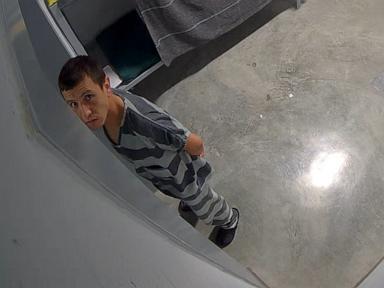
The media has a predictable playbook for tragedy. When an Associated Press investigation flags an "alarming" spike in suicides within Immigration and Customs Enforcement (ICE) detention facilities, the reaction from pundits, activists, and politicians is instant and uniform. They point at the walls. They blame the guards. They demand more oversight, more investigations, and more funding for the exact same federal oversight bodies that have failed to move the needle for decades.
It is a lazy consensus. It assumes that if you just patch the drywall, add more cameras, and force contracted private prison companies to fill out more compliance checklists, the despair will stop. For another look, consider: this related article.
It won't.
Having analyzed federal procurement, public health metrics, and the brutal mechanics of institutional bureaucracy for years, I can tell you that the mainstream narrative is asking the wrong questions. The institutional response to self-harm in detention centers is fundamentally broken because it treats a profound psychological crisis as a facility management problem. Further insight on this matter has been provided by TIME.
The real crisis isn't just what happens inside the cells. It is the crushing weight of an indefinite legal limbo designed by bureaucrats who optimize for liability rather than human outcomes.
The Flawed Premise of Facility Reform
The standard critique relies on a simple equation: Bad facility conditions equal higher suicide rates. Therefore, fix the facility to fix the rate.
This logic collapses under scrutiny. ICE facilities operate under a patchwork of National Detention Standards (NDS), Performance-Based National Detention Standards (PBNDS), and regular audits by the Office of Detention Oversight (ODO). When a tragic death occurs, the immediate reaction is to look for a compliance failure. Did a guard miss a 15-minute watch? Was a camera broken?
This operational hyper-focus misses the forest for the trees. Data from the Centers for Disease Control and Prevention (CDC) and the Bureau of Justice Statistics (BJS) consistently shows that the psychological drivers of self-harm in correctional or detentive environments are tied less to physical amenities and more to the duration of uncertainty.
When a person enters a standard state prison, they usually have a sentence. A date. A countdown. They know exactly how many days they have to survive.
ICE detention is entirely different. It is civil administrative detention. There is no set sentence. A detainee might be held for two weeks, two months, or two years while an immigration judge navigates a backlog of hundreds of thousands of cases. They are trapped in a legal black hole.
To blame the spike in suicides purely on physical facility management is to ignore the compounding psychological trauma of indefinite waiting. We are trying to solve a systemic judicial failure with better jail guards. It cannot be done.
The Liability Trap: Why More Oversight Makes Things Worse
Every time an investigative report drops, the inevitable recommendation is to increase oversight. Create another committee. Appoint another inspector general.
I have watched organizations blow millions of dollars chasing the illusion of safety through compliance. In practice, hyper-oversight creates a toxic culture of defensive management.
When a facility is flooded with checklists, the staff's primary objective shifts from human interaction to liability mitigation. Guards stop looking at the person; they look at the logbook. If the logbook says the round was completed, the institution considers its job done.
Consider the use of administrative segregation—colloquially known as solitary confinement—for "suicide watch." In theory, it isolates a vulnerable individual for their own protection. In reality, it strips away the last remnants of human contact, exacerbating the exact psychological distress it is meant to contain.
- The Intent: Remove objects that could be used for self-harm.
- The Reality: Total sensory deprivation and acute psychological destabilization.
- The Result: A facility that checks every compliance box while actively breaking the human spirit.
This is the downside of the contrarian reality: there is no clean, bureaucratic fix. To truly mitigate this crisis, you have to accept a higher degree of institutional risk. You have to move away from isolation-based suicide watches and move toward community-based housing models within facilities. But no private contractor or federal bureaucrat will ever sign off on that because it cannot be neatly quantified on a liability insurance form.
Dismantling the "Abolish vs. Fund" False Dichotomy
The public debate is hopelessly polarized between two equally useless positions. One side demands the total abolition of all immigration detention. The other side demands more funding for tougher enforcement and modernized facilities.
Both sides are wrong.
Abolitionists ignore the logistical reality that any nation-state will maintain some form of border enforcement and administrative processing. Total, immediate elimination of the system is a political fantasy that offers zero immediate relief to the people currently inside it.
Conversely, the "law and order" faction believes that throwing capital at newer, shinier detention centers will solve the human cost. It won't. You can build a facility with the finest medical wings and the most advanced surveillance architecture, but if the legal process remains an opaque, multi-year grind, the psychological toll will remain identical.
Look at the numbers provided by the Executive Office for Immigration Review (EOIR). The average time to resolve an immigration case has ballooned. The bottleneck isn't the physical capacity of the beds; it is the catastrophic shortage of immigration judges, asylum officers, and legal counsel.
We are funding a cage when we should be funding a clock.
The Actionable Pivot: Fix the Timeline, Not the Walls
If the goal is to stop people from dying in detention, we must stop trying to optimize the detention experience and start optimizing the exit velocity.
Every dollar spent on an extra layer of facility oversight would be better utilized directly funding legal representation for detainees. Data from organizations like the Vera Institute of Justice consistently demonstrates that when detainees have legal counsel, their cases move significantly faster through the system.
Speed reduces uncertainty. Uncertainty reduces despair.
Furthermore, we must scale up the use of supervised release and Alternatives to Detention (ATD) programs, such as electronic monitoring and case management. Critics argue that ATD programs allow individuals to abscond. Yet, government data shows compliance rates for immigration court appearances remain remarkably high under structured ATD programs—often exceeding 90% for those with legal representation.
By shifting the population out of physical cells and into monitored community settings, you eliminate the pressure cooker environment that drives the suicide rate. It costs a fraction of the price of physical bed space, satisfies the requirement for federal oversight, and radically reduces the human collateral damage.
Stop looking at the tragic data points in ICE facilities and demanding better walls. The walls are doing exactly what they were built to do: hold people indefinitely until they break. Shift the focus to the calendar. Speed up the docket. Provide counsel. Cut the line. Anything less is just rearranging the furniture in a burning house.