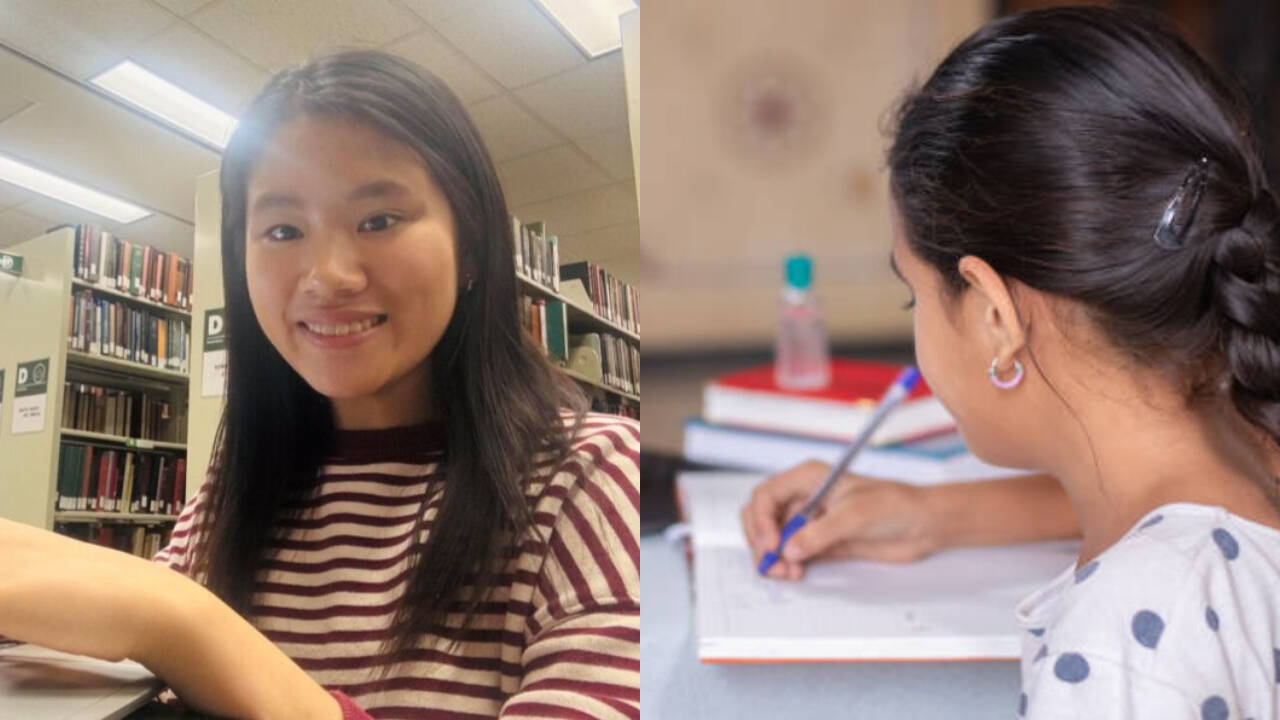
When Claire Wang and her co-founder Vivian Lu launched Future Female Scholars in the ninth grade, they were operating out of a quiet frustration that most adults simply ignored. They noticed the stark demographic tilt in advanced science and math classrooms, where girls, particularly from low-income or underrepresented backgrounds, were routinely outnumbered. Rather than writing an editorial or starting a petition, they built an operational pipeline. Today, that student-led initiative has scaled into a massive digital grid connecting over 10,000 girls with a network of 2,000 verified volunteer tutors spanning more than 70 countries.
The headlines love stories like this. They frame teenage founders as miraculous anomalies who single-handedly fix systemic failures that governments and multi-billion-dollar institutions spend decades ignoring. But the superficial profile pieces miss the grueling administrative engine required to keep a global enterprise afloat while the founders are still worrying about high school chemistry exams. Beneath the inspiring narrative of free tutoring lies a much harder examination of why children are forced to build shadow educational infrastructures in the first place, and what happens when youthful idealism collides with the harsh constraints of institutional reality.
The Architecture of a Grassroots Machine
Scale does not happen by accident. In its infancy, Future Female Scholars was entirely invisible. Back in 2024, the operation possessed roughly 300 Instagram followers and a modest roster of just 10 volunteer tutors. Most student-run projects fold at this exact junction, suffocated by inertia and the sheer monotony of cold outreach.
Wang and Lu survived the valley of death through relentless operational consistency. Instead of waiting for students to magically appear, Wang divided her time between vetting international applicants, manual matchmaking between tutors and pupils, and architecting an aggressive social media expansion strategy. By treating digital community growth as a serious logistical challenge rather than a hobby, the organization ballooned past 145,000 followers on Instagram.
This visibility changed everything. Major entities took notice, leading to high-profile collaborations with institutions like Lady Gaga's Born This Way Foundation. Yet, the day-to-day reality remained unglamorous. Wang spends 35 to 40 hours every month managing logistics, verifying credentials, and maintaining quality control across international time zones. That is equivalent to a part-time corporate job executed concurrently with a rigorous secondary school curriculum.
The Structural Illusion of Volunteerism
Relying on teenagers to patch systemic holes in global education creates a dangerous philosophical paradox. When free tutoring networks successfully educate tens of thousands of girls, they provide an invaluable public good. However, they also inadvertently mask the profound policy failures of institutional education systems.
Governments worldwide lean heavily on the emotional appeal of youth voluntarism. When non-profits led by high school students step in to provide foundational academic support, state actors are subtly relieved of their fiscal and structural responsibilities. It is cheap, highly marketable, and completely sustainable on paper. But treating education access as a charity case solved by adolescent goodwill ignores the root causes of educational inequity.
Consider the mathematics of scaling. A network of 2,000 volunteer tutors reaching 10,000 students is an extraordinary achievement for a high school senior. Against the backdrop of the 119 million girls globally who lack basic educational access, it is a drop in an ocean. Grassroots movements can spark cultural awareness and provide immediate relief, but they cannot replace public infrastructure, teacher salaries, or systemic legislative reform.
The Burnout Penalty on Young Founders
The media seldom discusses the personal toll exacted on youth who shoulder international responsibilities before they are legally old enough to vote. The expectation that teenagers should save the world while maintaining top-tier grades creates an unsustainable pressure cooker.
When a young founder's personal schedule includes dozens of hours of monthly administrative oversight, schoolwork, and emotional labor, the margin for error shrinks to zero. Burnout is not a theoretical risk in this ecosystem; it is an incoming certainty. While Wang plans to transition her focus toward a college degree in chemistry while maintaining her oversight role, thousands of other youth-led initiatives collapse annually precisely because the original founders graduate, burn out, or find themselves unable to institutionalize their operations beyond their own personal stamina.
Building an organization that relies on the heroic, round-the-clock availability of its teenage creators is structurally flawed. True institutional longevity requires moving past the personality cult of the founder. It demands formal governance, paid administrative strata, and a transition from emotional hustle to hardened institutional processes.
Beyond the Feel-Good Narrative
The true takeaway from the rise of modern youth networks is not that children make better policy experts than adults. The real lesson is that traditional educational institutions are moving far too slowly to meet the demands of a hyper-connected generation.
When young people realize that geography no longer dictates intellectual curiosity—that a student in rural Texas can directly mentor a peer in Morocco or France—they build their own bridges. They utilize modern communication channels, algorithmic reach, and sheer stubbornness to bypass red tape that would stall a corporate committee for years.
Future Female Scholars succeeded because its founders refused to wait for permission to care. But as these movements mature, the conversation must shift from celebrating individual exceptionalism to interrogating why basic human resources like tutoring and mentorship remain luxury items distributed by children in their spare time. Until systemic policy catches up to grassroots urgency, the burden of equity will continue to rest on the shoulders of teenagers working through their lunch breaks.

/voters-voting-in-polling-place-138711480-87a09f220a71438dbdff698a643c8cf1.jpg)