Attacks on Palestinian olive harvesters in the occupied West Bank are not sporadic outbreaks of seasonal rage. They are a calculated instrument of land seizure that converts temporary intimidation into permanent territorial control.
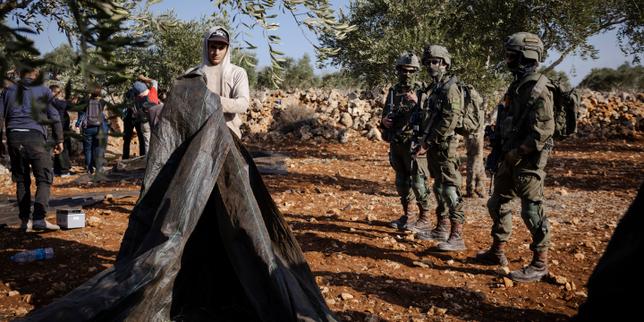
Anyone who has covered rural conflict long enough knows the rhythm of autumn in the West Bank. For tens of thousands of Palestinian families, the olive harvest is more than a rite of passage or a cultural anchor. It is the single biggest cash injection of the year, a buffer against chronic economic strain, and a tangible claim to ancestral soil. When masked assailants torch groves, snap branches, or turn farmers away at gunpoint during October and November, the immediate headline focuses on a seasonal flare-up. That framing misses the mechanics underneath.
A harvest attack rarely ends when the smoke clears. Once a grove becomes too dangerous to reach, it stops producing income. Once income vanishes, maintaining remote plots or herding flocks in exposed valleys grows harder. Over time, sporadic harassment hardens into a de facto exclusion zone, clearing space for grazing, roads, and outposts.
How Seasonal Raids Reshape the Map
Look closely at the geography of these assaults and a pattern emerges that pure emotion obscures. Violence clusters around farming outposts and newly established hilltops where a handful of settlers can project authority over vast stretches of surrounding land. According to data compiled by the Armed Conflict Location and Event Data project, settlers now control more than 1.1 million dunams—roughly 1,100 square kilometers—in Area C, amounting to about one-third of that zone.
One shepherd with a flock or a few young men with shovels can accomplish what a formal bulldozer cannot do overnight. They block dirt tracks. They let livestock wander into cultivated terraces. They show up just as families unpack ladders and tarps, turning routine farm work into a standoff.
When a farmer loses access to trees for two or three consecutive autumns, the economic clock runs backward. Pruning stops, soil erodes, and the physical boundary of daily life shrinks by a few hundred meters each year.
UN human rights monitors reported that 286,000 olive trees were damaged across the West Bank between 2023 and the end of September 2026, including 100,000 in 2026 before the harvest even hit full stride. Meanwhile, UN humanitarian tracking recorded 272 harvest-related settler attacks between September 1 and October 19, 2026 alone. Numbers like those do not happen by accident. They reflect pressure applied at the exact moment when Palestinian communities are most exposed in the open fields.
Not every incident follows the same script. In some villages near main highways, clashes erupt quickly and draw camera crews or international observers. In isolated herding hamlets tucked into rocky valleys, the pressure is quieter and more relentless—a water tank tipped over in the dark, a threat shouted at dusk, a grazing route cut off until leaving feels like the only way to keep children safe.
State Policy Behind Informal Pressure
Calling every assault "vigilante" or "extremist" violence is convenient. It is also incomplete.
Over the past few years, the boundary between informal outpost expansion and formal state administration has blurred dramatically. A July 2026 European External Action Service report on Israeli settlements noted that the Israeli government approved the future establishment of 54 new settlements and erected 86 new outposts in 2025—both record highs—while advancing tens of thousands of housing units and allocating hundreds of millions of shekels toward road infrastructure and land registration proceedings.
Those administrative levers matter just as much as street-level intimidation. When authorities declare large tracts of land as state land or advance title registration rules that favor documented or state-aligned claims, informal pressure on the ground and legal maneuvers on paper reinforce one another. A community pushed off its grazing land or kept away from its fields is far more vulnerable when bureaucratic classifications shift.
Accountability gaps remain the most glaring gear in the machine. Monitoring groups and legal analysts have long pointed out that investigations into settler offenses rarely end in conviction. When perpetrators face virtually no consequence for burning trees, destroying property, or firing weapons, deterrence collapses. Soldiers sometimes arrive after the worst is over, sometimes order Palestinian farmers to pack up and leave to "restore calm," and occasionally stand by while assailants act.
Why International Labels Spark Fierce Pushback
Human rights organizations have increasingly used stark legal terms to describe what is happening. In June 2026, Amnesty International published a major report arguing that Israeli authorities have pursued a policy of ethnic cleansing in Area C and that the forcible displacement of Bedouin and herding communities amounts to war crimes and crimes against humanity under international law. Human Rights Watch has similarly warned that Israel-backed settler violence is driving displacement and threatening mass atrocities.
Those conclusions are fiercely contested. Israeli officials and supporters of the settlement enterprise reject the ethnic cleansing label outright, arguing that actions in the West Bank are driven by security imperatives, historical ties to the land, and counterterrorism operations against militant groups. They contend that Palestinian narratives exaggerate settler aggression while downplaying attacks against Israelis, including shootings, stoning, and roadside ambushes.
Both realities coexist on the ground, even if they are weighed differently. Israeli civilians and security personnel have also been killed and injured in West Bank attacks over this period, and military commanders frequently argue that troops must stretch across volatile flashpoints while managing complex rules of engagement. Yet pointing to security threats does not explain why olive groves far from any active gun battle are set ablaze, or why unapproved farming outposts multiply in areas where no immediate military threat exists.
The Blind Spots in Coverage
Even seasoned correspondents sometimes fall into two traps when covering this beat. The first is treating the West Bank as a single uniform front. Conditions in northern villages near Jenin or Nablus differ sharply from herding clusters in the Jordan Valley or the South Hebron Hills, both in terrain and in how Palestinian Authority forces, Israeli troops, and local committees operate.
The second trap is focusing exclusively on dramatic clashes while ignoring slow attrition. A viral video of masked men throwing stones gets attention for twenty-four hours. A family quietly packing up its belongings after three years of ruined harvests, shuttered schools, and severed water lines rarely makes the evening broadcast.
Consider a hypothetical example of how slow attrition works in practice. Imagine a small herding and farming hamlet of twenty households sitting below a newly minted hillside outpost. No one is killed in a single headline-grabbing raid, yet twice a week armed youths drive pickups past the edge of the village, block the access road for an hour, and graze sheep across newly planted barley and olive saplings. Within eighteen months, two families move to town to find wage work, another loses half its herd to stress and poor forage, and the remaining residents spend half their energy just watching the ridge. No formal eviction order was ever needed.
What Actually Shifts Behavior on the Ground
Condemnations from foreign capitals have become background noise. Statements of concern, travel advisories, and diplomatic rebukes rarely stop a tractor from grading a new dirt road at dawn.
Where tangible friction has appeared, it has usually come from targeted pressure with real financial or legal bite, paired with physical presence at flashpoints. Sanctions on specific violent individuals and entities, scrutiny of funding channels supporting unauthorized outposts, and persistent protective accompaniment by local activists and international monitors can complicate calculations on the ground—though none of those measures is a silver bullet. Sanctions can be uneven or legally contested, and protective volunteers cannot be everywhere at once, especially when tensions spike across dozens of villages simultaneously.
Real change also depends on enforcement inside the legal system governing the territory. Until policing, prosecution, and military oversight treat crimes against Palestinian farmers and property with the same urgency applied to attacks against Israeli citizens, impunity will keep doing the heavy lifting.
Every autumn brings another round of promises to protect the harvest. Until those promises carry enforceable consequences on the dirt roads between the groves and the hills, the olive season will remain a test of endurance rather than a season of yield.