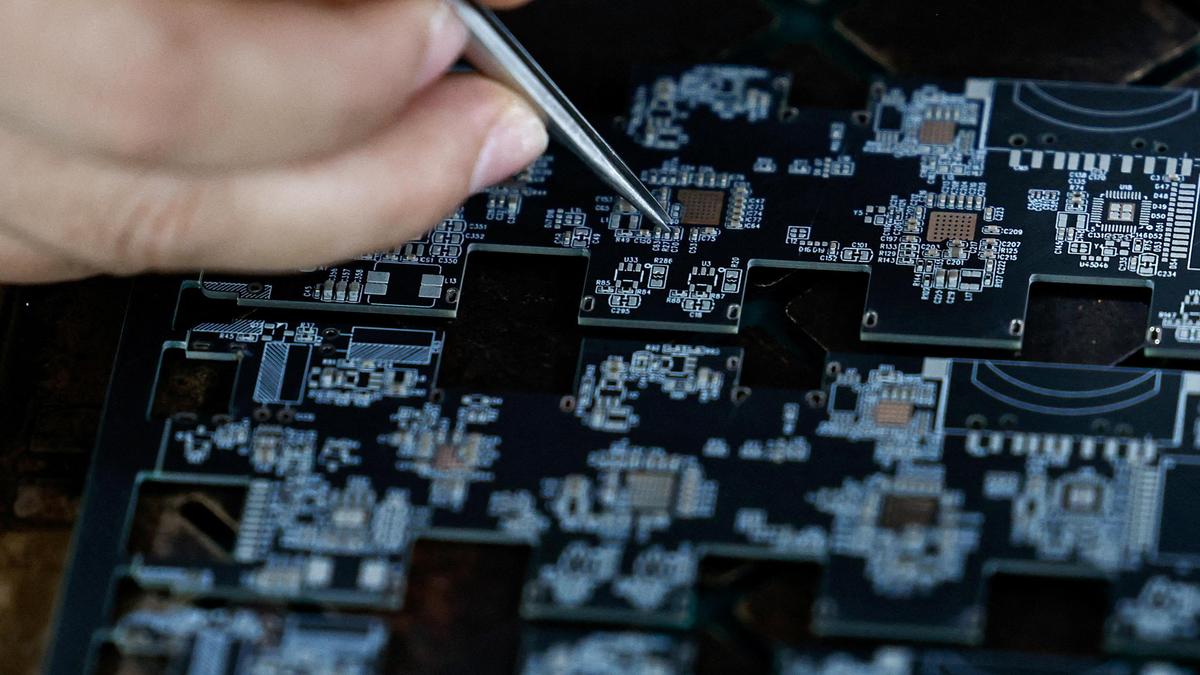
The global electronics industry is built on a house of cards that most consumers never see. When conflict flares in the Middle East, specifically involving Iran, the conversation usually centers on oil prices and gas pumps. This is a distraction from a much deeper, more permanent threat to the modern world. The real danger lies in the sudden, violent disruption of the Printed Circuit Board (PCB) supply chain and the critical minerals that make modern computing possible. If a full-scale conflict chokes the primary trade arteries of the region, the cost of a smartphone or a server won't just rise. The ability to manufacture them at scale could evaporate overnight.
The Geopolitical Chokepoint for Silicon and Copper
While Iran is not a primary manufacturer of high-end semiconductors, it sits directly adjacent to the Strait of Hormuz. This is not just an oil route. It is a vital artery for the transport of raw materials and chemical precursors required for PCB fabrication. Every circuit board requires a substrate, typically made of fiberglass and epoxy resin, bonded with copper foil. The chemicals needed to treat these boards and the copper used to etch the circuits often originate from or pass through regions sensitive to Iranian military activity.
A disruption here triggers a domino effect. When logistics in the Persian Gulf stall, shipping insurance premiums skyrocket. Freight forwarders reroute vessels around the Cape of Good Hope, adding weeks to delivery times. For an industry that operates on Just-In-Time (JIT) manufacturing, a delay of fourteen days is equivalent to a total shutdown. Factories in Shenzhen and Vietnam cannot finish products without the specific resins or the specialized copper foils that are currently stuck in a maritime traffic jam.
Beyond the Board the Rare Earth Reality
The hardware world is obsessed with chips, but those chips are useless without the boards that host them. Iran has been quietly developing its mining sector, boasting significant deposits of copper, zinc, and lead. More importantly, the country holds untapped potential in rare earth elements and lithium, materials that are the lifeblood of the transition to electric vehicles and advanced defense systems.
Conflict doesn't just stop the flow of these materials; it weaponizes the scarcity. If the Iranian government or its regional proxies choose to target shipping or mining infrastructure, the global market responds with panic. We saw a version of this during the 2021 shipping crisis, but a kinetic war is different. It is intentional. It creates a vacuum where supply is not just delayed, but destroyed. Tech firms that rely on a steady stream of affordable components find themselves outbid by defense contractors who have deeper pockets and a more urgent need for the same raw inputs.
The Hidden Cost of Rerouting the World
Logistics is the most boring part of technology until it fails. Most analysts point to the increased cost of finished goods, but the real damage happens in the middle of the supply chain. Consider the Tier 2 and Tier 3 suppliers. These are the companies that make the glass yarn for the circuit boards or the specific chemical resists used in lithography. These smaller players do not have the cash reserves to survive a six-month spike in shipping costs.
When a war in the Middle East forces a shift in global shipping, these mid-level manufacturers are forced to raise prices or go bankrupt. If a major supplier of PCB resin in the region goes dark, there is no "backup" factory that can simply flip a switch. It takes years to certify a new chemical supplier for aerospace or medical-grade electronics. The result is a thinning of the herd. Only the largest tech giants can afford to secure their supply chains, while smaller innovators are priced out of the market entirely.
The Copper Squeeze
Copper is the nervous system of the modern world. Every PCB uses it. Iran is home to some of the largest unexploited copper reserves on the planet. In a stable world, this would be a boon for the electronics industry. In a state of war, these reserves become a strategic liability. Sanctions already limit the flow of Iranian copper, but a hot war ensures that even the "shadow" markets used by some manufacturers disappear. This forces global buyers back toward more expensive, over-taxed mines in Chile and Peru, driving the spot price of copper to levels that make cheap electronics an impossibility.
The Fragility of the Substrate
We often talk about "the cloud" as if it were an ethereal concept. It isn't. The cloud is a series of massive data centers filled with thousands of servers, each containing dozens of complex PCBs. These boards are the most vulnerable component in the entire stack. Unlike a CPU, which is small and relatively easy to stockpile, a completed PCB is bulky and fragile.
If war disrupts the supply of the flame-retardant chemicals (FR-4) used in these boards, the production of server racks stops. This isn't a hypothetical fear. During previous periods of Middle Eastern instability, we have seen the prices of these chemical precursors swing by 300% in a single quarter. For a company building a new data center, that translates to tens of millions of dollars in unexpected costs. These costs are never absorbed by the manufacturer; they are passed directly to the consumer in the form of higher subscription fees for every digital service we use.
The Myth of Regional Insulation
There is a dangerous belief in some Western boardrooms that we can "near-shore" our way out of this problem. The idea is that if we build factories in Mexico or Eastern Europe, we are safe from Middle Eastern conflict. This is a fundamental misunderstanding of how materials move. You can move the assembly line, but you cannot move the crust of the earth.
The raw materials and the primary processing stages for the electronics industry are still heavily concentrated in areas vulnerable to the geopolitical ripples of an Iran-centered conflict. A factory in Arizona still needs the same specialized chemicals and metals that must pass through the same global chokepoints. Total independence from these disruptions is a decades-long project, not a quick fix.
The Escalation of Cyber Warfare on Production
A physical war involving Iran is almost certain to be accompanied by a massive surge in asymmetric cyber attacks. For the electronics industry, the target isn't just the company's email server; it is the Industrial Control Systems (ICS) of the factories themselves.
Modern PCB fabrication is an incredibly precise process involving high-end robotics and volatile chemicals. A sophisticated piece of malware can subtly alter the temperature of a chemical bath or the timing of a drill, leading to "silent failures." Thousands of boards could ship with defects that only appear after six months of use. This creates a crisis of trust. If a manufacturer cannot guarantee the integrity of their supply chain during a conflict, the entire industry enters a period of stagnation. Companies stop innovating and start hoarding, which is the death knell for technological progress.
The Displacement of Talent and R&D
Lost in the discussion of shipping lanes and copper prices is the human element. The Middle East has been working to position itself as a new hub for tech investment and R&D. A war involving Iran effectively nukes that potential for a generation. It causes a "brain drain" that sucks talent out of the region and into already overcrowded Western markets. This loss of regional expertise further destabilizes the local economy, creating a feedback loop that ensures the supply chain remains fractured and unpredictable for years after the actual fighting stops.
The Survival of the Biggest
In this environment, the "winner" is simply the company that can afford to lose the most money. We are looking at a future where the gap between a trillion-dollar tech titan and a mid-sized hardware startup becomes an unbridgeable chasm. The titan can buy its own cargo ships and secure private contracts for raw materials. The startup is left at the mercy of a broken market. This isn't just an economic shift; it is a fundamental change in the nature of innovation. When the cost of entry is "surviving a regional war," fewer people enter the game.
The volatility of the region is not a temporary hurdle. It is a permanent feature of the modern risk profile. Tech firms that treat these disruptions as "black swan" events are delusional. They are predictable, recurring systemic shocks.
Rethinking the Global Assembly Line
The industry needs to stop looking for the cheapest possible component and start looking for the most resilient one. This means moving away from the extreme centralization of PCB material processing. It means investing in synthetic alternatives to rare earth materials, even if they are currently more expensive. The "war tax" on electronics is already being paid in the form of instability and price hikes.
If the tech industry does not proactively diversify its material sources and logistics routes away from the primary zones of conflict, it remains a hostage to the next headline. The next time a missile is fired in the Gulf, don't look at the price of oil. Look at the lead times for the circuit boards that power your world.
Hardening the supply chain requires an admission that the era of "peace dividends" and cheap, globalized logistics is over. Every piece of hardware is now a geopolitical statement. Companies that fail to realize this will find themselves with plenty of orders and no way to build them. The cost of inaction is the slow, grinding halt of the digital age.
The move toward circular economies and e-waste recycling is no longer a "green" initiative; it is a national security requirement. Recovering copper and gold from old boards is the only way to bypass the chokepoints of the Middle East. This is the new reality for hardware. Secure the material or lose the market.