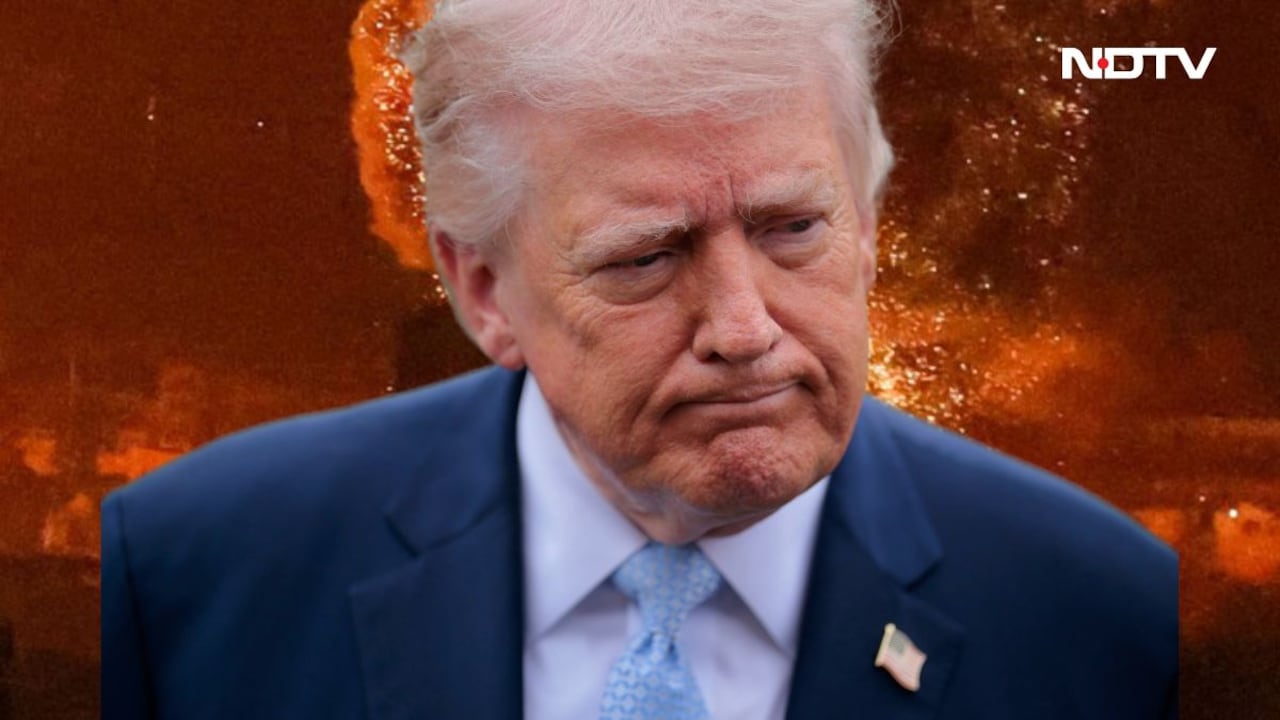
The threat arrived with typical late-night fury on Truth Social. President Donald Trump warned Iran that if it did not quickly capitulate to American terms for a nuclear peace deal, "there won't be anything left of them." He slammed Iranian leaders as "crazy bastards" and promised that a refusal to reopen the blockaded Strait of Hormuz would turn the country into a landscape of "Power Plant Day" and "Bridge Day"—a explicit warning of imminent infrastructure annihilation.
The primary driver behind this escalating rhetoric is not unhinged anger, but a calculated, desperate attempt to salvage a faltering diplomatic gamble. Trump’s administration is running out of time and leverage as its self-imposed deadlines expire, the global economy reels from record-high oil prices, and traditional European allies refuse to back a war they view as illegal. By threatening total destruction, Washington hopes to force Tehran to accept humiliating concessions before the domestic and international costs of the current conflict become untenable for the United States.
The Anatomy of a High-Stakes Blockade
The current conflict trace back to early 2025, when the newly inaugurated Trump administration attempted a rapid-fire rewrite of Middle Eastern geopolitics. Following a letter to Iranian Supreme Leader Ali Khamenei demanding a new nuclear pact within 60 days, negotiations fractured. The subsequent military escalation in early 2026 transformed the Persian Gulf into an active combat zone. Iran’s counter-move was swift and devastating: an effective closure of the Strait of Hormuz, the world's most critical transit corridor for petroleum.
The closure of the strait has sent shockwaves through global energy markets, but the strategic calculus in Washington remains fixed on five rigid, non-negotiable preconditions issued by the White House:
- Nuclear Surrender: Iran must immediately transfer 400 kilograms of enriched uranium directly to the United States.
- Infrastructure Dismantlement: Tehran is permitted to maintain only a single operational nuclear facility, ending its broader civilian energy ambitions.
- Asset Freeze: The United States refuses to release at least 25% of Iran’s foreign assets currently frozen in Western banks.
- Zero Reparations: Washington categorically rejects Iranian demands for economic compensation regarding war damages or prior sanctions.
- Regional Linkage: Any ceasefire or sanctions relief is conditional on Iran abandoning its regional security partnerships.
This framework leaves virtually no room for diplomatic maneuvering. By demanding total capitulation without offering meaningful economic relief up front, the administration has backed the Iranian regime into a corner where surrender looks identical to regime collapse.
The Breakdown of Parallel Fronts
The friction is not confined to Washington and Tehran. The failure of the recent high-level peace talks in Islamabad, Pakistan, highlighted a deep systemic disconnect. Vice President JD Vance, along with special envoys Jared Kushner and Steve Witkoff, encountered an unyielding Iranian delegation led by Foreign Minister Abbas Araghchi. The talks collapsed within 24 hours.
A major structural flaw in these negotiations is the parallel conflict involving Israel and Lebanon. While American negotiators attempted to isolate the nuclear issue, Iranian national security officials made it clear that no maritime or nuclear agreements would occur while Israeli airstrikes continued across its borders. The regional reality is interconnected; Washington treats these conflicts as separate theater operations, while Tehran views them as a single, existential battle.
+-----------------------------------------------------------+
|               THE ISLAMABAD DEADLOCK (2026)               |
+-----------------------------------------------------------+
|  U.S. DEMANDS:                     IRANIAN COUNTER-OFFER: |
|  - Export 400kg Enriched Uranium  - Immediate Sanctions   |
|  - Only 1 Nuclear Facility          Relief                |
|  - No Release of Frozen Assets    - End Hormuz Blockade   |
|  - No War Reparations             - Guarantees Against    |
|                                     Future Attacks        |
+-----------------------------------------------------------+
|          RESULT: TOTAL COLLAPSE OF DIPLOMACY             |
+-----------------------------------------------------------+
The Cost of Diplomatic Isolation
The administration's maximum pressure strategy faces a significant hurdle that did not exist during Trump's first term: the total fragmentation of the Western alliance on this issue. European and NATO allies have openly broken with Washington, refusing to participate in a naval blockade of Iranian ports or validate the legality of the hostilities. This isolation has sparked fierce blowback from the White House, including explicit threats to withdraw the United States from NATO entirely if European capitals do not align with the American military posture.
Domestically, the political consensus is fracturing along unusual lines. While Democratic lawmakers have predictably labeled the President's expletive-laden social media posts as the remarks of an unstable leader, prominent voices within the anti-interventionist wing of the Republican Party have also expressed deep alarm. Criticisms from within the populist movement highlight a growing resentment over the administration's departure from its non-interventionist campaign promises, openly questioning why American troops and resources are being risked to fight a war over decades-old intelligence templates.
The tactical reality on the ground further complicates the aggressive rhetoric. A grueling, 48-hour rescue operation inside hostile Iranian territory to retrieve two downed American pilots—leaving a highly respected colonel seriously wounded—offered a stark reminder that the Iranian military retains potent defensive and retaliatory capabilities. Air strikes on civilian infrastructure, such as the destruction of the B1 bridge between Tehran and Karaj, have unified the Iranian public against foreign pressure rather than forcing a political fracture in Tehran.
The administration’s strategy relies entirely on the assumption that extreme economic pain and the threat of catastrophic violence will force the Iranian leadership to break. However, history demonstrates that asymmetric pressure often yields asymmetric resistance. With the Strait of Hormuz closed and energy prices squeezing the global economy, the window for a negotiated settlement is closing fast, leaving behind only the volatile option of total military escalation.