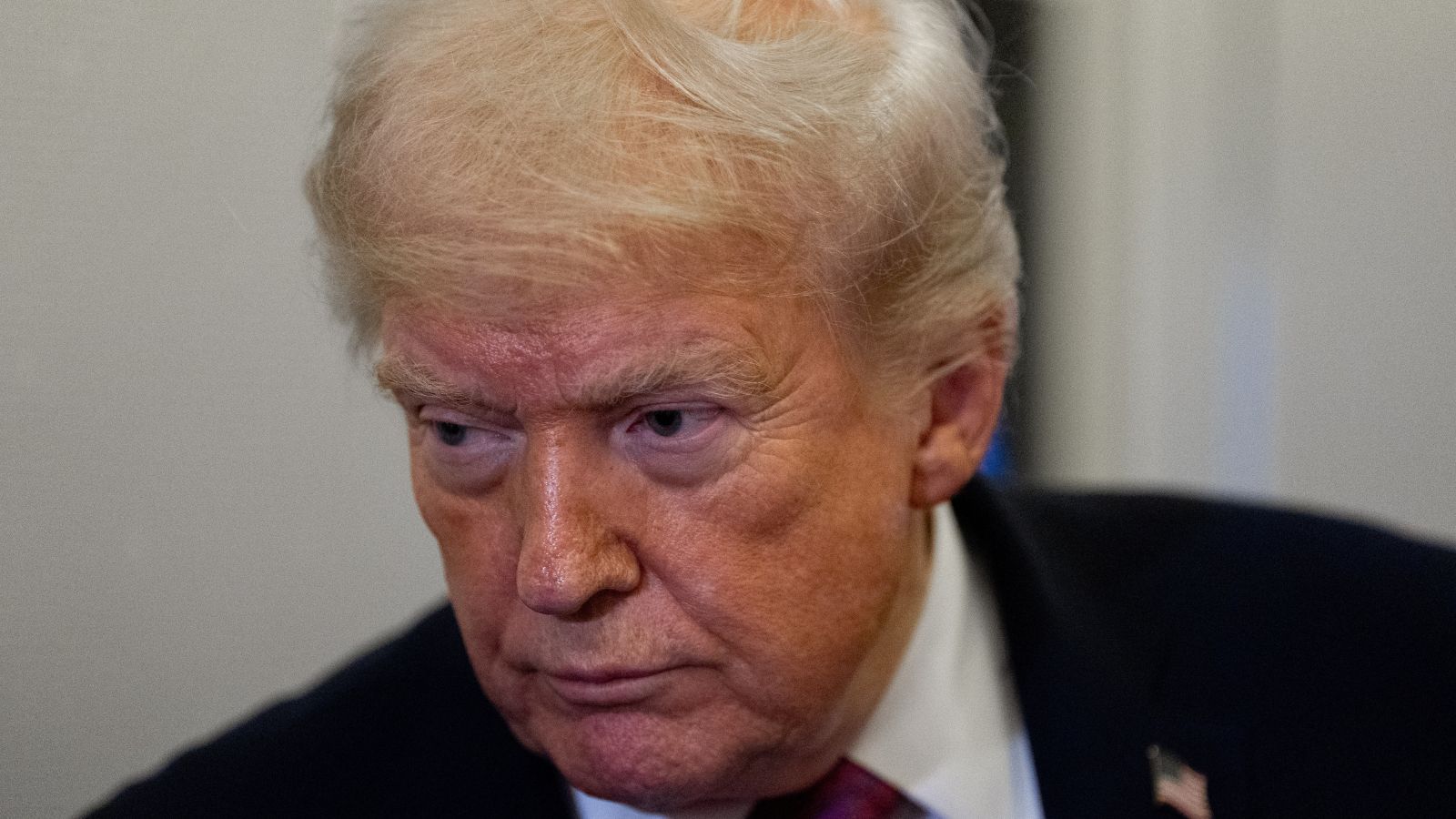
The United States is currently standing on the razor-thin edge of a permanent regional war or a diplomatic coup that would rewrite the history of the Middle East. President Donald Trump, speaking late Friday aboard Air Force One, teased "some pretty good news" regarding ongoing negotiations with Tehran, even as he issued a chilling ultimatum: if a definitive deal is not reached by Wednesday, the bombs will start falling again.
This isn't just another round of "maximum pressure." Since February 28, the United States and Israel have been engaged in active kinetic warfare against the Islamic Republic under Operation Epic Fury. Thousands are dead, the global oil market has been upended, and for the first time in decades, the U.S. Navy is enforcing a total maritime blockade of Iranian ports. While Trump signals optimism, the reality on the ground—and the terms being demanded behind closed doors—suggest a surrender that the Iranian clerical establishment may not be able to survive.
The Wednesday Deadline
The current two-week ceasefire, brokered through Pakistani mediation, is scheduled to expire on April 22. Trump’s "pretty good news" likely refers to an Iranian offer to transfer its entire stockpile of highly enriched uranium to the United States. During a telephone interview with Bloomberg and subsequent remarks to reporters, Trump claimed that Iran has "agreed to everything," including an indefinite suspension of its nuclear ambitions without the "sunset clauses" that doomed previous agreements.
However, the "how" of this retrieval remains a volatile sticking point. Trump insists that "our people" will go in and take the material "100% of it" back to the United States. Tehran, through Parliament Speaker Mohammad Bagher Ghalibaf, has publicly called these claims "lies," setting up a dangerous disconnect between Trump’s public confidence and the official Iranian narrative.
The Siege of the Strait
While the diplomacy plays out in Islamabad and Rome, the economic reality is being dictated at the Strait of Hormuz. On Friday, Iranian Foreign Minister Abbas Araghchi announced the waterway is "completely open" for commercial traffic. This sounds like a concession, but it comes with a catch: ships must follow a "coordinated route" dictated by Tehran.
The U.S. response has been a cold refusal to acknowledge Iranian authority over the passage. U.S. Central Command (CENTCOM) is currently maintaining a blockade that has already forced at least 21 Iranian-affiliated vessels to turn back.
"Maybe I won’t extend it [the ceasefire], but the blockade is going to remain," Trump warned. "So you have a blockade, and unfortunately, we have to start dropping bombs again."
This is the central mechanism of the Trump strategy: decouple the blockade from the ceasefire. By keeping the blockade in place even during "peaceful" windows, the U.S. is effectively strangling the Iranian economy in real-time while using the threat of renewed airstrikes to force a signature on a permanent treaty.
The Infrastructure Threat
If the Wednesday deadline passes without a deal, the nature of the conflict will shift from tactical strikes to total infrastructure destruction. Investigative reports and internal briefings suggest that the Pentagon has already mapped out targets for a "blackout campaign."
This involves:
- Electric Generating Plants: Simultaneous strikes on the national grid to paralyze urban centers.
- Desalinization Facilities: Cutting off the fresh water supply to key regions.
- Kharg Island: Permanently disabling Iran’s primary oil export terminal.
The risk in this approach is the "symmetry of retaliation." Analysts at the Atlantic Council and CSIS warn that if Iran’s water and power are cut, they will almost certainly use their remaining drone and midget-submarine assets to strike the desalinization plants of U.S. allies in the Gulf. It is a scorched-earth gamble.
Uranium for Cash
There is a persistent rumor, first reported by Axios and later denied by the White House, that the U.S. is mulling the release of $20 billion in frozen assets in exchange for the physical handover of the uranium stockpile. Trump’s public denial—a flat "no" when asked about unfreezing funds—follows his established pattern of denying concessions until the moment they are signed.
For Trump, the win isn't just a nuclear-free Iran; it's the visual of American planes flying out of Tehran with canisters of enriched fuel. It would be the ultimate vindication of his "America First" doctrine, proving that kinetic force and economic siege can achieve what years of multi-lateral diplomacy could not.
The Resistance Within
The "pretty good news" may be premature. Despite the decimation of the IRGC leadership—with reports suggesting over 250 senior officials have been killed since February—the clerical core in Qom remains defiant. The Iranian strategy has always been to survive the bombing until the domestic political cost in the U.S. becomes too high. With petrol prices up 31% globally and fuel outages reported in allied nations like Australia, Tehran is betting that the world’s thirst for oil will break the U.S. blockade before the U.S. bombs break the regime.
The next 96 hours will determine if this conflict ends with a historic signing ceremony in Islamabad or a massive escalation that targets the very lifeblood of the Iranian state. Trump has made it clear that he is tired of waiting. The "lovely stay" in Iran, as he mockingly called it, is over. One way or another, the U.S. is going to get that uranium.