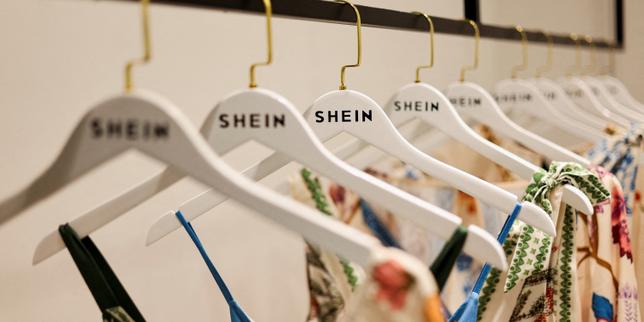
Shein is abandoning its dream of a blockbuster New York initial public offering to pursue a fallback listing in Hong Kong. The fast-fashion giant spent years courted by Western bankers, but relentless geopolitical friction and intense regulatory scrutiny over its supply chain forced a retreat. This shift is not a strategic choice. It is a tactical survival mechanism. By moving its public debut to Hong Kong, Shein is trading the deep liquidity of Wall Street for a regulatory environment that might actually let the transaction happen, even as it signals to global investors that the company cannot escape its geopolitical baggage.
The Washington Roadblock
The decision to pivot away from New York exposes the limits of corporate rebranding. Shein moved its headquarters to Singapore, restructured its corporate hierarchy, and hired army of Washington lobbyists to present itself as a global enterprise. Capitol Hill did not buy it. For an alternative perspective, consider: this related article.
US lawmakers across the political spectrum maintained a steady barrage of criticism. They focused on allegations of forced labor in Xinjiang, the exploitation of tariff loopholes, and intellectual property theft. The Securities and Exchange Commission faced immense pressure to block the listing unless Shein provided absolute transparency regarding its supply chain. For a company built on a highly fragmented, opaque network of thousands of small Chinese factories, that level of transparency proved impossible to deliver.
Wall Street listings carry a reputational premium. They require a level of disclosure that risks exposing how the machinery actually works. When the burden of proof became too heavy, the Singaporean facade crumbled, revealing that the company's operational roots remain deeply entangled in mainland China. Related analysis regarding this has been shared by Business Insider.
The Regulatory Squeeze from Beijing
While Washington slammed the front door, Beijing quietly locked the back. The Cyberspace Administration of China initiated a data security review of Shein, focusing on how the company handles the information of its overseas users, suppliers, and partners.
Under Chinese law, domestic companies seeking overseas listings must obtain explicit approval from the China Securities Regulatory Commission. Because Shein relies entirely on Chinese manufacturing and logistics, regulators viewed its push for a New York IPO as a potential vulnerability. Beijing fears that US regulators could demand access to data that compromises national security or exposes supply chain vulnerabilities.
+------------------------------------------+
|      SHEIN'S REGULATORY STALEMATE        |
+------------------------------------------+
|  WASHINGTON DEMANDS:     BEIJING DEMANDS:|
|  Full supply chain       Data localization|
|  transparency, cotton    and strict state |
|  origin verification.    oversight.       |
+------------------------------------------+
|                 RESULT:                  |
|       The New York IPO collapses.        |
+------------------------------------------+
Hong Kong acts as a pressure valve. The city exists under a "one country, two systems" framework, making it acceptable to Beijing while remaining accessible to international capital. It is a compromise born of necessity, not preference.
The Cost of the Hong Kong Compromise
Listing in Hong Kong comes with a severe financial penalty. Markets in Asia typically assign lower valuations to tech-driven retail firms than Western markets do.
Consider the liquidity gap. The daily trading volume on the New York Stock Exchange dwarfs that of the Hong Kong Stock Exchange. Institutional investors in the West face stricter ESG mandates, and many will be restricted from buying shares listed in Hong Kong, especially given the cloud hanging over Shein's labor practices.
- Valuation compression: Private funding rounds once pegged Shein at $100 billion. A Hong Kong listing could shave tens of billions off that figure.
- Investor hesitation: Global asset managers are cautious about allocating capital to entities facing continuous regulatory threats.
- Currency and capital controls: While Hong Kong retains a free-floating currency, the broader economic alignment with the mainland introduces structural risks.
The company is discovering that escaping Washington's crosshairs means accepting a smaller footprint on the global stage.
Cracks in the Ultra Fast Fashion Machine
Beyond the regulatory hurdles, Shein faces structural decay in its core business model. The company succeeded by weaponizing data, tracking micro-trends via algorithms, and ordering tiny production runs from agile factories. It minimized inventory risk.
But competitors adapted. Temu, backed by the massive balance sheet of PDD Holdings, entered the arena with an aggressive subsidized pricing strategy that undercuts Shein on basic goods. This triggered a brutal price war, squeezing margins at the exact moment Shein needed to show profitability to prospective investors.
To defend its turf, Shein tried to transition into a marketplace model, inviting third-party sellers to use its platform. This move diluted its core identity. It also multiplied its legal liabilities, as monitoring third-party inventory for counterfeit goods is an ongoing logistical nightmare. The unique operational advantage that fueled its rapid rise is losing its edge.
The De Minimis Loophole Target
The biggest existential threat to Shein's business model remains the potential elimination of the de minimis tariff exemption in the United States. This trade provision allows packages valued under $800 to enter the country duty-free and with minimal customs inspection.
Shein ships millions of individual packages directly to American consumers from warehouses in China, bypassing traditional import duties entirely. If US lawmakers close or significantly alter this loophole, the company's cost structure changes instantly.
Imagine a scenario where every package faces standard textile tariffs ranging from 10% to 32%, alongside processing fees. The ultra-low pricing model vanishes overnight. A Hong Kong IPO does nothing to shield the company from this vulnerability. It merely shifts the venue where public shareholders will witness the fallout.
The Myth of Geopolitical Neutrality
The retreat to Hong Kong shatters the illusion that a modern consumer giant can remain neutral in an era of decoupling. You cannot build a business model on Chinese supply chains and Western consumer wallets without picking a regulatory master.
Shein tried to play both sides, using Singaporean registration as a shield while leaning heavily on the industrial efficiency of Guangdong province. That strategy has hit its logical limit. By filing in Hong Kong, the company is bending to the reality of its geographic dependence.
Moving Beyond the Hype
Institutional investors look at numbers, not narratives. The numbers suggest that while Shein remains highly profitable and dominant in terms of market share, its path to sustaining that growth is narrowing.
The public debut will likely still happen because early-stage venture capital backers require an exit strategy. They need liquidity after years of waiting. But the upcoming listing will not be the triumphant coronation the company envisioned. It will be a stark reminder that in the current macroeconomic climate, operational agility cannot outrun geopolitical reality. The company must now prove to a more skeptical, localized investor base that its model can withstand rising supply costs, aggressive competition, and the permanent loss of Western political goodwill.
The era of frictionless, borderless e-commerce is over. Shein's journey to Hong Kong is the definitive proof. Shareholders are no longer buying into a frictionless global disruptor; they are purchasing a stake in a company fighting a defensive rearguard action against structural shifts in international trade. Watch the pricing of the debut closely. It will reveal exactly how much discount the market demands for a company caught between two superpowers.