The State Against the Hustings
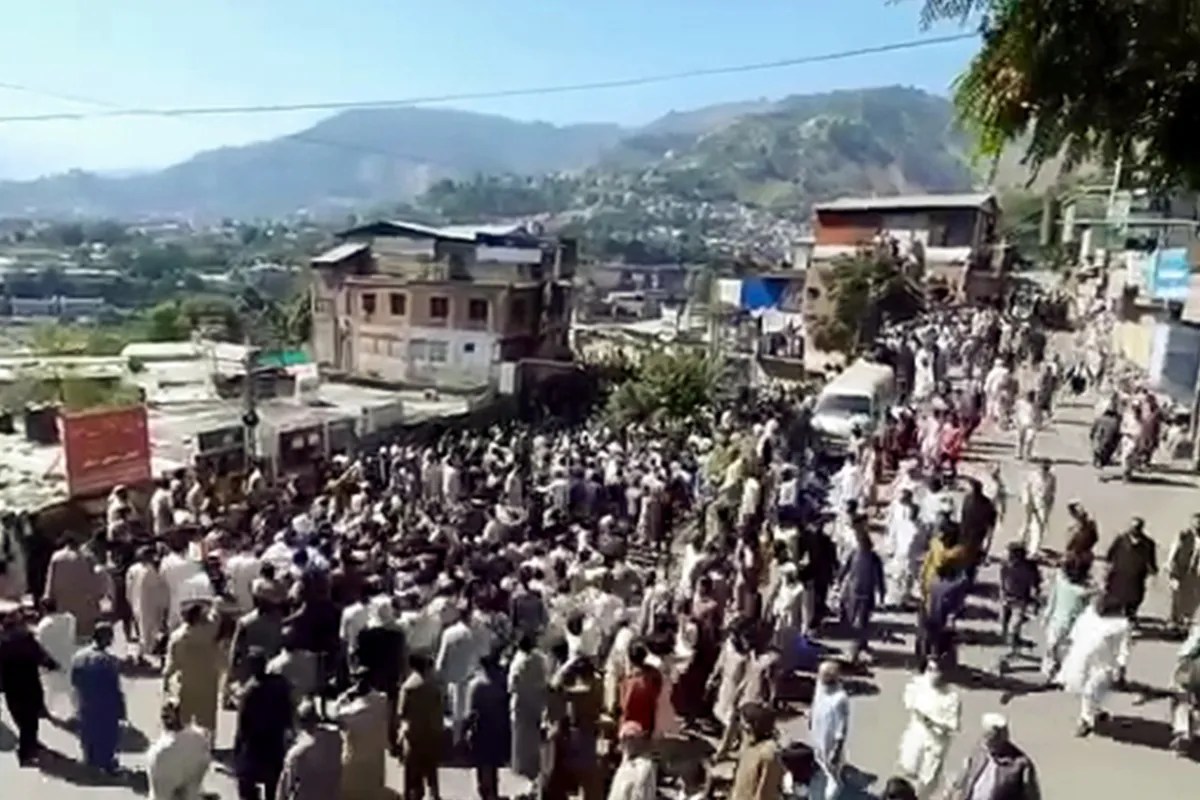
Political dissent in Islamabad has reached a breaking point. Opposition leaders face systematic exclusion, terrorism charges, and physical blockades preventing them from entering key constituencies. The state machinery increasingly treats political rivalry not as a democratic exercise, but as a national security threat. This heavy-handed approach goes far beyond standard political maneuvering. It represents a structural shift where the ruling coalition, backed by the military establishment, uses anti-terror legislation to dismantle the electoral viability of its critics. The primary goal is simple: total neutralization of dissent before it can mobilize on the streets.
The narrative of "freedom of speech" in Pakistan is frequently discussed, but the mechanics of its suppression are rarely analyzed. When opposition figures claim they are treated like terrorists in their own country, they are not merely using hyperbole for the cameras. They are describing a deliberate legal and bureaucratic architecture designed to criminalize mainstream political activity. You might also find this similar coverage useful: Why Everything You Know About Operation Entebbe is Wrong.
The Anti-Terror Apparatus as a Political Weapon
The use of the Anti-Terrorism Act (ATA) against politicians is the core mechanism of control. Originally designed to combat sectarian violence and militant networks, the ATA grants law enforcement sweeping powers of arrest and detention without bail. Today, these laws are routinely applied to routine political rallies and press conferences.
The Standard Operating Procedure for Suppression
The process follows a predictable, highly effective pattern. It begins long before an opposition leader steps up to a microphone. As highlighted in detailed reports by NPR, the results are significant.
- The Preemptive Blockade: Shipping containers are placed across major highways and entry points into cities like Lahore, Rawalpindi, and Islamabad. Ostensibly for "security," these barriers ensure that opposition leaders cannot physically reach their supporters.
- The Blanket FIR: First Information Reports (FIRs) are filed by state actors, frequently naming dozens of opposition leaders and hundreds of unnamed workers. These charges routinely include sedition, rioting, and terrorism.
- The Digital Blackout: Cellular networks and internet services are suspended in areas where opposition gatherings are scheduled. This stops live broadcasting and prevents real-time coordination among organizers.
This is not a sign of a confident government. It is the behavior of an administration acutely aware of its own lack of public legitimacy, relying on physical barriers and legal intimidation to maintain a semblance of order.
The Illusion of a Civilian Government
To understand why this happens, one must look past the civilian faces occupying ministerial offices. The current governance model relies on a hybrid structure where the military establishment dictates the parameters of acceptable political behavior. Civilian politicians are permitted to govern only if they agree to enforce these boundaries.
+-----------------------------------------------------------+
|                  The Hybrid Power Model                   |
+-----------------------------------------------------------+
|                                                           |
|  [ Military Establishment ] ---> Dictates Security &      |
|                                  Foreign Policy           |
|               |                                           |
|               v                                           |
|  [ Civilian Coalition ]     ---> Implements Crackdowns &  |
|                                  Provides Legal Cover     |
|               |                                           |
|               v                                           |
|  [ Suppression of Dissent ] ---> Targets Opposition,       |
|                                  Media, & Activists       |
+-----------------------------------------------------------+
When an opposition party grows too popular, it threatens this equilibrium. The response from the state is uniform, regardless of which specific party happens to be in power at the time. The tactics used against the current opposition are almost identical to those used against previous administrations when they fell out of favor with the high command.
This cyclical vengeance has hollowed out state institutions. The judiciary is constantly pressured to validate executive excesses, while the police force functions as a partisan enforcement wing rather than a public safety agency.
The Human Toll of Bureaucratic Terror
Behind the high-profile arrests of party leaders lies a much broader campaign targeting lower-level workers and their families. While party figureheads receive international media coverage, local union council members and student activists disappear into detention facilities without legal recourse.
Economic Strangulation as Punishment
The state does not stop at physical detention. It uses economic levers to break the will of the opposition. Businesses belonging to opposition donors face sudden, aggressive tax audits. Licenses are revoked, and properties are sealed under the guise of anti-encroachment drives.
For the average political worker, affiliation with the opposition means risking their livelihood. Government jobs are denied, and private employers are quietly advised to let certain individuals go. This systematic economic warfare ensures that supporting an alternative political vision carries an unacceptable cost for ordinary citizens.
The Failure of Regional and International Oversight
International observers often view Pakistan through a narrow lens focused on geopolitical stability and counter-terrorism. Consequently, Western capitals routinely overlook domestic human rights violations and the erosion of democratic norms in exchange for cooperation on regional security matters.
This silence provides the ruling regime with a sense of impunity. Statements from foreign ministries expressing "concern over democratic processes" are viewed in Islamabad as mere formalities. They carry no real diplomatic or economic consequences. The International Monetary Fund (IMF) continues to negotiate bailouts based purely on fiscal metrics, ignoring the fact that the political instability caused by state repression directly undermines economic predictability.
The Counter-Productive Nature of Total Suppression
The fundamental flaw in this strategy is that it ignores historical precedent. Pushing mainstream political entities to the wall does not eliminate them. Instead, it radicalizes their base.
When citizens realize that the ballot box is no longer a viable mechanism for change, and that peaceful assembly is met with terrorism charges, they lose faith in the state structure entirely. This creates a dangerous vacuum. Mainstream opposition parties have historically acted as a buffer, channeling public anger into the constitutional framework. By destroying this buffer, the state inadvertently creates space for far-more radical, anti-system elements to gain traction among a disillusioned youth population.
The current strategy assumes that public discontent can be managed indefinitely through fear and structural blockades. That assumption is historically illiterate. Containers can block roads, and fabricated lawsuits can fill prison cells, but they cannot manufacture the public consent required to actually govern a nation facing deep economic and social crises.