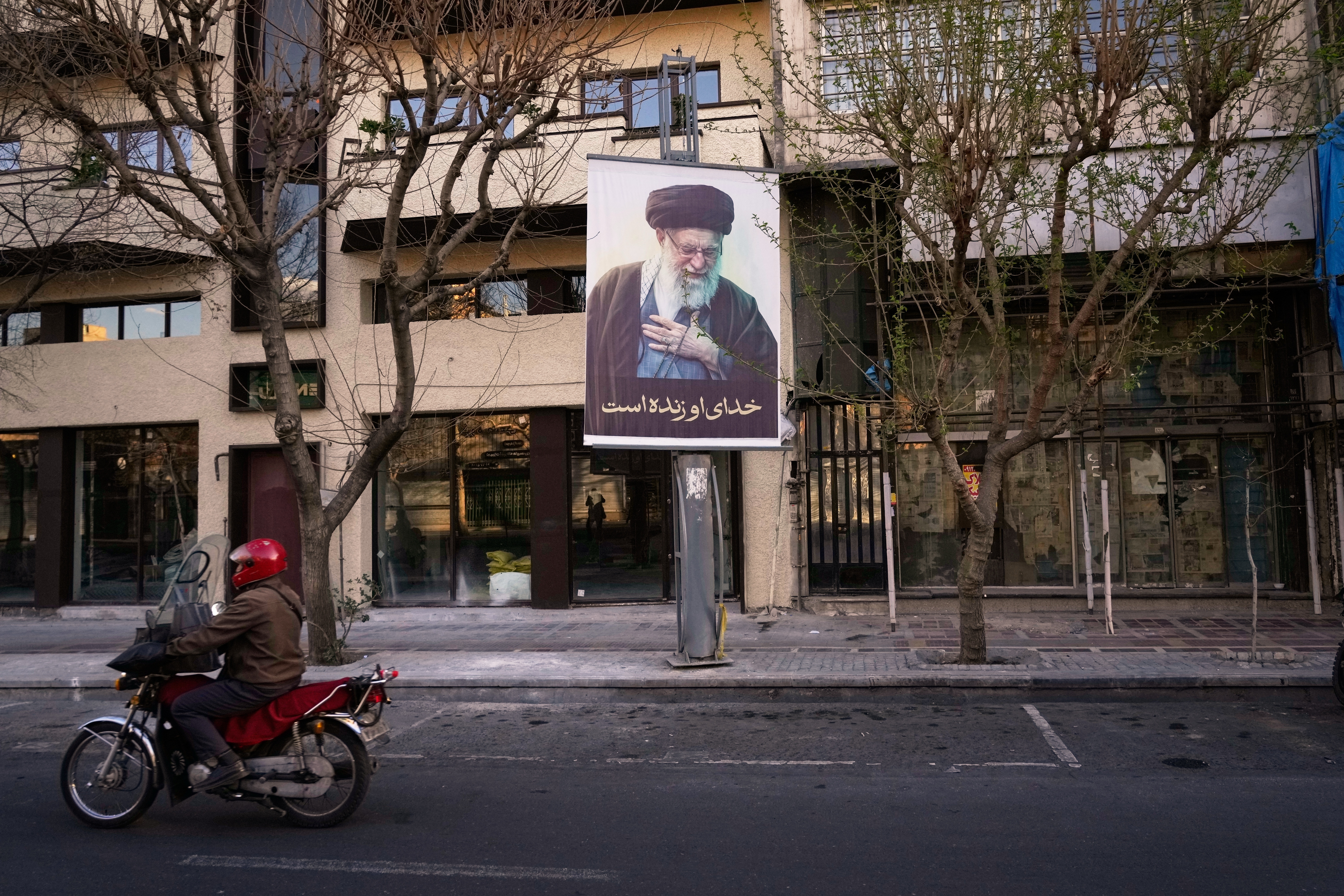
The death of Ayatollah Ali Khamenei has not triggered the immediate collapse of the Islamic Republic, but it has shattered the central pillar of its survival. On February 28, 2026, a coordinated intelligence and air strike operation by the United States and Israel eliminated the 86-year-old Supreme Leader in Tehran. Within forty-eight hours, the regional blowback claimed the lives of three American service members based in Kuwait, marking the first U.S. combat fatalities in a conflict that the Trump administration claims could be over in a month.
While the world watches the smoke rise over Iranian ballistic missile sites, the real war is being fought in the secretive halls of the Assembly of Experts and the darkened command centers of the Islamic Revolutionary Guard Corps (IRGC). This is no longer just a military campaign. It is an existential race to fill a vacuum that was never properly prepared for. Also making news in related news: Finland Is Not Keeping Calm And The West Is Misreading The Silence.
The Cost of Decapitation
The Pentagon and Central Command (CENTCOM) confirmed on Sunday that the three Americans were killed during an Iranian retaliatory strike involving one-way attack drones and projectiles. These casualties occurred despite what President Trump described as "every possible step" to minimize risk. Five other service members are seriously wounded, and many more are being treated for concussions and shrapnel injuries.
The military logic behind Operation Epic Fury was simple: remove the head, and the body will fail. But the body of the Iranian state is a hydra. While B-2 bombers from Whiteman Air Force Base continue to pound hardened missile silos and air defense systems, the IRGC has already initiated its "most intense offensive operation," targeting U.S. bases in Bahrain, Qatar, Kuwait, and the UAE. More insights regarding the matter are explored by BBC News.
The three soldiers in Kuwait were part of a sustainment unit. Their deaths represent a grim reality for the thousands of U.S. troops stationed in the "ring of fire" surrounding Iran. Despite the massive technological superiority of the American and Israeli air campaigns, the low-tech threat of the Shahed drone remains the most lethal variable for personnel on the ground.
The Succession Crisis Nobody Planned For
For decades, the name Ebrahim Raisi was the answer to the question of who comes next. His death in a 2024 helicopter crash essentially erased the "groomed" path to succession. When the strikes hit Tehran this weekend, they didn't just kill Khamenei; they hit a regime that was still scrambling to find a replacement for its replacement.
Legally, a Provisional Leadership Council has taken over. It consists of:
- Masoud Pezeshkian: The President, who now finds himself a figurehead in a nation at war.
- Gholam-Hossein Mohseni-Ejei: The Chief Justice, a hardliner with deep ties to the intelligence apparatus.
- Alireza Arafi: A senior cleric from the Guardian Council, recently appointed to the interim group.
This trio is supposed to keep the lights on until the 88-member Assembly of Experts can elect a new Supreme Leader. However, voting for a lifelong religious and political dictator is difficult when your capital is being bombed.
The list of potential heirs is a gallery of the old guard and the well-connected. Mojtaba Khamenei, the late leader's son, has long been the subject of rumors, but his elevation would transform the Islamic Republic into a hereditary monarchy—a move that would alienate many of the regime's own religious purists. Then there is Ali Larijani, the former Majlis speaker who was recently tasked with National Security duties. He represents the "pragmatic" wing of the hardliners, if such a thing exists.
The IRGC Junta
The most critical factor in the coming days isn't the clerics; it is the military. There is significant evidence that the IRGC has already moved to a "junta" style of governance. Reports suggest that during the initial 2025 skirmishes and the lead-up to this weekend's assassination, military commanders were already filtering information to Khamenei or making decisions without his input.
If the Assembly of Experts cannot reach a consensus—which requires 59 votes—the IRGC may simply ignore the constitutional process. A military-led Iran would be far less concerned with religious jurisprudence and far more focused on survival through escalation. We are seeing this play out now. The strikes on Dubai, Riyadh, and Tel Aviv are not the actions of a state looking for a diplomatic exit. They are the actions of a cornered beast trying to prove it still has teeth.
Two Irans Under One Sky
The social reality on the ground is bifurcated. In the neighborhoods of North Tehran and among the diaspora in Berlin and Vienna, there were celebrations. People danced. They saw the death of the man who oversaw the "Woman, Life, Freedom" crackdowns as a long-overdue liberation.
But by day, the regime's loyalists are out in force. These are the people who will fight in the streets if the U.S. attempts a ground incursion. The "Axis of Resistance" is also waking up. While Hezbollah was largely quiet following its 2024 losses, projectiles were fired from Lebanon into northern Israel on Sunday. This suggests that while the head is gone, the nervous system of Iran's proxy network is still sending signals.
The Four Week Gamble
The White House has signaled a timeline of "four weeks or less" to achieve its objectives. This is a dangerous echo of past conflicts in the region. Toppling a regime's leadership is a weekend's work for a stealth bomber; building a stable successor out of the ruins of a 47-year-old theocracy is the work of decades.
The U.S. is betting that the Iranian people will rise up and finish what the missiles started. But history shows that foreign intervention often triggers a "rally around the flag" effect, even among those who loathe their government. If the transition in Tehran stalls, or if the IRGC decides that a permanent state of war is the only way to maintain its grip on power, the three American lives lost in Kuwait will only be the beginning.
The transition process is currently described as "under way," but in a system built on the absolute authority of one man, there is no such thing as an orderly handoff during a firestorm.



