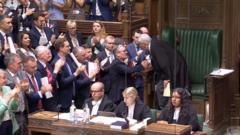
The standing ovation Keir Starmer received at his final Prime Minister’s Questions on Wednesday, July 15, 2026, was a masterclass in parliamentary theater. For nearly an hour, the House of Commons suspended its usual hostility to bid farewell to a man whose political career has ended not with a gradual decline, but with a swift, internal party execution.
Starmer insisted he leaves Britain "in better shape than I found it". Yet the warm applause, the damp eyes of Chancellor Rachel Reeves, and the polite tributes from Conservative leader Kemi Badenoch cannot paper over the reality of what actually transpired. Just two years after leading Labour to a historic landslide victory in July 2024, Starmer has been forced out of Downing Street by his own colleagues. The applause was not a celebration of a triumphant legacy, but rather a collective sigh of relief from a party desperate to save itself from electoral ruin.
The Illusion of Stability
When Starmer took the podium to declare "this is the end of my political journey," he sought to frame his departure as a natural passing of the torch. It was nothing of the sort.
His premiership collapsed under the weight of unfulfilled promises, economic stagnation, and a series of damaging unforced errors. The ultimate catalyst was the disastrous local elections in May 2026, where Labour was thoroughly hammered by an electorate tired of high living costs and perceived government drift. Fearful of losing their seats in the next general election, Labour MPs quickly turned on their leader. By June 22, Starmer was standing on the steps of Downing Street, announcing a resignation he had desperately tried to avoid.
While Starmer pointed to achievements like child poverty reduction and new protections for workers, the broader electorate felt little of this progress. Instead, they saw a leader who regularly retreated from core pledges and struggled to articulate a clear vision for the country’s economic recovery.
The Missteps That Sealed His Fate
Governments rarely fall due to a single policy failure. Instead, they erode slowly until a sudden crisis breaks them. For Starmer, that erosion was accelerated by self-inflicted wounds that severely damaged his reputation for clean, decent governance.
The most prominent of these was his baffling decision to appoint Peter Mandelson as the UK’s ambassador to the United States. Mandelson, a controversial figure with historical ties to Jeffrey Epstein, was a toxic choice that alienated both the public and rank-and-file Labour members. It signaled a return to the backroom, insider politics that Starmer had explicitly promised to eradicate.
Furthermore, as the cost-of-living crisis deepened, Starmer’s cautious, managerial style began to look like paralysis. His administration hesitated to implement bold economic interventions, leaving him exposed to attacks from both the left of his own party and a resurgent opposition.
The Shadow of Burnham
As Starmer prepares to hand his resignation to King Charles III on Monday, attention shifts to his successor, Andy Burnham. The former Mayor of Greater Manchester is running unopposed to take the reins of the Labour Party.
Burnham’s rise represents a fundamental shift in the party's direction. Unlike Starmer, who was often viewed as a detached Westminster lawyer, Burnham has spent years cultivating a reputation as a plain-spoken champion of the regions. He inherits a deeply fractured party and a country still grappling with severe economic headwinds.
While Starmer offered Burnham his "wholehearted support," he notably declined to offer any public advice, stating such conversations would remain strictly private. Burnham’s immediate challenge will be to prove that he can convert his regional popularity into national governance, avoiding the rapid disillusionment that tanked his predecessor.
The House of Commons is exceptionally good at giving its departures a dignified gloss. But when the chamber emptied on Wednesday and the applause faded, the cold political reality remained. Starmer’s rapid descent from a historic landslide to an early exit is a stark reminder of how quickly power evaporates when a leader fails to deliver on the expectations of those who put them there.