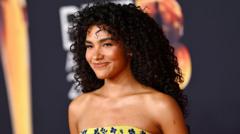
The announcement of the 2026 Ivor Novello Award nominations has sent a predictable jolt through the UK music industry, placing Olivia Dean, Lola Young, and Lily Allen at the center of a high-stakes cultural audit. While the headlines focus on the glamor of the shortlist, the reality of the 71st Ivors is far more complex than a simple tally of hits. These awards are peer-judged, meaning they are designed to ignore the noise of TikTok trends and streaming algorithms to focus on the raw mechanics of songwriting. Yet, even as the Academy attempts to celebrate "exceptional craft," it is grappling with a starkly lopsided playing field where male writers still outnumber women and non-binary creators two to one.
The Return of the Reluctant Icon
Lily Allen’s nomination for Best Album with West End Girl is the most significant narrative arc of this cycle. It has been seven years since her last record. In an industry that usually discards female artists the moment they stop behaving like ingenues, Allen’s return is a middle finger to the status quo. West End Girl is not a polite comeback. It is a lacerating, semi-fictionalized autopsy of her marriage to actor David Harbour and her exhaustion with the public eye.
The Academy has recognized Allen’s ability to weaponize honesty. Unlike the polished, committee-written pop that dominates the charts, Allen’s work feels dangerously personal. By placing her alongside contemporary powerhouses like Wolf Alice and Olivia Dean, the Ivors are making a point about longevity. Writing a hit at 22 is a feat; writing a culturally resonant album after a decade of industry-induced cynicism is an act of war.
The New Guard and the Metric of Success
Olivia Dean is currently the gravitational center of British music. Fresh off a Brit Awards sweep where she hauled in four trophies, including Artist of the Year, her Ivor nominations for The Art of Loving and the single "Man I Need" feel like a formality. But look closer at the "Most Performed Work" category where she faces off against Lola Young’s "Messy." This is where the industry’s data-driven reality clashes with the Academy’s "art first" ethos.
"Messy" was released in mid-2024. The fact that it is still being nominated in 2026 for its sheer volume of broadcast and online performances is a testament to the slow-burn success model that is becoming increasingly rare. Lola Young represents a gritty, uncompromising vocal style that refuses to fit into the neo-soul box Dean occupies. Young’s fourth Ivors nomination proves she is no longer a "breakthrough" act but a structural pillar of the songwriting community.
The Hidden Crisis in the Credits
Despite the high-profile success of women like Dean, Young, and Florence Welch, the broader data remains grim. The 2026 nominations reveal a staggering gender disparity: 40 men to just 19 women. This isn't just a "bad year" for diversity; it is a systemic regression. Research from the Annenberg Inclusion Initiative shows that female participation in top-tier songwriting dropped from nearly 19% in 2024 to 14.5% in 2025.
The Ivors Academy often defends these numbers by pointing to their peer-judging process, which is supposedly "blind" to identity. But you cannot judge what isn't in the room. If labels and publishers are funneling the majority of their resources, studio time, and co-writing opportunities toward male creators, the "peer-judged" pool will inevitably reflect that bias. We are seeing a "Winner Takes All" effect where a handful of exceptional women—the Deans and the Allens—are elevated to represent an entire gender, while the middle-tier of female songwriters is hollowed out.
The Evolution of the Best Album
The "Best Album" category is where the true investigative interest lies this year. It is a fascinating collision of genres that defines the current British identity:
- Jim Legxacy: Black British Music (A bold, genre-bending interrogation of heritage).
- CMAT: EURO-COUNTRY (Irish wit meeting Nashville tropes).
- Wolf Alice: The Clearing (The gold standard for modern British rock).
- Olivia Dean: The Art of Loving.
- Lily Allen: West End Girl.
This list suggests the Academy is moving away from the "Singer-Songwriter" trope of a lonely person with a guitar. These are heavily produced, collaborative works. The nomination of Jacob Alon for "Don't Fall Asleep" in the Best Song Musically and Lyrically category serves as the necessary counterweight—a reminder that a single, devastatingly written melody can still stand up against a million-pound production budget.
The Coldplay Anomaly
Nothing illustrates the weirdness of the music industry quite like Coldplay’s "Viva La Vida" getting a nomination in 2026. A song released in 2008 is currently competing for "Most Performed Work" alongside tracks by Lola Young and Myles Smith. This is the "Touring Effect." Because Chris Martin and company spent the last year playing to millions in stadiums, the performance data for their back catalog skyrocketed. It highlights a flaw in the Ivors' data-driven categories: they occasionally reward historical dominance over current innovation.
The Ivor Novello Awards remain the most prestigious trophy on a songwriter’s mantel because they are supposedly untainted by commercialism. However, as the 2026 nominations show, the "song" is becoming harder to separate from the "system." Whether it is Lily Allen’s hard-won return or Olivia Dean’s meteoric rise, the winners on May 21 will not just be celebrating good lyrics. They will be surviving an industry that is becoming narrower and more difficult to navigate every single day.
Would you like me to analyze the specific production credits of the "Best Album" nominees to see which co-writers are dominating the 2026 landscape?