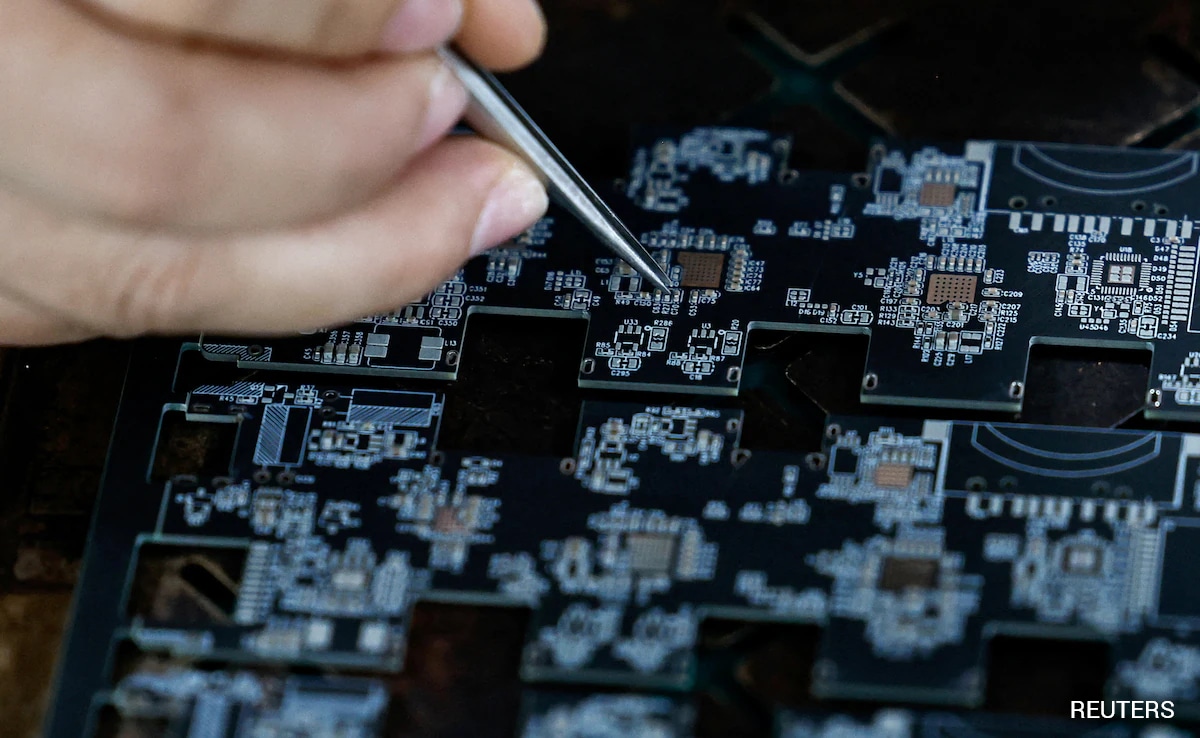
The global electronics industry just hit a wall. While headlines focus on geopolitical posturing and drone strikes, the silent casualty is the printed circuit board (PCB) supply chain. This isn't just about shipping delays or a minor uptick in consumer prices. It is a fundamental fracturing of a manufacturing ecosystem that was already brittle. Tech firms are now facing a reality where the "brain" of every electronic device—from high-end servers to simple medical monitors—is becoming a scarce, high-premium commodity.
The immediate disruption stems from the geography of the Persian Gulf and the tightening of maritime choke points. When conflict flares in this region, the shockwaves hit the raw material markets first. Copper, epoxy resins, and glass fibers—the unglamorous building blocks of a PCB—are seeing price spikes that make the 2021 chip shortage look like a practice run.
The Copper Foil Trap
You cannot build a modern circuit board without high-purity copper foil. Most industry analysts focus on the finished board, but the real crisis sits further up the stream. Iran’s proximity to the Strait of Hormuz puts a stranglehold on the transit of base metals and the energy required to process them.
Refining copper into the ultra-thin foils required for multi-layer PCBs is an incredibly energy-intensive process. As energy markets react to the threat of regional war, the cost of electricity in manufacturing hubs across Europe and Asia climbs. For a tier-one manufacturer in Taiwan or South Korea, a 20 percent jump in energy costs can wipe out the entire margin for a production run.
We are seeing a ripple effect where the "laminators"—the companies that glue copper to fiberglass—are declaring force majeure. They cannot fulfill existing contracts because their own input costs have detached from reality. This leaves the actual board assemblers high and dry. If you are a mid-sized hardware company in Silicon Valley or Austin, your "confirmed" order for 50,000 units just became a "maybe" with a 40 percent surcharge.
Why Diversification is a Myth
For years, procurement officers have talked about "China Plus One" or "Friend-shoring" to avoid regional instability. The Iranian conflict exposes the emptiness of those strategies. The PCB industry is not a set of independent silos; it is a tangled web of dependencies.
A board might be etched in Vietnam, but the chemical resists often come from specialized Japanese firms that rely on petroleum derivatives sourced from the Gulf. The fiberglass yarn might be spun in China using Belgian technology and Middle Eastern energy. When you pull the thread of Iranian stability, the entire sweater unravels.
There is no "back-up" geography ready to take the load. India and Mexico have growing assembly capabilities, but they still lack the deep-tier chemical and material infrastructure that characterizes the Asian Pacific corridor. You cannot move a chemical plant that handles hazardous etching fluids overnight. You cannot replicate a cleanroom environment that took a decade to calibrate just because a shipping lane is blocked.
The Hidden Cost of Rerouting
Shipping is the most visible pain point. With the Red Sea and the Gulf of Oman turning into combat zones, logistics firms are opting for the long way around Africa. This adds 10 to 14 days to a standard transit time. In the world of "Just-in-Time" manufacturing, a two-week delay is an eternity.
The Inventory Tax
Companies are forced to hold more safety stock to buffer against these delays. This "inventory tax" is a massive drain on liquidity. Money that should be going into Research and Development is instead sitting in a warehouse in the form of unpopulated green boards.
The Air Freight Escalation
When sea lanes fail, desperate firms turn to air freight. But a PCB is heavy. It is a dense composite of metal and glass. Shipping boards by air is prohibitively expensive for anything other than high-margin aerospace or medical equipment. This creates a class divide in the tech world. The giants with deep pockets can buy their way to the front of the line, while startups and small-scale innovators are effectively priced out of the market.
The Resin Crisis No One is Monitoring
While everyone watches the copper charts, the real danger might be in the epoxy. High-frequency boards, the kind used in 5G infrastructure and AI data centers, require specialized low-loss resins. A significant portion of the global supply of the precursors for these resins is tied to the petrochemical output of the Middle East.
If the conflict escalates to a point where refinery infrastructure is damaged, the high-end PCB market will go into a total freeze. We aren't talking about longer lead times; we are talking about the physical inability to produce the boards required for the next generation of computing.
Engineers are already being told to "design down." This means reverting to older, less efficient materials because the high-performance stuff simply isn't available. This stalls the entire trajectory of the industry. It puts a ceiling on what a smartphone can do or how fast a server can process data.
The Specter of Counterfeit Components
When supply dries up, the "gray market" thrives. This is the dark underbelly of the electronics world that veterans know all too well. When a reputable supplier says they can't deliver for six months, but a random broker in a different jurisdiction says they have 10,000 units ready to ship tomorrow, red flags should go up.
Desperate tech firms are increasingly tempted to skip rigorous quality control. This leads to the "Golden Sample" trap: the first few boards look perfect, but the bulk shipment is riddled with delamination issues or micro-cracks that only fail after 500 hours of use. A conflict in Iran doesn't just make boards expensive; it makes them dangerous. A faulty circuit board in a consumer toy is a nuisance. A faulty board in an autonomous vehicle’s braking system is a catastrophe.
The Strategy of Forced Obsolescence
Some of the largest players are using this crisis to prune their product lines. If you can only get enough boards for 60 percent of your portfolio, you kill off the low-margin products. We are seeing a forced migration where companies are abandoning the "budget" tier of electronics to protect their flagship items.
This creates a vacuum in the market. Education-focused laptops, affordable medical devices for developing nations, and low-cost IoT sensors for agriculture are being sacrificed. The "cost of tech" isn't just rising for the wealthy; the "access to tech" is being severed for everyone else.
Engineering a Way Out
If you are waiting for the geopolitical situation to "normalize," you have already lost. The era of cheap, reliable, and abundant PCBs is over for the foreseeable future. The winners in this new environment will be the companies that treat hardware engineering as a survival skill rather than a procurement task.
Material Agnostic Design
The most resilient firms are moving toward "material agnostic" designs. This involves creating layouts that can function on a variety of different substrates. If the high-grade FR4 material isn't available, the design can be shifted to a secondary material without a total redesign of the architecture. It is difficult, expensive, and requires a higher caliber of engineering talent, but it is the only way to stay operational.
Vertical Integration of Basics
We are seeing a return to a more "vertical" mindset. Large-scale manufacturers are looking at acquiring their own copper processing or resin production facilities. It sounds radical, but when the supply chain is this broken, owning the "dirt" becomes a competitive advantage.
The Iranian conflict is a loud reminder that the digital world is built on a very physical, very fragile foundation. The circuit board is the floor of the modern world. And right now, the floor is shaking.
Stop looking at the stock price of the chip makers. Start looking at the lead times for the green boards they sit on. That is where the real war is being fought. Any company that hasn't secured its 2027 substrate supply by the end of this quarter is effectively gambling with its existence. The luxury of the "wait and see" approach died the moment the first tanker was diverted.