The global markets breathed a collective, if premature, sigh of relief this week as oil prices dipped on news that the Strait of Hormuz has "reopened." On the surface, the narrative is a classic diplomatic win: a ten-day ceasefire in Lebanon, a two-week truce between Washington and Tehran, and the return of commercial shipping to a waterway that carries 20% of the world’s petroleum. But beneath the celebratory social media posts and the rapid-fire rhetoric coming from Phoenix and Tehran, a much grimmer reality is taking hold. This is not a return to the status quo. It is the beginning of a high-stakes maritime siege that could permanently rewrite the rules of international trade.
The friction point is a "split reality" in the Persian Gulf. While Iranian Foreign Minister Abbas Araghchi declared the strait "completely open" for the duration of the truce, the U.S. Navy continues to enforce a rigorous blockade targeting any vessel tied to Iranian ports. We are witnessing a paradox where a waterway is technically open for the world, yet surgically sealed for the nation that sits on its northern shore. This isn’t a peace deal. It is a chokehold rebranded as a breakthrough.
The Seven Claims and the Field Reality
On Friday, the digital airwaves crackled with a series of claims from the White House that suggested a comprehensive peace deal was "very close." These assertions included the bold idea that Iran had agreed to never close the strait again and that its enriched uranium stockpile would soon be "heading home to the USA" via a fleet of American excavators. To an industry analyst, these claims feel less like a diplomatic roadmap and more like a tactical psychological operation.
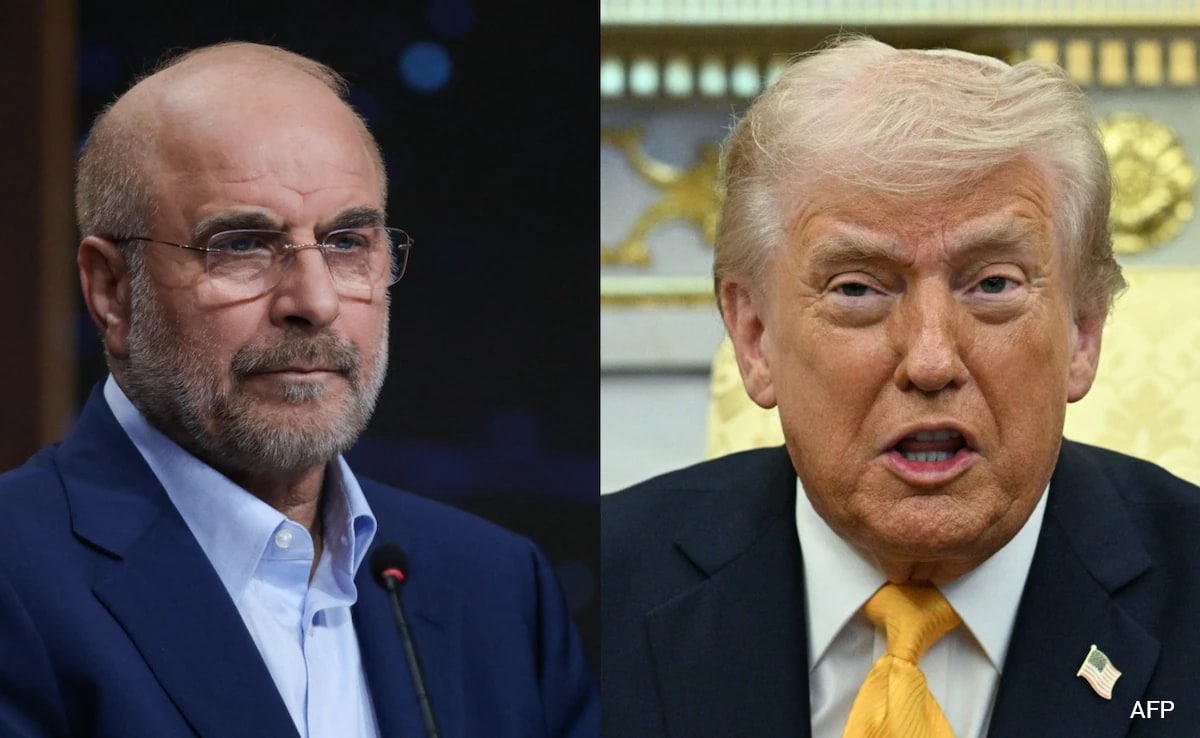
Tehran’s response was swift and predictably sharp. Parliament Speaker Mohammad Bagher Ghalibaf dismissed the "seven false claims" made in a single hour, pointing out a fundamental truth that often gets lost in political theater: the opening and closing of a strategic choke point does not happen on the internet. It happens in the "field."
The field, in this case, is a narrow neck of water where the Islamic Revolutionary Guard Corps (IRGC) still demands that every commercial vessel follow "coordinated routes" under their oversight. By forcing ships into designated lanes, Iran has effectively turned a global commons into a controlled corridor. They aren't just letting ships through; they are conducting a census of every barrel and crate that passes their doorstep.
The Excavator Diplomacy Mirage
One of the more jarring claims involves the physical removal of Iran's nuclear material. The imagery of "massive excavators" entering Iranian nuclear sites to dig out enriched material and ship it to the United States sounds like a logistical fever dream. Nuclear decommissioning is a process of precision, shielding, and extreme caution, not a construction project involving heavy earth-movers.
For veterans of the nuclear energy sector, this rhetoric signals a massive gap between the public narrative and the technical requirements of any real deal. Iran has already stated that its stockpile is staying put. When one side claims a "historical" deal is finalized and the other side claims they haven't agreed to the most basic terms, the market isn't looking at a resolution—it’s looking at a temporary pause in a much larger confrontation.
Why the Naval Blockade is Different This Time
Unlike the "Maximum Pressure" campaigns of the past, the current U.S. naval blockade is an active, physical interdiction. This isn't just about freezing bank accounts or sanctioning individual tankers. U.S. warships and aircraft are actively turning back ships or threatening boardings for any vessel attempting to dock at Iranian ports.
This creates a secondary, invisible barrier within the open strait.
- Commercial Risk: Insurance premiums for ships entering the Gulf remain at atmospheric levels.
- Operational Delay: The "coordinated routes" required by the IRGC add hours, if not days, to transit times.
- Legal Limbo: The International Maritime Organization is still struggling to determine if Iran’s new oversight rules comply with the United Nations Convention on the Law of the Sea (UNCLOS).
If the U.S. continues to choke off Iranian revenue while expecting the strait to remain a free-flowing highway for everyone else, they are betting on Iranian restraint that historically does not exist. The IRGC has spent decades practicing "asymmetric" naval warfare. They don't need to win a fleet-on-fleet battle; they only need to make the water too dangerous for a Lloyd's of London underwriter to touch.
The Looming Tuesday Deadline
The two-week truce between the U.S. and Iran is set to expire this Tuesday. While the Lebanon ceasefire offers a ten-day window of relative calm, the core conflict between Washington and Tehran remains unresolved. The "Great and Brilliant Day" heralded in social media posts looks increasingly like a tactical intermission.
The U.S. is pushing for a total capitulation on the nuclear front, using the blockade as a primary lever. Iran is using its control over the strait to prove that it can still hurt the global economy at will. When the clock runs out on Tuesday, the "completely open" status of the Strait of Hormuz will likely evaporate.
What we are seeing is the weaponization of geography. For the global shipping industry, the lesson is clear: do not mistake a temporary dip in oil prices for a permanent solution. The "Hormuz Blockade" hasn't ended; it has simply evolved into a more complex, and perhaps more dangerous, phase of maritime siege. The excavators aren't coming, but the next wave of volatility certainly is.