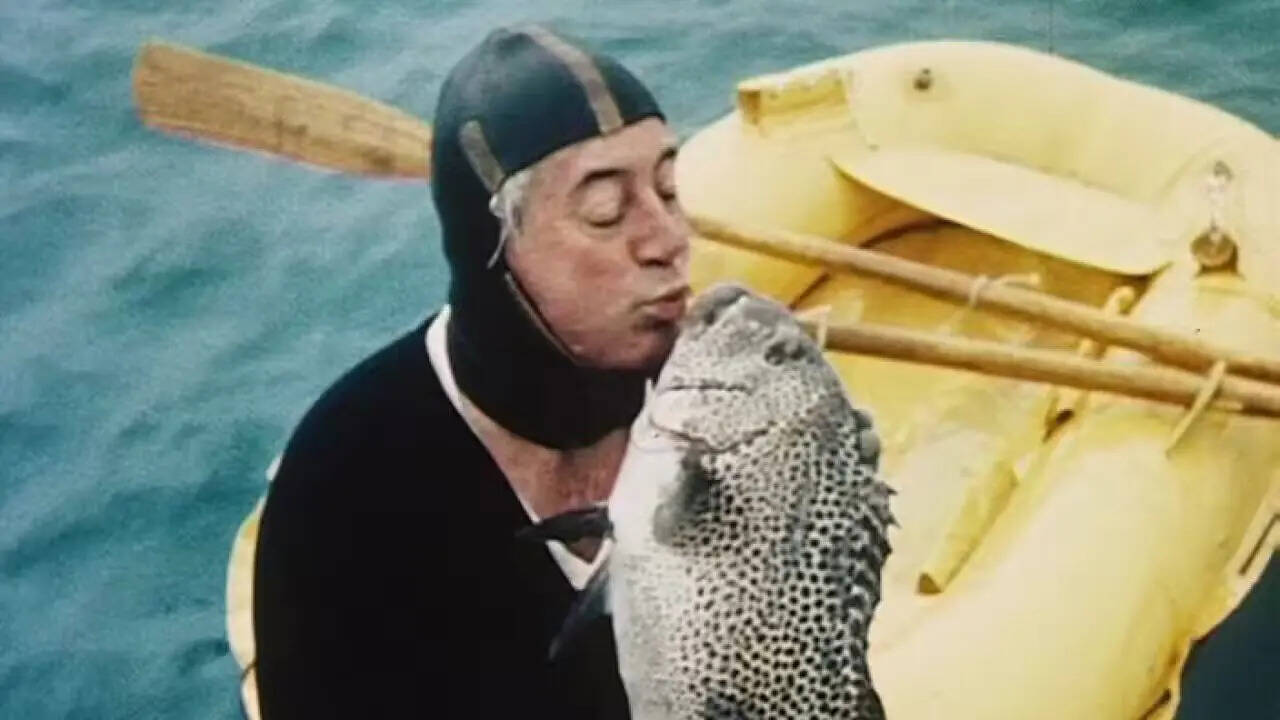
On December 17, 1967, a sitting prime minister walked into the surf at Cheviot Beach and vanished. Harold Holt was not just any politician; he was the leader of a nation firmly locked in the grip of the Cold War. Within hours of his disappearance, a vacuum opened at the center of Australian power, quickly filled by a toxic mix of conspiracy theories, intelligence failures, and institutional panic.
The official narrative settled on a straightforward tragedy: an exhausted leader overtaken by a treacherous rip tide. Yet, looking back through the cold lens of history and intelligence protocols, that explanation glosses over the institutional recklessness that allowed the crisis to happen. Holt did not just drown. He was permitted to drown by a security apparatus that was shockingly negligent, protecting a man who was physically unraveling under immense political strain.
The Myth of the Carefree Swimmer
For decades, the public accepted the image of Holt as a vigorous, sea-loving Australian statesman. He was often photographed in a wetsuit, flanked by young women or spearfishing in the deep ocean. This image was carefully curated, but it masked a grim medical reality.
He was falling apart. At 59, Holt was suffering from severe chronic pain, the result of a shoulder injury and a lifetime of punishing physical exertion. Just days before his disappearance, his personal physician had injected him with a cocktail of painkillers and advised him to stay out of the water. He ignored the advice.
The pressures weighing on him were historic. Holt had tethered his political survival to the United States and the escalating Vietnam War, famously declaring Australia to be "all the way with LBJ." By late 1967, that policy was fracturing the Australian electorate. Consumed by sleeplessness, relying on heavy medication to manage his physical ailments, and facing a mutiny within his own coalition government, Holt was a man operating at the absolute limit of human endurance.
When he stepped into the water at Cheviot Beach that Sunday afternoon, the sea conditions were atrocious. The tide was high, the undertow was savage, and the water was churning with visible debris. To anyone watching from the shore, the decision to swim was not an act of recreation. It was an act of profound, medication-fueled hubris.
The Total Collapse of Commonwealth Security
The most damning aspect of the entire affair is not that Holt chose to enter a dangerous ocean, but that he was allowed to do so completely unmonitored.
In 1967, Australia operated under a naive assumption of isolation. The Australian Security Intelligence Organisation focused heavily on communist subversion but paid virtually no attention to the physical protection of the nation's executive leadership. Holt traveled without a personal security detail. There were no bodyguards on the beach, no emergency communication devices, and no contingency plans for an asset under extreme stress.
Consider the witnesses on the sand that day. Marjorie Gillespie, a close friend, along with her daughter and two family friends, watched from the dunes. They were civilians, entirely unequipped to recognize the signs of a swimmer in distress until it was far too late. When Holt drifted beyond the breaker line, there was no radio to call for immediate assistance, no flare, and no rescue boat on standby.
The subsequent search operation was an exercise in chaos. Hundreds of soldiers, police officers, and volunteer divers descended on Point Nepean. They lacked coordinated command structures, proper diving equipment for the treacherous conditions, and basic forensic training to preserve the scene. The delay in launching a professional, centralized rescue effort effectively guaranteed that if Holt did survive the initial immersion, he would succumb to hypothermia long before help arrived.
The Intelligence Vacuum and the Chinese Submarine Myth
Because the government failed to secure the site or provide a transparent account of the timeline, the public imagination filled the void. The most enduring nonsense to emerge from the tragedy was the claim that Holt was a lifelong spy for the People's Republic of China, smuggled off the beach into a waiting submarine.
This theory, popularized years later by British journalist Anthony Grey, collapses under the slightest logistical scrutiny. The waters off Cheviot Beach are shallow, rock-strewn, and highly turbulent. Navigating a submarine into those shallows during a high tide with heavy swells would be a suicidal maneuver for any naval crew.
Furthermore, the idea that a sitting prime minister could maintain a double life while under the constant scrutiny of Western intelligence agencies—at a time when Australia was deeply integrated into the ANZUS alliance—is absurd. The real tragedy was not a complex espionage plot, but a simple failure of basic duty of care. The state failed to protect its most valuable human asset from his own worst impulses.
The Political Inheritance of a Vacuum
The immediate aftermath of the disappearance exposed the fragility of the Australian political system. Within days, John McEwen, the leader of the Country Party and the interim Prime Minister, weaponized the tragedy to block his chief rival, William McMahon, from taking permanent control of the Liberal Party. McEwen publicly declared that he and his party would not serve under McMahon, triggering a bitter, internal civil war that paralyzed the government for months.
| Key Political Figures | Stance Post-Disappearance | Impact on Government |
|---|---|---|
| John McEwen | Refused to serve under McMahon | Triggered an immediate leadership crisis |
| William McMahon | Forced to withdraw from initial race | Delayed his prime ministerial ambitions until 1971 |
| John Gorton | Emerged as compromise candidate | Altered the direction of Australian social policy |
This political instability occurred at the height of the Vietnam War, a period when Australia needed steady, decisive leadership. Instead, the nation was left adrift, guided by a fractured cabinet that was more interested in self-preservation than addressing the strategic vulnerabilities exposed by Holt's demise.
The Permanent Scars of Cheviot Beach
The legacy of that December afternoon forced a reluctant modernization of the Australian state. The casual, accessible style of leadership that Holt championed died in the surf alongside him.
Never again would an Australian prime minister be allowed to wander into the wilderness without a dedicated security detail. The incident forced the creation of modern protection protocols, the establishment of permanent security contingents for the head of government, and a complete overhaul of how the nation manages crises involving its top officials.
The ocean never gave up Harold Holt's body. The relentless tides and the jagged rocks of the Victorian coast ensured that the physical evidence vanished completely within days. But the lesson remains written in the history of Australian governance. A nation that treats the security of its leaders as an afterthought invites catastrophe, and when that catastrophe arrives, the sea does not offer second chances.