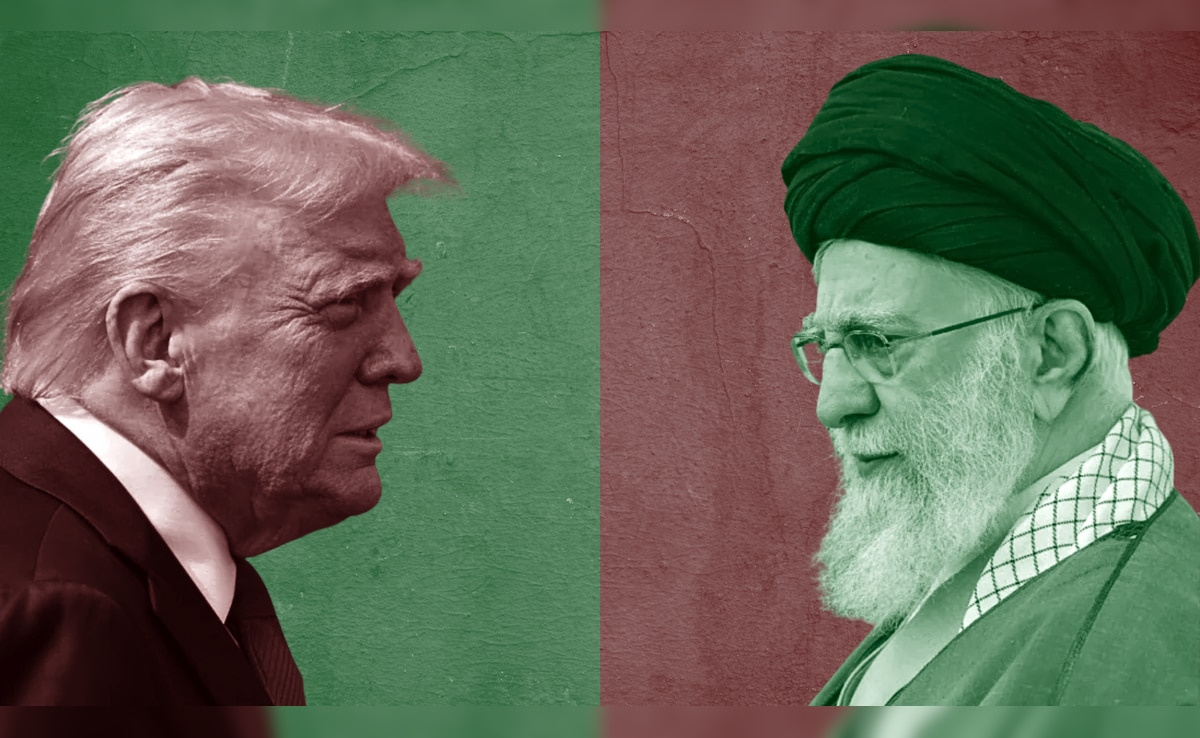
The shadow that governed the Middle East for thirty-six years evaporated in a matter of seconds. On February 28, 2026, a series of precision strikes decimated the Supreme Leader’s compound in central Tehran, ending the life of Ayatollah Ali Khamenei at age 86. While the world scrambled to confirm the smoke rising over the capital, Donald Trump bypassed traditional diplomatic cables to deliver the verdict himself. "Khamenei, one of the most evil people in history, is dead," he declared. It was not just an announcement of a successful military operation; it was a deliberate shattering of the status quo that has defined Iranian-American relations since 1989.
This was not a solo effort by a single nation. It was a cold, calculated fusion of American intelligence and Israeli kinetic power. For decades, Khamenei was the ultimate arbiter of Iranian policy, the man who held the leash of the Revolutionary Guard and the architect of the "Axis of Resistance." His removal is the most significant decapitation of a state apparatus in the 21st century.
The Mechanics of a High-Stakes Assassination
The operation did not happen in a vacuum. It was the culmination of a massive buildup of U.S. strike forces in the region following the collapse of nuclear negotiations earlier in the year. Intelligence suggests that the CIA provided "highly sophisticated tracking systems" to pinpoint a gathering of the Iranian inner circle. This wasn't a broad bombing campaign; it was a "pinpoint" strike designed to remove the brain of the Islamic Republic while leaving the body in a state of total shock.
The technical execution involved overcoming some of the most densely packed air defenses in the world. Reports indicate that the U.S. and Israel used a combination of stealth technology and electronic warfare to blind Iranian radar long enough for the ordnance to reach the Supreme Leader’s office. This was a message to the remaining leadership: no bunker is deep enough, and no encryption is strong enough to hide from the current administration’s reach.
Casualties of the Inner Circle
Khamenei did not die alone. The strikes were a wholesale clearing of the old guard. Among the dead are:
- General Abdolrahim Mousavi: The Commander-in-Chief of the Islamic Republic of Iran Army.
- Mohammad Pakpour: The Commander of the IRGC Ground Forces.
- Ali Shamkhani: A long-time power broker and former Secretary of the Supreme National Security Council.
- Khamenei’s Family: State media confirmed his daughter, son-in-law, and grandchild were also killed in the residence.
By removing these figures simultaneously, the U.S. and Israel have ensured that the immediate line of succession is not just broken, but nonexistent. The "gray men" who usually step in to manage a crisis are currently under the same rubble as their leader.
Why Trump Pulled the Trigger Now
The timing of this strike is as important as the target. For most of 2025, the administration had been oscillating between threats of "annihilation" and offers of a "deal." But the internal pressure within Iran changed the calculus. Weeks prior to the strike, Iranian security forces had killed an estimated 30,000 people to suppress domestic protests sparked by hyperinflation and social restrictions.
The White House saw a window. By removing the head of the theocracy during a moment of peak domestic resentment, the administration is betting on a total regime collapse rather than a managed transition. Trump’s rhetoric shifted from "Good Luck" to "Justice for the People of Iran" almost overnight. He is explicitly calling for the Iranian public to "seize control of your destiny," banking on the hope that the fear which sustained the regime died with its architect.
The Vacuum and the Volatility
The Islamic Republic is built on the concept of Velayat-e Faqih—the Guardianship of the Islamic Jurist. Without a Jurist, the entire legal and spiritual framework of the state is in jeopardy. The 88-seat Assembly of Experts is theoretically tasked with choosing a successor, but they have never had to do so under the pressure of active bombardment and a domestic uprising.
In the immediate aftermath, the Islamic Revolutionary Guard Corps (IRGC) is the only entity with the guns to maintain order. However, the IRGC itself is a sprawling conglomerate with vast business interests. Without Khamenei to balance the competing factions of generals and clerics, the risk of an internal civil war between the "deep state" and the military is high.
The Regional Blowback
The response was immediate and violent. Within hours of the confirmation, Iran launched retaliatory missile strikes not just at Israel, but at U.S. assets in Bahrain and several Arab states, including the UAE and Kuwait. A prominent hotel in Dubai was hit, and a person was killed in central Tel Aviv.
- Proxy Activation: Expect Hezbollah in Lebanon and the Houthis in Yemen to escalate their operations. However, with their primary benefactor in chaos, their long-term funding and strategic direction are now in doubt.
- Oil Markets: Global markets are pricing in the risk of a total closure of the Strait of Hormuz. If Iran feels it is facing an existential threat, it may attempt to take the global economy down with it.
- Nuclear Proliferation: The greatest risk is a "breakout." With the leadership decapitated, rogue elements of the IRGC might decide that a nuclear test is their only remaining deterrent against further strikes.
The Myth of a Clean Break
The administration's gamble rests on the idea that the Iranian people will embrace this "opportunity" to overthrow the remaining clerics. While social media shows videos of people celebrating in certain districts, the reality on the ground is far more complex. The regime has spent four decades building a network of millions of people—from the Basij militia to the sprawling bureaucracy—whose livelihoods and lives depend on the survival of the current system. These people will not go quietly.
Furthermore, the "Axis of Resistance" was never just about one man. It is an ideology and a regional strategy. While Khamenei was the master strategist, the infrastructure he built is designed to function even when the center does not hold. The U.S. and Israel have successfully removed the pilot, but the plane is still in the air, and it is currently nose-diving toward the rest of the region.
The New Reality of Direct Intervention
This assassination marks the end of the era of "strategic patience" and the beginning of a far more aggressive doctrine. By directly targeting a head of state, the United States has signaled that it no longer views the Iranian government as a permanent fixture to be managed, but as a problem to be solved through kinetic force.
The "heavy and pinpoint bombing" that Trump promised will continue through the week is not just about finishing off military targets. It is a psychological campaign to prevent any new leader from consolidating power. The goal is to keep the Iranian leadership in a state of perpetual flight, moving from bunker to bunker, unable to issue commands or organize a coherent defense.
Whether this leads to a democratic "New Iran" or a decades-long regional conflagration remains to be seen. What is certain is that the Middle East of February 27 no longer exists. The architect of the old world is gone, and the new one is being forged in the heat of a "massive and ongoing" campaign that has only just begun.
Would you like me to analyze the specific economic impact this will have on global oil prices and the stability of the Strait of Hormuz?


