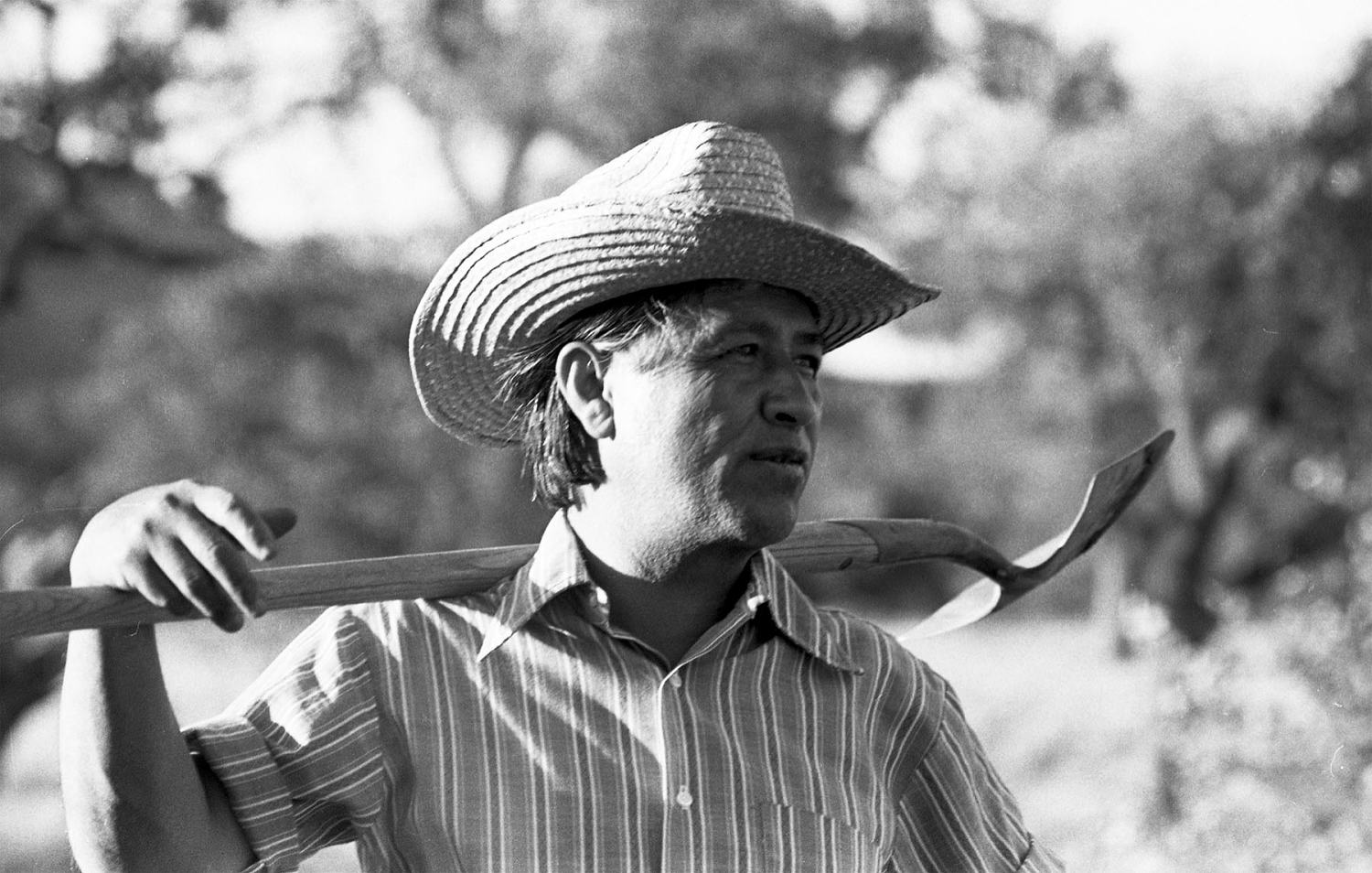
For decades, the portrait of Cesar Chavez served as a secular icon in the American Southwest, a symbol of nonviolent resistance and the face of the farmworker’s dignity. That image shattered this week. A devastating investigation has brought forward credible, horrific allegations of sexual assault and the grooming of young girls by the United Farm Workers (UFW) co-founder. Perhaps most jarring is the testimony of Dolores Huerta, the 95-year-old labor titan and Chavez’s closest ally, who revealed that he raped her in 1966 and pressured her into a second encounter, both resulting in secret pregnancies.
The impact on the Latino community is not a simple news cycle. It is a fundamental collapse of a foundational narrative. Across California, Texas, and Arizona, the response has moved past "disturbing" into a frantic institutional retreat. Schools are being stripped of his name, murals are being whitewashed, and the upcoming March 31 holiday has been effectively disowned by the very union Chavez built. This is a crisis of betrayal, where the man who preached "Si, Se Puede" is now accused of the very predatory behavior his movement was designed to protect workers against. You might also find this connected coverage insightful: Strategic Asymmetry and the Kinetic Deconstruction of Iranian Integrated Air Defense.
The Architecture of Silence
To understand why these allegations took over sixty years to surface, one must look at the high-pressure environment of the UFW during its 1960s and 70s heyday. It was more than a union; it was a crusade. Leaders within the movement, including Huerta, have admitted they felt an immense, self-imposed burden to protect the "cause" at any cost.
Huerta’s admission that she stayed silent to avoid "hurting the movement" reveals the dark side of hero worship. When a person becomes the movement, their personal crimes are treated as existential threats to the collective. This allowed a culture of impunity to take root at La Paz, the union’s compound in Kern County. The New York Times investigation details how Chavez allegedly targeted the daughters of his own organizers—girls as young as 12 and 15—knowing their families’ devotion to the UFW would provide a natural shield of silence. As discussed in latest coverage by Al Jazeera, the results are worth noting.
The mechanism of abuse here was built on absolute authority. Chavez wasn't just a boss; he was a spiritual leader who practiced asceticism and long fasts to cultivate an aura of saintliness. That aura made the acts described by survivors—grooming, manipulation, and physical assault—feel impossible to report. Who do you tell when the predator is the only person the world believes can save you?
The Fall of the Secular Saint
The immediate fallout is a logistical and emotional nightmare for Latino political and civic leadership. In Texas, Governor Greg Abbott has already moved to permanently strike Chavez’s name from state law. In California, where Chavez’s birthday is a state holiday, lawmakers are in a state of paralysis, with many calling for the date to be rebranded as "Farmworkers Day" to shift the focus from the man to the laborers.
Institutional Retreats as of March 2026
- United Farm Workers (UFW): The union canceled all Chavez Day events and labeled the allegations "indefensible."
- University of California, Davis: Stripped Chavez’s name from its prominent college access conference.
- City of Austin: Moving to revert "Cesar Chavez Street" back to its original name, First Street.
- Department of Labor: Removed Chavez’s portrait from the hall of fame and draped a flag over his name at the auditorium entrance.
This isn't just about optics. It is about the moral bankruptcy of a legacy that was used to justify decades of activism. For the "Chicano" generation that came of age in the 60s, Chavez was the bridge to political power. Seeing that bridge burned by his own actions is causing a generational rift. Younger activists are demanding an immediate "iconoclasm"—the literal tearing down of images—while older generations are struggling with the "mourning" of a man they thought they knew.
Separating the Work from the Worker
A common defense in the wake of such revelations is to point to the tangible gains: the elimination of the short-handled hoe, the first farmworker contracts, and the banning of toxic pesticides like DDT. But the survivors' testimonies suggest those gains were achieved in an environment where the most vulnerable—women and children within the inner circle—were traded for the greater good.
The "why" behind the delay in these allegations is now clear: the movement was a closed ecosystem. Chavez increasingly adopted tactics from the cult-like group Synanon in the late 70s, including "The Game," a form of aggressive verbal humiliation used to purge perceived enemies. This created a paranoid atmosphere where dissent was viewed as treason. If you questioned Chavez, you were questioning the survival of the Mexican-American people.
We are now seeing the end of the "Great Man" theory of history in real-time. The Latino community is being forced to reconcile a painful truth: the farmworker movement was successful because of the thousands of people who marched, fasted, and lost their livelihoods, not because of one man's supposed divinity.
The Road to Accountability
Accountability in 2026 looks like a total scrub of the public square. It is a brutal process, but a necessary one. The move to elevate Dolores Huerta in his place is already gaining steam, though even that is complicated by her admission of helping cover up the truth for six decades.
The real work now lies in the de-centering of individuals. Labor groups are pivotally shifting toward collective leadership models where no single person holds the power to suppress a rape allegation in the name of the "cause." This is a hard-hitting lesson for every social justice organization currently operating: if your mission depends on the reputation of one person, your mission is a house of cards.
The statues are coming down because they have to. A movement built on the "dignity of the human person" cannot survive while honoring a man who allegedly stole it from the women closest to him. The era of the Latino saint is over; the era of the worker is just beginning.
If you are a survivor of sexual assault or have information regarding historical abuse within labor organizations, contact the National Sexual Assault Telephone Hotline at 800-656-HOPE.