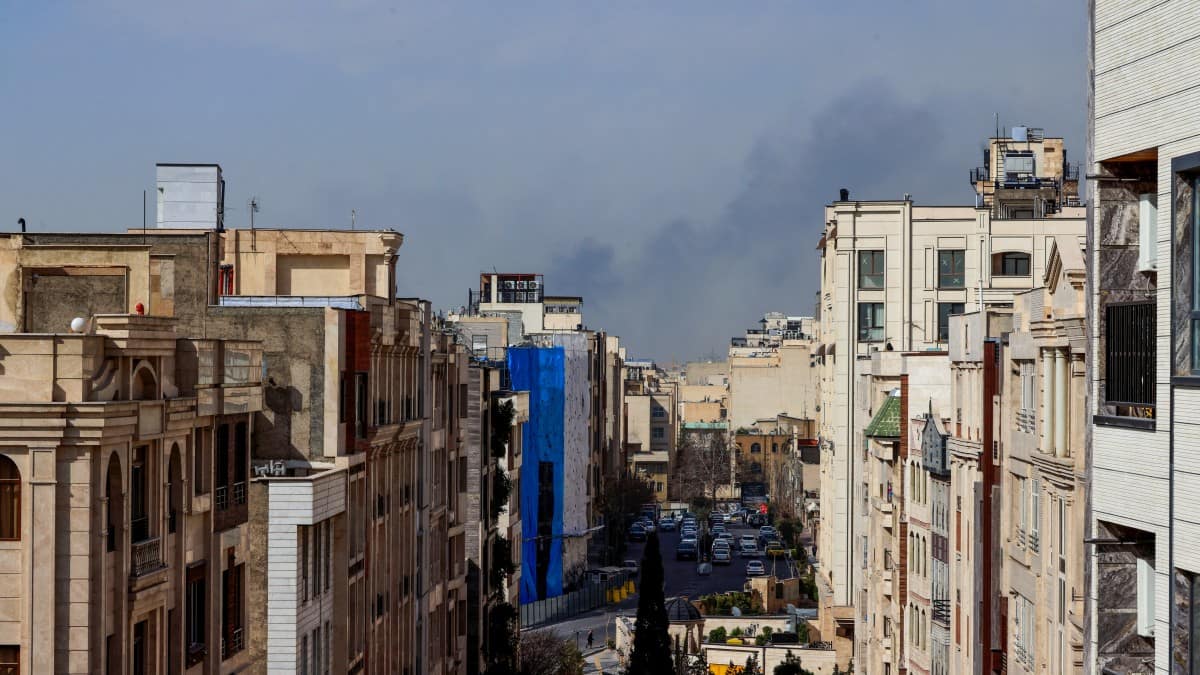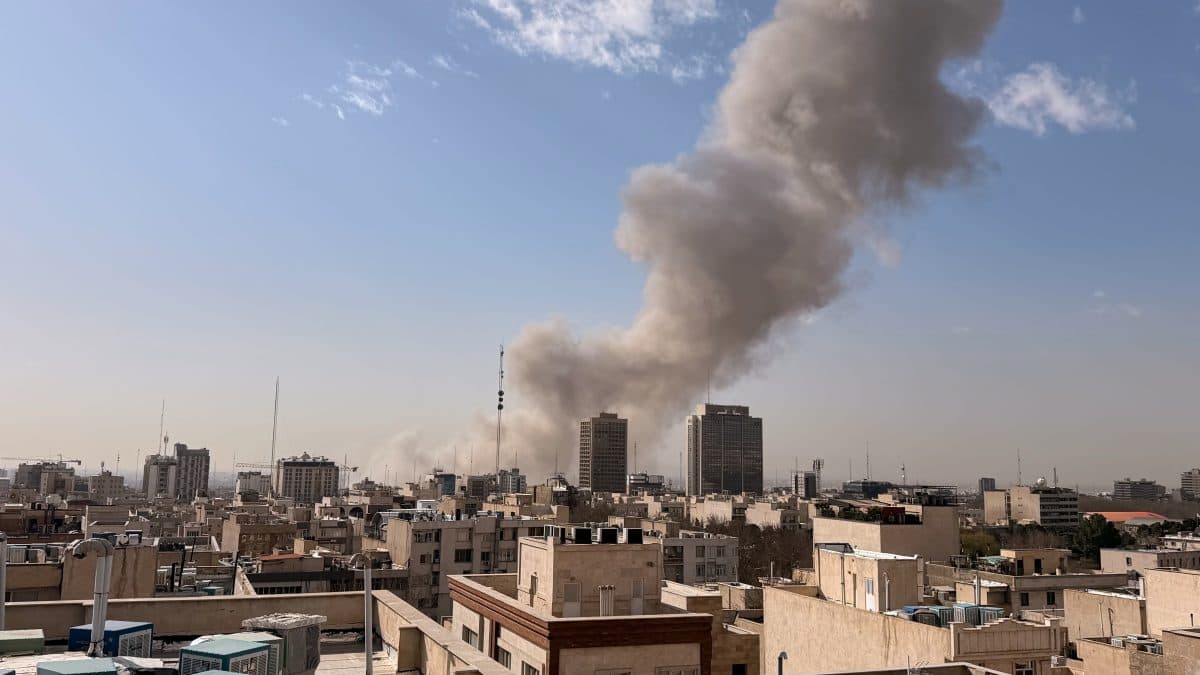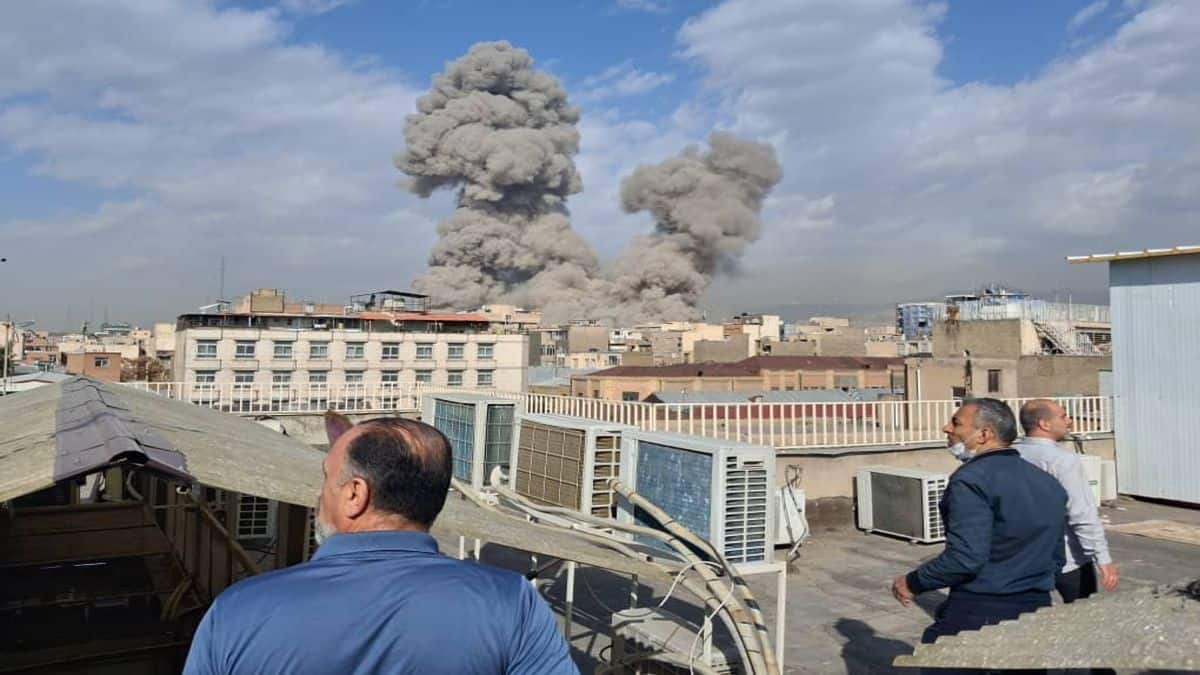
The cycle of "crushing" retaliation vows and surgical strikes has moved beyond mere brinkmanship. We are no longer watching a shadow war. The recent exchange of fire between Israel and Iran, backed by a significant American logistical footprint, represents a fundamental shift in the regional order. While the headlines focus on the immediate threat of missiles, the real story lies in the exhaustion of the old rules of engagement. For decades, Tehran and Jerusalem operated within a predictable, if violent, set of boundaries. Those boundaries are gone.
The Myth of Proportionality
Western diplomats often speak about proportionality as if it were a mathematical formula. They believe that if one side hits a specific military target, the other side will respond with a similar, localized strike to save face without triggering a full-scale war. This is a dangerous misunderstanding of how the Iranian security apparatus—specifically the Islamic Revolutionary Guard Corps (IRGC)—views survival.
To the IRGC, the concept of "Strategic Patience" has become a liability. In previous years, Iran would absorb hits to its nuclear program or proxy leadership, betting that time was on its side. However, the intensity of recent Israeli operations has forced Tehran’s hand. If they do not respond with enough force to change the Israeli calculus, they risk appearing hollowed out to their own domestic base and their regional "Axis of Resistance."
Israel has flipped the script. Instead of focusing solely on the "octopus arms" (Hezbollah, Hamas, the Houthis), Jerusalem is now striking the "head." This isn't just about destroying hardware; it is about demonstrating that no one in Tehran is untouchable.
The American Pressure Cooker
The United States is currently trying to perform a delicate balancing act that may be physically impossible. On one hand, Washington has deployed missile defense systems and carrier strike groups to ensure Israel’s defense. On the other, the White House is frantically signaling to Tehran through back-channels that it does not seek a direct war.
This dual-track approach creates a massive gray zone. When the U.S. assists in intercepting Iranian drones, it becomes a de facto combatant in the eyes of Iranian hardliners. This makes American bases in Iraq and Syria prime targets for "deniable" militia attacks. We are seeing a shift where the U.S. is no longer a mediator but a primary variable in the Iranian retaliation equation.
The logistics of this escalation are staggering. It isn't just about the number of missiles. It's about the attrition of interceptors. Every time Iran launches a swarm of low-cost drones, they force Israel and the U.S. to use high-cost interceptors. It is a war of economic and industrial capacity.
Why the Crushing Retaliation Rhetoric is Different Now
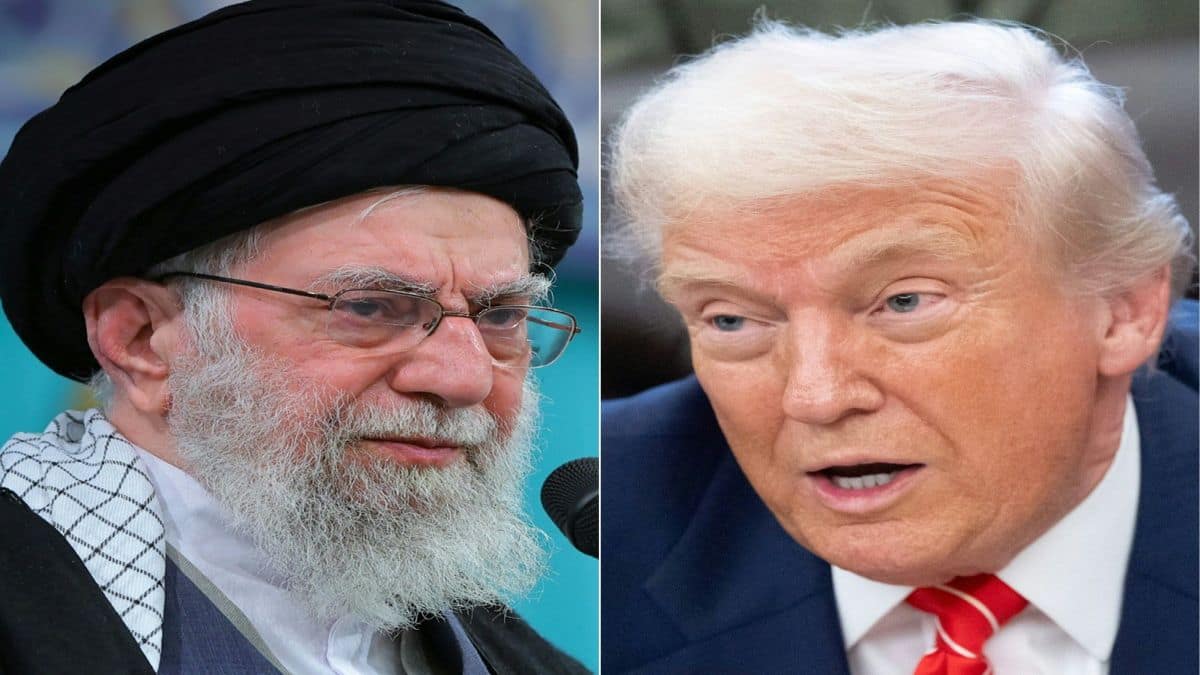
We have heard the word "crushing" from Iranian officials for forty years. Usually, it's followed by a symbolic strike on an empty field or a sternly worded letter to the UN. But the internal dynamics in Iran have shifted. The clerical establishment is facing an aging leadership transition. Supreme Leader Ali Khamenei’s eventual successor will need a military that is perceived as strong, not just ideological.
Furthermore, the technological gap is closing. Iran’s ballistic missile program has moved from rudimentary scuds to precision-guided munitions capable of overwhelming sophisticated defense grids through sheer volume. When Tehran speaks of a crushing blow, they are referring to a saturation attack. They know they cannot win a conventional air war against the F-35s of the Israeli Air Force, so they intend to turn the sky into a numbers game.
The Intelligence Gap
One factor rarely discussed is the erosion of intelligence certainty. During the Cold War, hotlines and satellite imagery provided a level of predictability. Today, the sheer speed of social media and the prevalence of cyber-warfare mean that a single misinterpreted sensor reading could trigger a launch.
The "red lines" have become blurred. Israel has signaled that it will hit Iranian energy infrastructure if the retaliation exceeds a certain threshold. Iran has signaled that any hit on its oil fields will result in the closure of the Strait of Hormuz. This is not just a military escalation; it is a global economic threat. Approximately 20 percent of the world's oil passes through that narrow waterway. If Tehran feels backed into a corner where its regime survival is at stake, the economic "nuclear option" becomes their most viable move.
The Failure of Conventional Diplomacy
The traditional diplomatic toolkit—sanctions, UN resolutions, and public condemnations—has failed to prevent this moment. Sanctions have been baked into the Iranian economy for years. They have learned to navigate around them, building a "resistance economy" that relies on black-market oil sales to China and military cooperation with Russia.
Russia's role here is crucial and often overlooked. As Moscow becomes more dependent on Iranian drones for its conflict in Ukraine, it has a vested interest in keeping the Middle East volatile. This pulls American resources away from Europe. We are seeing the birth of a new, cynical alliance where regional instability in the Levant serves the broader geopolitical goals of the Kremlin.
The Technological Brink
We are entering an era of automated escalation. When defense systems are managed by algorithms designed to respond in milliseconds, the human window for de-escalation shrinks. If an Iranian missile battery detects a perceived threat and fires automatically, the Israeli response is equally automated.
This leads to a situation where the political leaders in both countries may find themselves trapped by the very technology they built to protect themselves. A "crushing" blow might not even be a conscious command; it could be the result of a system-wide failure to distinguish a test from a strike.
The Domestic Fronts
Both Benjamin Netanyahu and the leadership in Tehran are governed by domestic survival as much as national security. Netanyahu faces a fractured coalition and ongoing legal pressures; a hardline stance against Iran is his primary political currency. In Tehran, the IRGC uses external threats to justify the suppression of internal dissent.
For both sides, a state of "perpetual almost-war" is actually quite useful. The danger is that they have played this game for so long that they have lost the ability to stop the momentum. They are like two high-speed trains on the same track, both hoping the other will jump off first.
The Miscalculation of Deterrence
The fundamental flaw in current strategy is the belief that deterrence is static. It isn't. Deterrence is a psychological state that requires constant, escalating demonstrations of force to maintain. If you hit someone and they don't stop, you have to hit them harder next time. Eventually, you run out of things to hit that won't trigger a total collapse.
Israel’s "War Between Wars" strategy was designed to prevent this exact day. By striking Iranian assets in Syria and Lebanon for years, they hoped to degrade Tehran’s capabilities enough to prevent a direct confrontation. Instead, it seems to have merely accelerated Iran’s desire to move the fight to the front porch.
The Infrastructure of War
The upcoming weeks will likely see a focus on hardened targets. Iran has spent decades burying its most sensitive military and nuclear sites deep underground. A "crushing" retaliation from the Israeli side would likely require munitions that the U.S. has been hesitant to provide, such as heavy bunker-busters.
This creates another friction point between Washington and Jerusalem. If Israel decides to go after these deep-site targets, it effectively forces the U.S. into the war, as the logistical and intelligence support required would be massive. The U.S. is essentially being pulled into a conflict it has spent two decades trying to exit.
The Human Cost and the Silence of the Neighbors
Lost in the talk of missiles and geopolitics are the civilian populations. Not just in Israel and Iran, but in Lebanon, Jordan, and Iraq—the countries that sit directly in the flight path of these exchanges. Jordan, in particular, finds itself in an impossible position, having to decide whether to intercept Iranian missiles over its territory and risk the wrath of Tehran, or let them pass and face the consequences from Israel and the U.S.
The Arab Gulf states are also watching with a quiet, terrified intensity. They have spent billions on their own defenses, yet they know that in a true regional conflagration, their shimmering cities and oil terminals would be the first to suffer from collateral damage or direct "message" strikes from Iranian proxies.
Beyond the Next Strike
The immediate question isn't whether Iran will retaliate—they have made it clear that they must. The question is whether that retaliation is designed to end the current round or start a new, much bloodier chapter. If Tehran chooses a target that results in high civilian casualties or hits a core piece of Israeli infrastructure, the response will not be another "measured" strike. It will be the beginning of a structural dismantling of the Iranian state.
We have moved past the era of symbolic gestures. The hardware is in place, the rhetoric has reached a fever pitch, and the diplomatic off-ramps have been blocked by years of broken trust. The Middle East is no longer waiting for a spark; it is waiting to see how much of the building the fire will consume.
The next move will not be judged by its intensity, but by whether it leaves any room for the survivor to walk away. If both sides continue to view "crushing" force as the only language the other understands, then the conversation is already over.
Check your local emergency protocols and monitor regional flight paths; the window for a quiet resolution has slammed shut.