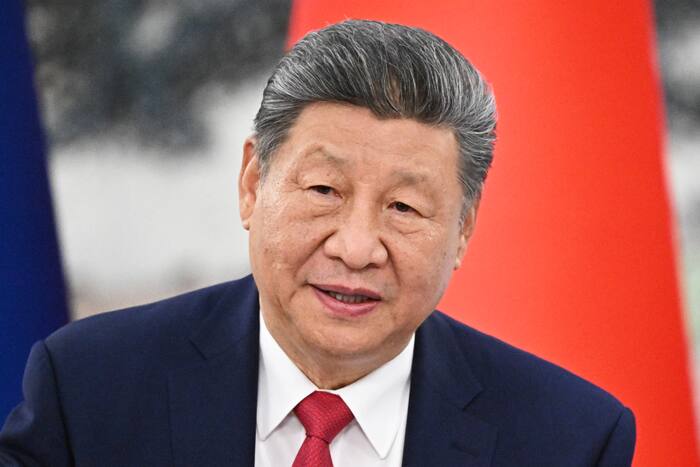
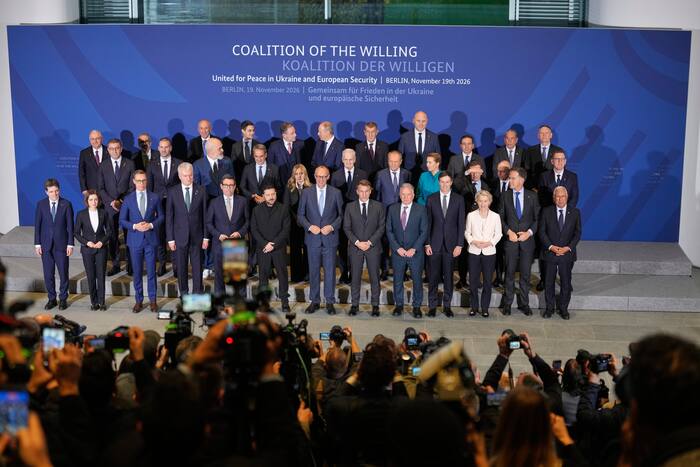
A trilateral deal limiting nuclear weapons between the United States, China, and Russia is dead on arrival for one simple reason—the three nations are moving in completely opposite strategic directions at the exact moment the last legal guardrails have vanished. When President Donald Trump stepped off Air Force One after his November 19, 2026 summit with Chinese President Xi Jinping and Russian President Vladimir Putin in Shenzhen, he admitted that capping their arsenals would be "very hard," even as he promised to keep trying. That concession was diplomatic shorthand for a structural deadlock.
For 70 minutes behind closed doors at Shenzhen’s Kylin Villa, the leaders of the world’s three largest nuclear powers talked about global stability. They emerged with a four-point joint declaration promising to "conduct a dialogue on reducing nuclear risks" and echoing the classic 1985 Reagan-Gorbachev line that a nuclear war cannot be won and must never be fought. Yet the document contained zero binding limits, zero verification mechanisms, and zero warhead caps.
To understand why a substantive treaty remains out of reach, look past the summit pageantry. The collapse of Cold War-era arms control has collided with a three-way nuclear race where every player holds a fundamentally incompatible hand.
The End of the New START Era
For more than five decades, bilateral treaties between Washington and Moscow prevented an unchecked buildup of strategic warheads. That era officially ended in February 2026 with the expiration of the New Strategic Arms Reduction Treaty (New START).
For the first time since Richard Nixon and Leonid Brezhnev signed SALT I in 1972, there are no legally binding treaties restricting the deployed strategic nuclear forces of the United States and Russia. On-site inspections halted years ago. Data exchanges dried up. Now, even the ceiling of 1,550 deployed warheads per side is gone.
Trump has argued that any replacement treaty must include China. On paper, the logic is straightforward. Together, the United States, Russia, and China control roughly 92 percent of the world's nuclear firepower. A bilateral deal that ties Washington’s hands while Beijing builds hundreds of new missile silos makes little sense to Pentagon planners.
Yet demanding a three-way treaty creates a mathematical trap. Bilateral arms control relied on strategic parity—two superpowers matching each other weapon for weapon, delivery system for delivery system. Bringing a third, much smaller nuclear power into the room breaks that symmetry immediately.
Beijing’s Sprint to Parity
China has no intention of freezing its arsenal at current levels. For decades, Beijing maintained a posture of "minimum deterrence," keeping a modest stockpile of a few hundred warheads designed merely to survive a first strike and retaliate. That doctrine is obsolete.
According to U.S. defense assessments, China is rapidly expanding its nuclear forces to match American and Russian dominance. Satellite imagery over the past several years has revealed hundreds of new intercontinental ballistic missile silos across China's northern deserts, alongside a modernized fleet of ballistic missile submarines and nuclear-capable bombers.
From Xi Jinping’s perspective, signing a treaty that locks in today's numbers would codify permanent Chinese inferiority. Why would Beijing accept a cap of 600 or 1,000 warheads while Washington and Moscow each sit on stockpiles exceeding 5,000 total warheads?
Chinese diplomats have repeatedly signaled that the United States and Russia must drastically slash their own arsenals first before China will consider formal numerical limits. Trump himself acknowledged the political impossibility of that demand back in Washington, telling reporters that putting an American president in the position of cutting the U.S. arsenal in half is nearly impossible to execute.
Moscow’s Nuclear Shield
While China is building up to gain leverage, Russia is leaning on its nuclear stockpile to compensate for conventional weaknesses.
Moscow holds the largest nuclear inventory on Earth—between 5,400 and 5,600 warheads—and has steadily expanded its stock over the past four years. Throughout the grinding war in Ukraine, Vladimir Putin has used nuclear signaling as an active instrument of statecraft to deter direct Western military intervention.
Furthermore, Russia’s strategic anxiety centers on capabilities that traditional warhead counts do not measure. Moscow’s military planners worry that advanced American precision conventional weapons, missile defense interceptors, and space-based sensor networks could eventually neutralize Russia’s retaliatory strike. To counter that threat, Russia has poured resources into exotic delivery systems designed to bypass U.S. defenses entirely, including the nuclear-powered Poseidon underwater drone and the Burevestnik nuclear-powered cruise missile.
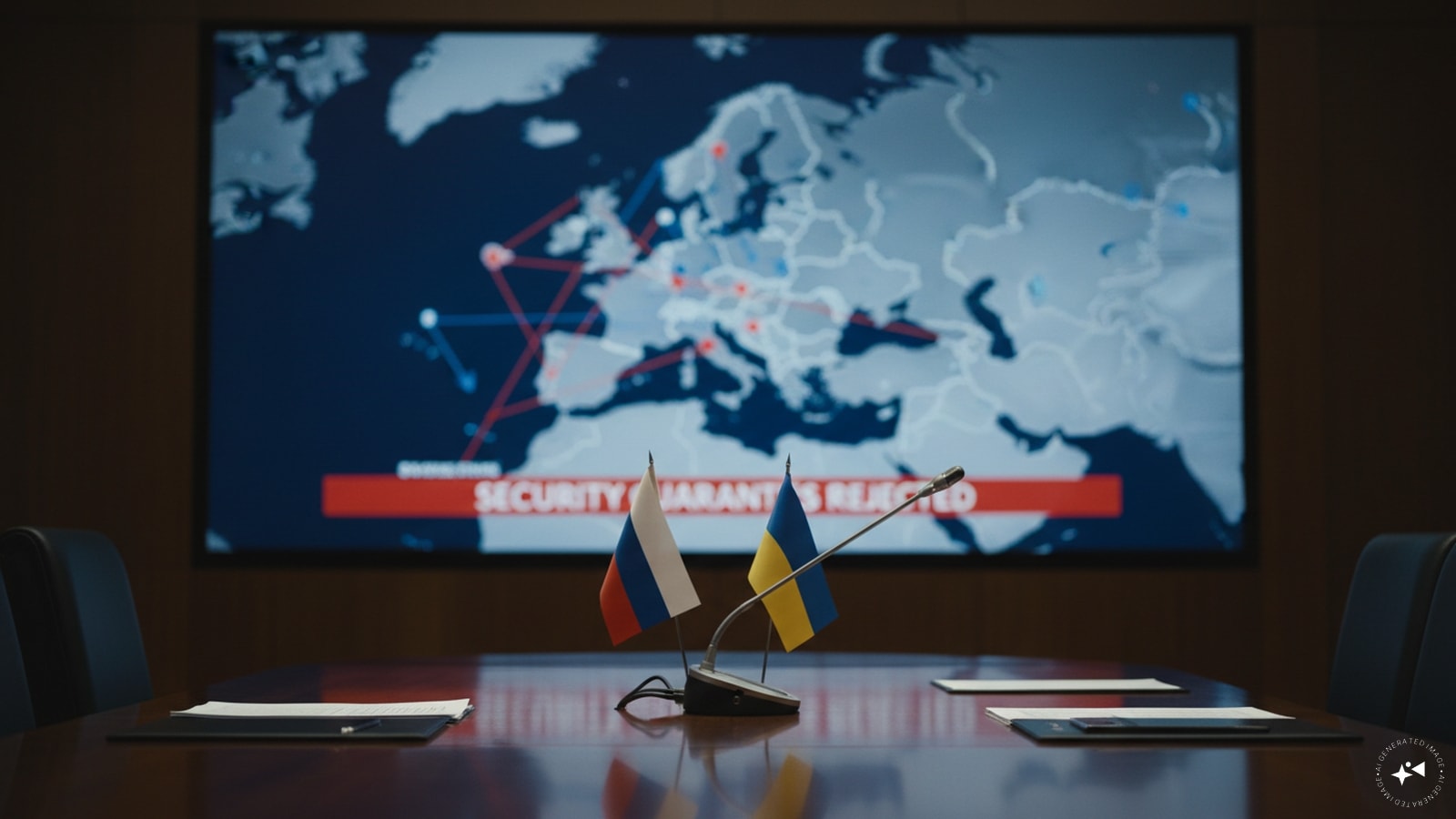
Russia will not trade away its asymmetrical advantages or submit to intrusive inspections while fighting a proxy conflict with NATO. Even worse, Putin refuses to enter trilateral talks unless the nuclear arsenals of U.S. allies—specifically Britain and France—are counted on Washington’s side of the ledger. If Beijing demands parity and Moscow demands counting European warheads, the negotiating math collapses before a single draft treaty is written.
The Verification Nightmare
Even if Trump, Xi, and Putin somehow agreed on a headline number for warhead limits, enforcing the deal would present an unprecedented technical hurdle.
Cold War treaties worked because of exhaustive, invasive verification regimes. Inspectors physically counted warheads on missiles, monitored factory perimeters, and tracked rail-mobile launchers via dedicated satellite protocols.
The Dual-Use Problem
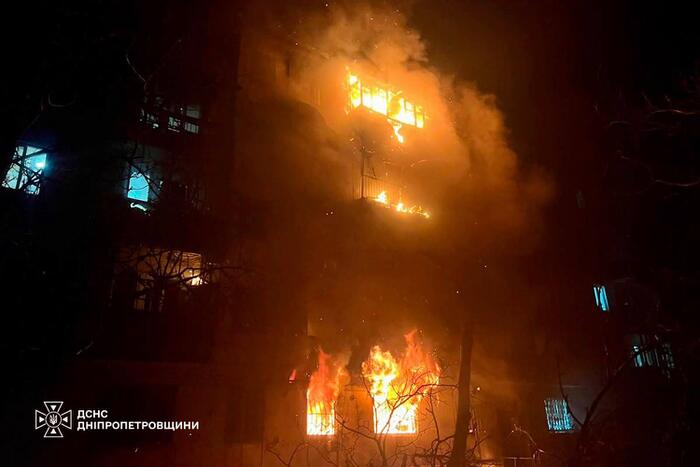
Modern weapons blur the line between conventional and nuclear warfare. Consider Russia’s deployment of ground-launched intermediate-range ballistic missiles—weapons that were banned under the defunct Intermediate-Range Nuclear Forces (INF) Treaty until its collapse in 2019. Russia has already fired such missiles armed with conventional warheads against Ukrainian cities like Dnipro. Because the exact same launcher and airframe can carry either a conventional payload or a nuclear warhead, inspectors cannot tell what is inside the nose cone without physically opening the weapon.
Tactical Weapons and Cyber Risks
New START only counted strategic weapons—massive missiles capable of crossing oceans. It left out tactical nuclear weapons, which are smaller, shorter-range warheads designed for battlefield use. Russia maintains a massive advantage in tactical warheads, holding an estimated 1,500 to 2,000 compared to roughly 200 for the United States. Counting tactical warheads requires inspecting bunkers deep inside sovereign territory, a level of transparency neither Beijing nor Moscow will tolerate.
At the same time, emerging technologies like artificial intelligence, hypersonic glide vehicles, and anti-satellite weapons threaten nuclear command-and-control networks in ways that legacy treaties never anticipated. You cannot easily count lines of cyber-warfare code or verify whether an orbiting satellite carries an electronic jammer or a nuclear anti-satellite payload.
What Actually Happened in Shenzhen
If a real arms control treaty was never on the table, why did Xi host the summit, and why did Trump fly across the Pacific for a 70-minute meeting?
Look closely at the rest of the Shenzhen joint declaration. Alongside the vague pledge to discuss nuclear risks, the three leaders agreed to cooperate on reforming the United Nations, expanding the global refining and supply of fossil fuels, and curbing the jurisdiction of the International Criminal Court.
Every single leader walked away with a specific political prize unrelated to warhead counts:
- Vladimir Putin achieved a major diplomatic rehabilitation. Wanted on an arrest warrant by the International Criminal Court, the Russian president stood shoulder-to-shoulder with the leaders of the United States and China as an equal architect of global order, while securing joint language attacking the very court that indicted him.
- Xi Jinping positioned Beijing as the indispensable diplomatic hub of the multipolar world. By convening both Washington and Moscow on Chinese soil, Xi projected global statesmanship at a moment when trade tensions and U.S. semiconductor export controls are squeezing the Chinese economy.
- Donald Trump secured a high-visibility spectacle ahead of the December G20 summit in Miami. By framing himself as the only leader capable of bringing America's two primary nuclear adversaries to the same table, he reinforced his brand as an unconventional dealmaker willing to shatter diplomatic taboos.
The Realistic Alternative to Grand Treaties
Chasing a sweeping, legally binding trilateral arms reduction treaty right now is a fool's errand. The geopolitical trust required to ratify a complex verification regime in the U.S. Senate—let alone get it signed in Beijing and Moscow—does not exist.
However, abandoning grand treaties does not mean accepting nuclear chaos. Arms control veterans point out that Washington, Beijing, and Moscow could pursue targeted risk-reduction measures that require minimal trust and zero warhead cuts.
The most immediate step is a trilateral missile pre-launch notification agreement. The United States and Russia have notified each other before test-firing ballistic missiles and space-launch vehicles for decades so that early-warning satellites do not mistake a routine test for a surprise attack. China has a limited bilateral notification pact with Russia, but virtually no formal mechanism with Washington. Extending a unified notification protocol across all three capitals would drastically lower the odds of an accidental nuclear exchange triggered by a misread radar screen.
Establishing dedicated, resilient military-to-military crisis hotlines between the Pentagon and China's Central Military Commission—and keeping AI systems strictly isolated from nuclear launch authorization—would also buy critical stability without forcing any nation to surrender a single warhead.
Grand summits produce headlines, and vague declarations buy political breathing room. Until the three superpowers settle their fundamental disputes over European borders, Indo-Pacific dominance, and missile defense, the numbers in their nuclear silos will only move in one direction.