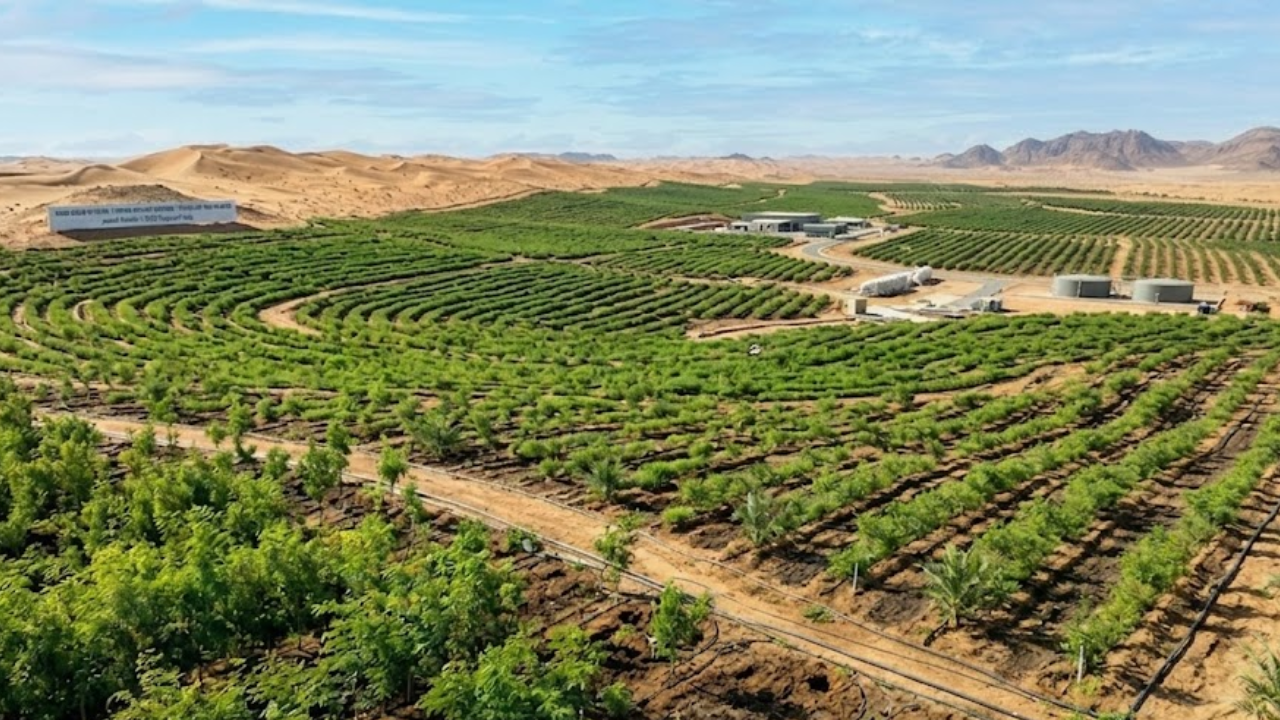
The Saudi Green Initiative (SGI) recently announced a milestone that sounds impossible on paper: one million hectares of land restored and 150 million trees planted. To a casual observer, these figures represent a miracle in the sand. To an analyst who has tracked Gulf infrastructure for decades, they represent an audacious, high-stakes engineering project that is as much about water security and economic survival as it is about carbon credits. Saudi Arabia is not just planting trees. It is attempting to rewire the hydrology of a peninsula that hasn't seen consistent natural forestation since the wet periods of the Holocene.
The scale of this effort is difficult to visualize. One million hectares is roughly the size of Lebanon. Achieving this in one of the most arid climates on Earth requires more than just shovels and seeds. It requires a massive deployment of treated sewage effluent (TSE), cloud seeding technology, and a radical overhaul of land management. While the headline numbers are impressive, the real story lies in the survival rate of these saplings and the staggering volume of water required to keep a "green" Saudi Arabia from turning back into a dust bowl within a decade.
The Desalination Trap and the Water Budget
You cannot talk about Saudi greening without talking about salt. The Kingdom is the world's largest producer of desalinated water, a process that is traditionally energy-intensive and ecologically taxing due to brine discharge. For years, the math didn't add up. Why burn oil to create water to grow trees to offset the carbon from the oil you just burned?
The shift began with the integration of renewable energy into the desalination process. By 2024, the push toward solar-powered desalination plants changed the internal rate of return for environmental projects. The 150 million trees already in the ground are largely being sustained by Treated Sewage Effluent (TSE). Historically, this water was dumped. Now, it is the lifeblood of the SGI.
However, the "how" involves a calculated risk. Using recycled water for irrigation is a closed loop, but it is a fragile one. If the industrial or residential output of water drops—or if the infrastructure for transport fails—the "million-hectare" restoration could collapse into a graveyard of dried timber. The Kingdom is betting that its urban expansion will provide a consistent, growing supply of wastewater to feed its burgeoning forests.
The Vegetation Paradox
Not all trees are created equal. In the early days of Gulf development, cities were filled with thirsty, non-native species like the Eucalyptus or the Conocarpus. These looked good in brochures but were environmental vampires, sucking the water tables dry and offering little to the local ecosystem.
The current strategy has pivoted toward indigenous species such as the Acacia, the Ghaf, and the Sidr. These plants are built for the heat. They have evolved deep root systems that can tap into moisture far below the surface, and they require significantly less "active" irrigation once they reach maturity. By focusing on these species, the SGI is trying to create a self-sustaining biome rather than a high-maintenance park.
Land Restoration or Land Reclassification
There is a distinction between planting a tree and restoring a hectare of land. Critics often point out that "restoration" can be a vague term in international climate accounting. In the Saudi context, this involves the cessation of overgrazing and the physical stabilization of dunes.
For a century, unregulated grazing by camel and goat herders decimated the natural scrubland of the Nejd and Hejaz regions. By fencing off vast tracts of land and enforcing "no-go" zones for livestock, the government has allowed the dormant seed bank in the soil to reactivate. This is the "hidden" restoration that accounts for much of the million-hectare figure. It is less about planting and more about stepping back.
But this move has social costs. Bedouin communities that have moved their herds across these lands for generations are finding their traditional routes blocked. The government is attempting to mitigate this by promoting "controlled grazing" and sustainable fodder production, but the tension between ancient nomadic traditions and modern environmental mandates is a friction point that rarely makes it into the official press releases.
The Economic Engine Behind the Green
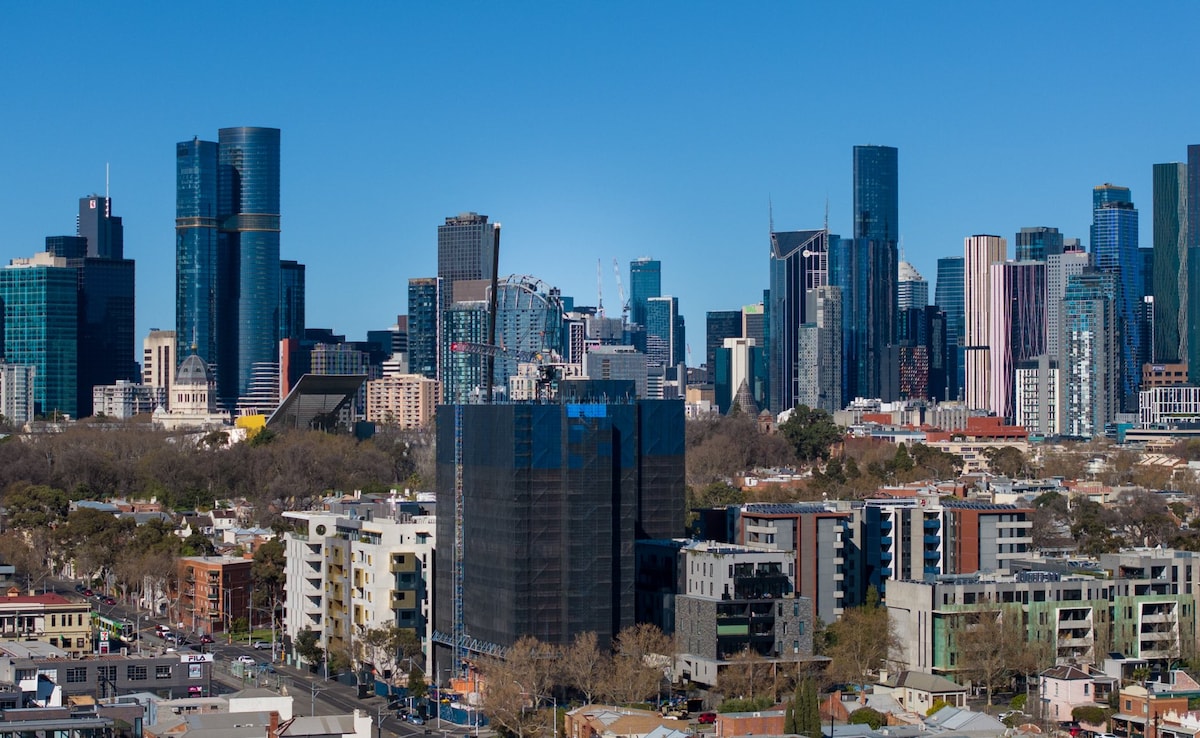
The Saudi Green Initiative is often framed as a philanthropic or "visionary" project, but at its core, it is a diversification play. Crown Prince Mohammed bin Salman knows that a scorched, uninhabitable Riyadh is a city that cannot attract foreign investment or high-level global talent.
- Urban Heat Island Mitigation: Temperatures in Saudi cities can hit 50°C. By increasing canopy cover, the government aims to drop ambient temperatures by 2°C to 4°C. This isn't just about comfort; it's about reducing the massive energy load required for air conditioning, which currently consumes a terrifying percentage of the Kingdom's domestic power.
- The Carbon Credit Market: Under the Paris Agreement, these millions of trees represent a significant carbon sink. As the world moves toward mandatory carbon reporting, the Kingdom is positioning itself to be a net exporter of "green" energy and a holder of massive domestic carbon offsets.
- Eco-Tourism: Projects like the Red Sea Global and NEOM rely on a specific aesthetic. They need mangroves, they need greenery, and they need a climate that doesn't feel like a furnace. The 150 million trees are the literal foundation of a multi-billion dollar tourism industry.
Technical Hurdles and the Mortality Rate
The most guarded secret in any massive reforestation project is the mortality rate. In arid climates, it is common for 30% to 50% of saplings to die within the first three years. To hit the target of 10 billion trees eventually, the Kingdom has to plant at a rate that accounts for this inevitable attrition.
To combat this, they are using site-specific AI modeling to determine where a seed has the highest chance of survival based on soil salinity, wind patterns, and historical rainfall data. They are also deploying "Groasis Waterboxx" technology—small, self-contained units that capture dew and rainwater to nurture a sapling until its roots reach the water table. This is a far cry from a man with a watering can. It is a high-tech siege against the desert.
The Role of Mangroves
While the desert gets the headlines, the coastline is where the real carbon sequestration happens. Saudi Arabia has one of the most ambitious mangrove restoration programs on the planet. Mangroves can sequester up to four times more carbon than tropical rainforests. By restoring the coastal fringes of the Red Sea and the Arabian Gulf, the Kingdom is building a natural defense against rising sea levels while padding its carbon balance sheet.
The challenge here is salinity. As the Red Sea becomes warmer and more saline due to climate change, even the hardy mangrove reaches its limit. Scientists at King Abdullah University of Science and Technology (KAUST) are currently working on "super-mangroves"—variants that can thrive in hypersaline conditions. This is where the project moves from "gardening" into the realm of bio-engineering.
A Regional Ripple Effect
The Saudi Green Initiative is the catalyst for the broader Middle East Green Initiative (MGI). The goal is to plant 50 billion trees across the region. This is where the politics get interesting. By leading this charge, Riyadh is asserting environmental leadership over its neighbors, essentially dictating the regional standards for climate action and sustainable development.
This "green diplomacy" serves a dual purpose. It builds a coalition of states dependent on Saudi expertise and funding, and it provides a unified front against international critics who view the Kingdom solely through the lens of fossil fuels. It is a sophisticated rebranding, backed by real capital and real dirt.
The Verdict on the First Million Hectares
A million hectares is a significant start, but it is only the first inning of a very long game. The success of this project won't be measured by the number of trees planted this year, but by how many are still standing in 2040.
The Kingdom has shown it has the money and the political will to move mountains—or in this case, to forest deserts. The primary threat remains the climate itself. If global temperatures continue to rise at current rates, the sheer evaporative demand might outpace even the most efficient recycled water systems. Saudi Arabia is effectively in a race against the sun.
The strategy is clear: use the current wealth generated by oil to build a post-oil environment that is physically habitable. It is a pragmatic, survivalist approach to the climate crisis. Every tree planted is a bet against the encroaching sand. For the first time in modern history, the desert is losing ground.
Track the irrigation maps. If the water flows, the trees grow. If the water stops, the million hectares will vanish back into the dunes in less than a summer. The sustainability of the "how" is now more important than the "why."
Check the soil salinity levels in the restored zones. If the salt rises, the restoration fails.