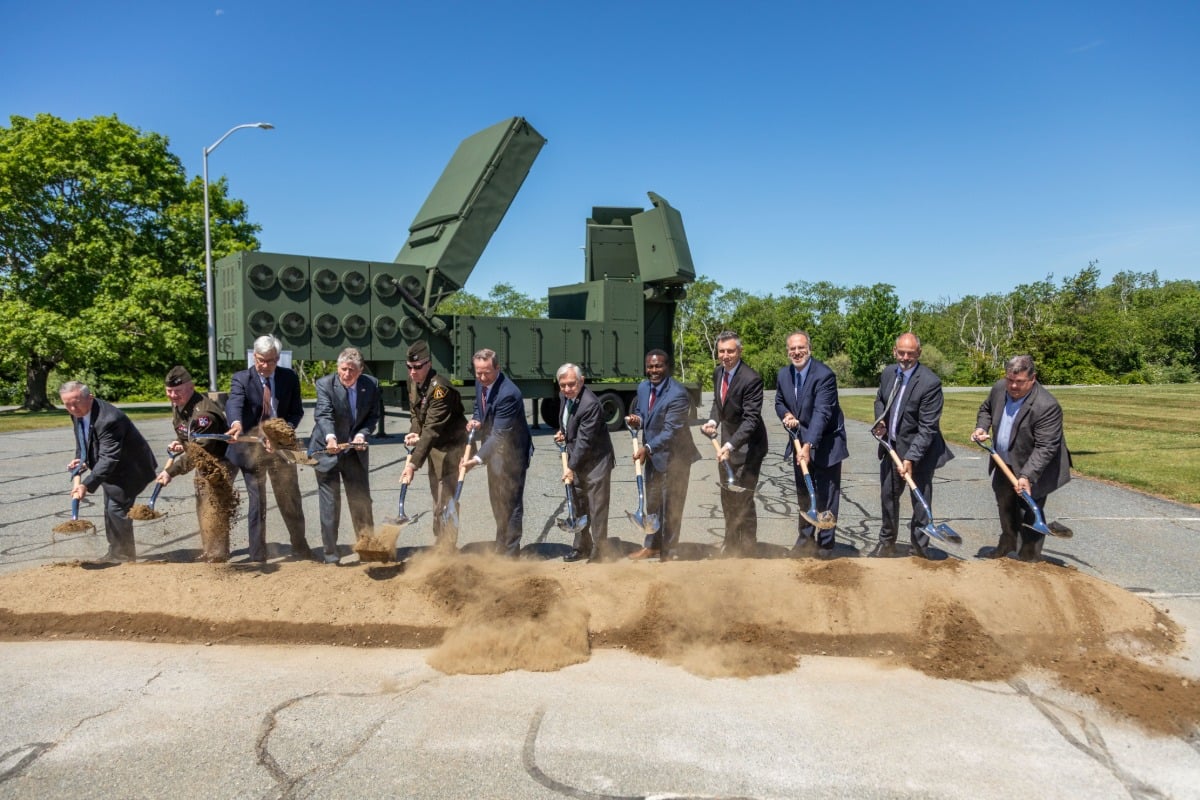
Raytheon is spending $100 million to expand its Patriot missile system production factory in Camden, Arkansas. On the surface, the defense contractor's investment looks like a straightforward corporate response to a massive spike in global demand. It is not. This capital expenditure is a reactive, stopgap measure designed to fix a broken, slow-moving supply chain that has left Western defense reserves dangerously depleted. While a nine-figure expansion sounds impressive in a press release, the reality is that the defense industrial base cannot simply buy its way out of a generational manufacturing bottleneck with a single factory upgrade.
The expansion targets the production of the Patriot Advanced Capability-3 (PAC-3) Missile Segment Enhancement (MSE), the primary interceptor used to knock down ballistic missiles, cruise missiles, and advanced aircraft. For decades, the Pentagon and its contractors operated on a lean, just-in-time manufacturing model optimized for low-intensity, counter-insurgency conflicts. That model collapsed when faced with the high-attrition warfare seen in modern European and Middle Eastern theaters.
The Hidden Bottleneck in Camden
To understand why $100 million is barely a down payment on fixing the missile shortage, you have to look at how a Patriot missile is actually built. Raytheon acts as the prime system integrator, but the PAC-3 MSE interceptor itself is a complex jigsaw puzzle requiring precision components from hundreds of secondary suppliers.
The Camden facility handles the final assembly, integration, and testing. Adding square footage and advanced robotics to this facility speeds up the very end of the assembly line. It does nothing to accelerate the highly specialized, sluggish supply chain feeding it.
The Rocket Motor Problem
Every PAC-3 MSE relies on a solid rocket motor to get into the air. Aerojet Rocketdyne, the primary supplier of these motors, has spent years struggling with production backlogs and quality control issues. If Aerojet cannot deliver rocket motors faster, Raytheon’s shiny new floor space in Arkansas sits empty.
The Microchip Deficit
A modern air defense interceptor is essentially an flying supercomputer. It requires hardened, military-grade semiconductors that are resistant to electronic warfare and extreme thermal stress. These chips are not the same ones found in smartphones or electric vehicles. They are legacy components produced in low volumes by a handful of specialized foundries. A delay in a single chip shipment halts the entire integration line.
The Economics of Attrition
The financial reality of air defense is fundamentally unsustainable. A single Patriot interceptor costs roughly $4 million. The threats they are designed to intercept—such as long-range kamikaze drones or primitive cruise missiles—frequently cost less than $50,000 to produce.
+-------------------------------------------------------------+
|                     THE ASYMMETRY OF AIR DEFENSE            |
+-------------------------------------------------------------+
|                                                             |
|   [Threat: Loitering Munition / Drone]  -->  $50,000        |
|                                                             |
|   VS.                                                       |
|                                                             |
|   [Defense: Patriot PAC-3 Interceptor]  -->  $4,000,000     |
|                                                             |
+-------------------------------------------------------------+
This cost asymmetry creates a profound economic dilemma for Western militaries. If an adversary fires twenty cheap drones at critical infrastructure, a defender must theoretically fire twenty Patriot missiles to guarantee a clean intercept. That is an $80 million defensive salvo to neutralize a $1 million offensive threat.
Global stockpiles are burning out faster than factories can replenish them. Raytheon's current production rate for PAC-3 MSE interceptors sits somewhere around 500 per year globally, with plans to scale toward 650. When a intense conflict can burn through dozens of interceptors in a single week, a target of 650 missiles a year ceases to look like an aggressive expansion. It looks like a mathematical deficit.
Washington Is Funding the Floor Not the Future
The Pentagon is pouring billions into procurement, but the money is flowing into a highly consolidated industry that resists rapid scaling. Decades of defense mergers have left the United States with only a few mega-contractors capable of handling major programs. This lack of competition breeds inertia.
When Raytheon allocates $100 million to Camden, it is doing so with heavily subsidized, guaranteed government contracts backing the risk. The corporation is not betting its own capital on an uncertain market. It is capitalizing on a backlog of orders from the U.S. Army, European allies, and Indo-Pacific partners that extends well into the 2030s.
The real risk is that this infrastructure expansion fixes yesterday's problem. By the time the Camden expansion is fully operational and churning out missiles at the new target rate, the threat environment will have shifted toward hypersonic weapons and massive, swarming drone tactics that the current Patriot architecture was never built to handle.
Why Automation Cannot Save the Assembly Line
Defense executives love to talk about factory automation, digital twins, and advanced manufacturing techniques. They promise these tools will compress delivery schedules. The rhetoric rarely matches the factory floor reality.
Building a Patriot missile remains an stubbornly manual, artisanal process. Technicians must meticulously hand-wire critical sensor arrays. Solid rocket fuel must be poured, cured, and inspected for microscopic air bubbles using industrial X-ray machines. A single flaw in the curing process can cause a missile to explode inside its canister upon ignition.
You cannot automate away the physical laws of chemical curing, nor can you rush the rigorous safety testing required for ordnance. Attempting to force higher throughput without resolving these foundational manufacturing realities invariably leads to quality control failures, which pulls missiles off the line for expensive, time-consuming retrofits.
The Fragile Global Coalition
The Patriot system is no longer just an American asset; it is a global cartel of air defense users. Nations like Germany, Japan, the Netherlands, and Taiwan all rely on the same supply chain. This shared dependency creates intense geopolitical friction when production lags.
When the U.S. government decides to divert a shipment of Patriot missiles to a live combat zone, a peacetime ally that has been waiting years for its ordered battery gets pushed down the queue. This constant reshuffling of the priority list disrupts long-term defense planning across Europe and Asia.
Raytheon’s $100 million expansion is an admission that the current global defense footprint is unsustainable without massive, permanent industrial intervention. The Camden upgrade will help fill some empty warehouses, but it leaves the core vulnerabilities of the defense industrial base completely untouched. Militaries will continue to burn through interceptors faster than workers can build them, proving that in modern warfare, industrial capacity is the ultimate limiting factor.