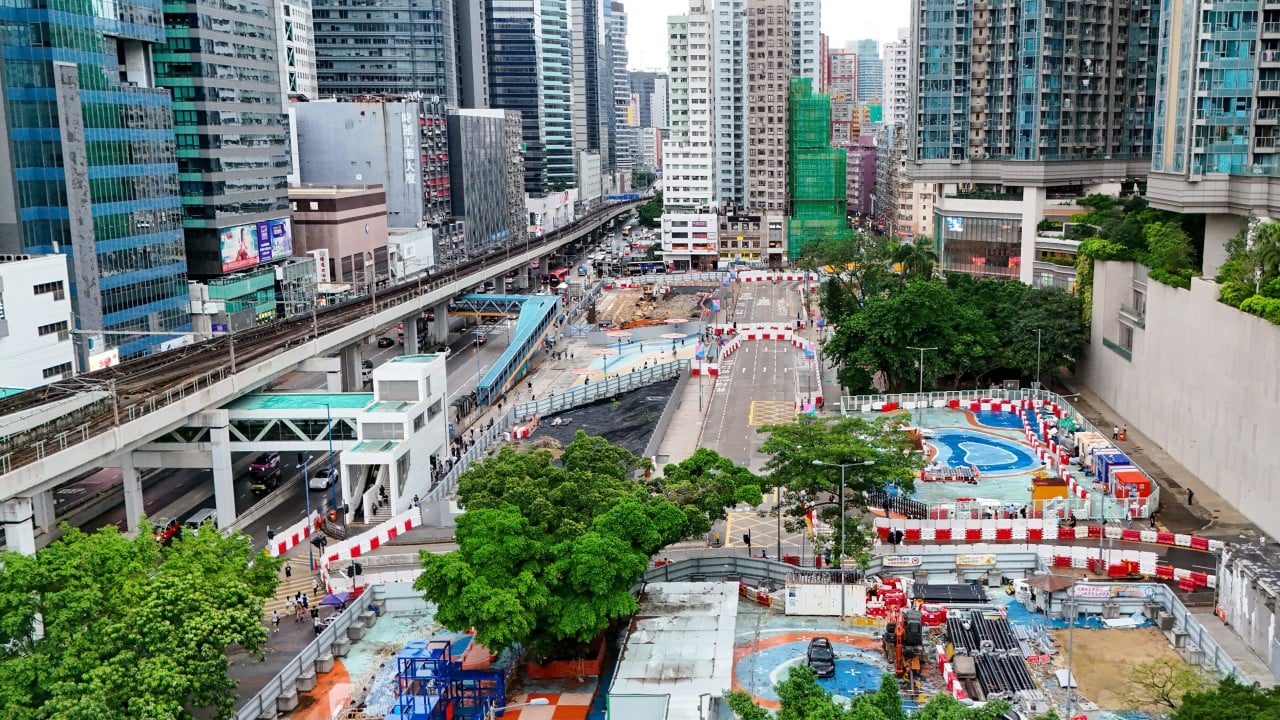
The forced closure of Yue Man Square in Kwun Tong marks the collapse of authentic community-driven commerce in Hong Kong, sacrificed for high-end residential towers and sanitized shopping malls that locals cannot afford. When hundreds gathered to say goodbye to the old district, the public narrative focused heavily on nostalgia and tears. The real story is a calculated, decades-long extraction of value by the Urban Renewal Authority (URA) that systematically dismantled a self-sustaining ecosystem of working-class entrepreneurs. What replaced it is not progress, but a sterile privatization of public space.
To understand the crisis facing Hong Kong’s urban identity, one must look beneath the glossy promotional brochures of the development project. The URA pitched the multi-billion-dollar Kwun Tong town centre redevelopment as a necessary modernization scheme. They promised a cleaner, safer, more efficient urban hub. Instead, they delivered a textbook example of gentrification that breaks the social contract with the city's most vulnerable residents.
The Financial Engine of Community Displacement
Urban renewal in Hong Kong operates as a real estate mechanism disguised as public welfare. The URA functions under a mandate that requires it to remain financially self-sustaining. This operational structure creates an inherent conflict of interest. To fund future acquisitions, the authority must maximize the land value of its current projects.
When the government clears a low-income neighborhood like Yue Man Square, it compensates property owners based on the value of a replacement flat that is typically seven years old in the same general locality. This sounds fair on paper. In practice, the formula fails to account for the unique economic utility of old, low-rent commercial spaces.
Consider a grassroots street vendor or a small independent repair shop. These businesses survived on razor-thin margins made possible by nominal rents in decades-old buildings. They served a low-income clientele that relied on affordable goods. By reclaiming this land, consolidating the plots, and auctioning them to mega-developers, the city eliminates the physical infrastructure required for working-class survival. A street vendor cannot pay corporate mall rents. The math does not work.
The result is a massive transfer of wealth. Small, independent operators are wiped out, while major property conglomerates acquire pristine, massive plots of land in the heart of established districts. The local economy loses its diversity, replaced by the same chain stores, luxury cosmetic shops, and high-end supermarkets that populate every other district in Hong Kong.
The Myth of the Public Consultation
Officials frequently point to years of public consultation to justify the destruction of Yue Man Square. They claim the community supported the modernization. This defense ignores the power dynamics at play during these town hall meetings.
Consultation processes in Hong Kong urban planning are largely performative. The overarching goals of the project—high-density residential towers, a massive podium mall, and a privatized transport interchange—are decided long before the public enters the room. The consultation merely tweaks the margins. Residents are allowed to vote on the color of the benches or the placement of a green wall, but they cannot vote to preserve the low-rise, open-air street market character that defined the area for half a century.
Furthermore, the compensation negotiations systematically fractured the community's collective bargaining power. By dealing with tenants and owners individually behind closed doors, the authority prevented a unified front. Activists and shopkeepers who held out for better terms or demanded to be reintegrated into the new design as street-level operators were painted as obstructionists holding back the city’s development.
The Architecture of Exclusion
Walk through the newly completed phases of the redevelopment and the strategy becomes clear. The old Yue Man Square was chaotic, hot, and vibrant. It featured wide pavement areas where people interacted, bargained, and lingered without the obligation to spend money. It was an organic public space.
The new structure relies on the architecture of exclusion. Everything is funneled indoors into air-conditioned private property. Security guards patrol the indoor transport interchange and the adjacent mall spaces, ensuring that activities deemed untidy or non-commercial are quickly shut down.
- Street-level access is minimized: High walls and glass facades separate the indoor mall environment from the surrounding older, poorer sections of Kwun Tong.
- Elevated walkways dictate movement: Pedestrians are funneled directly from transit hubs into commercial properties, bypassing what remains of the local street economy.
- Public spaces are heavily policed: Benches are designed to prevent lying down, and open plazas lack shade, discouraging prolonged gatherings that do not generate revenue.
This architectural shift alters the demographic profile of the neighborhood. The elderly and the working poor, who once used Yue Man Square as a central social hub, are visibly absent from the new development. They have been priced out and designed out.
The Failure of the Hawker Mitigation Scheme
To counter criticism about wiping out local culture, the URA established the Yue Man Hawker Bazaar. This indoor, multi-story facility was marketed as a modern, clean environment where traditional street vendors could continue their trades. It has proven to be a commercial failure for the hawkers who accepted the relocation.
Street vending relies entirely on foot traffic, visibility, and spontaneity. A pedestrian walking home from work buys fruit or a cheap household item because it is directly in their path on the sidewalk. Moving these vendors inside a building, up escalators, or down into designated basements breaks the economic link between the seller and the passerby.
Many vendors report that their revenues dropped by more than half after moving into the managed bazaar. The sterile environment strips away the identity that made their businesses attractive in the first place. It turns out that tourists and locals alike do not want to buy traditional street food or cheap garments in a space that feels like a hospital corridor. The bazaar serves as a holding pen, keeping the vendors out of sight until their leases expire and their trades naturally die out.
A Dangerous Blueprint for the Rest of the City
What happened in Kwun Tong is not an isolated incident. It is the blueprint for the future of Hong Kong’s older districts. Massive redevelopment projects are already slated for Sham Shui Po, To Kwa Wan, and Yau Ma Tei. These are the last remaining strongholds of affordable housing and grassroots entrepreneurship in the urban core.
If the URA applies the same financial model to these neighborhoods, Hong Kong will completely lose the unique urban fabric that distinguishes it from any other global financial hub. The city risks becoming a monotonous conveyor belt of identical shopping podiums and restricted luxury enclaves.
The economic argument for this model is crumbling. The retail sector in Hong Kong is undergoing a structural shift, with declining luxury spending and changing tourist habits. Building more massive shopping malls to replace vibrant street markets is an outdated strategy that no longer guarantees high financial returns. The vacancy rates in newly built commercial podiums across the city indicate that the market is saturated.
The city must shift away from the complete demolition and reconstruction model. True urban renewal requires organic preservation, where existing buildings are structurally upgraded without evicting the communities inside them. Rents must be stabilized for local businesses, and street-level commerce must be protected by zoning laws rather than being consolidated into corporate retail complexes.
The crowd that gathered to witness the final days of Yue Man Square did not just show up to mourn old buildings. They were witnessing the systematic closure of a lifestyle that allowed ordinary citizens to build businesses, support families, and create a community on their own terms. The glossy towers that now stand in their place are monuments to real estate speculation, paid for by the destruction of the city's living social history.