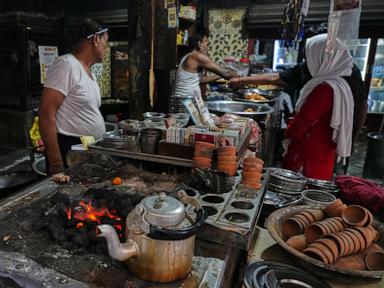
The global energy crisis has moved from the boardrooms of London and New York to the cooking fires of sub-Saharan Africa and Southeast Asia. While Western nations debate the merits of heat pumps and nuclear fusion, over 2.3 billion people are facing a much more primitive reality. They are being forced to choose between buying food or buying the fuel required to cook it. As the prices of Liquefied Petroleum Gas (LPG) and kerosene skyrocket, families are abandoning "clean" energy and returning to the forest. This is not just a localized poverty issue. It is a massive, systemic failure of the global energy transition that is currently erasing decades of conservation gains in a matter of months.
The Broken Promise of Liquid Gas
For the last twenty years, international development agencies pushed a specific narrative. They argued that transitioning rural households from wood and charcoal to LPG was the "silver bullet" for both public health and environmental preservation. It made sense on paper. LPG burns cleaner, reduces respiratory illness, and stops the constant hacking away at local woodlands. Meanwhile, you can read related events here: The Invisible Hand in the Postman’s Bag.
But this strategy had a fatal flaw: it ignored the volatility of global commodity markets. When the war in Ukraine triggered a global scramble for natural gas, the ripples hit the world’s poorest consumers first. In places like Kenya, Ghana, and Vietnam, the cost of refilling a standard gas cylinder doubled or even tripled. For a family living on less than five dollars a day, that price hike is an insurmountable barrier.
They did not stop cooking. They simply went back to what was free. To explore the complete picture, check out the detailed article by The Economist.
The result is a massive surge in the demand for charcoal and firewood. Unlike the organized, regulated timber industry, the "informal" fuel trade is a ghost economy. It operates under the radar of national statistics but its impact is visible from space. Satellite imagery now shows thinning canopies around major urban centers in Tanzania and Cambodia, areas that were supposed to be protected zones. This is "reverse transition"—a regression where modern energy is replaced by ancient, carbon-heavy alternatives because the modern systems proved too fragile to handle a price shock.
Charcoal as a Hard Currency
We need to talk about charcoal as more than just a fuel. In many developing economies, charcoal has become a form of shadow currency. It is portable, divisible, and always in demand. When the formal economy fails, people turn to the charcoal trade to survive.
The process is devastatingly inefficient. To produce one ton of charcoal, you generally need between five and ten tons of raw wood, depending on the kiln technology used. Most of these kilns are nothing more than dirt-covered mounds that leak heat and methane.
The Hidden Industrial Demand
It is a mistake to think this is only about small pots of rice in rural huts. There is a massive industrial undercurrent. Small and medium enterprises—brick kilns, bakeries, tea processing plants, and tobacco dryers—are also fleeing high electricity and gas prices. They are switching to wood-fired boilers in staggering numbers.
When a factory switches from fuel oil to wood, it doesn't just pick up sticks. It clears hectares. This industrial-scale consumption puts a pressure on old-growth forests that traditional "subsistence" gathering never could. We are seeing the industrialization of deforestation, fueled by the desperation of business owners who can no longer afford the electric bill.
Why Solar and Wind Are Not the Immediate Fix
There is a common refrain in climate circles that we should just "leapfrog" straight to renewables. This sounds visionary in a TED Talk, but it ignores the physics of energy density.
Cooking requires high, concentrated heat. A solar-powered stove that can boil a large pot of water in the same timeframe as a gas burner or a charcoal fire is either prohibitively expensive or requires a battery array that costs more than the house it sits in. Small-scale solar is excellent for lighting a LED bulb or charging a mobile phone. It is currently incapable of replacing the thermal energy required for the daily survival of two billion people.
[Image comparing energy density of wood, charcoal, LPG, and solar batteries]
Furthermore, the supply chains for renewable hardware are themselves subject to the same geopolitical pressures as fossil fuels. The cost of lithium, copper, and specialized glass has not remained static. For a community that has just been priced out of the gas market, a high-tech solar cooker that requires imported spare parts is not a solution. It is a risk.
The Conservation Ghost Towns
Conservation efforts in the Global South have long relied on "incentive-based" models. The idea was simple: if we give local communities jobs in eco-tourism or pay them to protect a forest, they will stop cutting it down.
The energy shock has shredded this social contract.
When the tourism industry collapsed during the pandemic and was then hit by the global inflation spike, those "incentives" evaporated. At the same time, the cost of basic energy rose. Conservation rangers in protected parks from Madagascar to the Amazon are now reporting a different kind of poacher. These aren't people looking for ivory or exotic skins. They are people looking for fuel.
The Failure of Carbon Credits
Many of these forests were supposed to be protected by the sale of carbon credits. The theory was that Western companies would pay to keep these trees standing. However, the carbon market has been plagued by transparency issues and "junk" credits that don't actually result in new carbon sequestration.
More importantly, the money from these credits rarely reaches the person with the axe. If a carbon project pays a local government or a large NGO, but the local mother still can't afford gas to cook her children's dinner, she will cut down the "protected" tree. The tree has more immediate value as fuel than it does as a theoretical carbon sink on a spreadsheet in Geneva.
The Infrastructure Trap
The real reason the energy transition is failing in these regions is a lack of localized infrastructure. Most developing nations are dependent on imported fuels. They are at the end of a very long, very expensive tail of logistics.
When a ship carrying LPG arrives at a port in Mombasa or Chittagong, every hand that touches that fuel adds a margin. By the time it reaches a village 300 miles inland, the price is disconnected from reality.
Energy sovereignty is the only way out, but it requires a move away from the "import-everything" model. This means investing in decentralized biogas from agricultural waste, which can be produced locally and doesn't rely on the price of Brent Crude. It means developing geothermal resources that provide steady, base-load power regardless of whether the sun is shining or the wind is blowing.
The Human Cost of High-Efficiency Myths
We often see "improved cookstove" programs touted as the answer. These are stoves designed to burn wood or charcoal more efficiently. While they help, they often fall into the "rebound effect" trap. When you make a resource more efficient to use, people sometimes end up using more of it because the perceived cost has dropped.
More tragically, these programs often fail because they don't account for cultural reality. A stove designed in a lab in California might not be able to hold the heavy, round-bottomed pots used for making ugali or fufu. If the technology doesn't fit the culture, it becomes a glorified flowerpot.
The energy crisis is forcing a brutal honesty upon us. We have spent billions on "innovative" gadgets while ignoring the underlying economic reality: if clean energy is a luxury, the forest will be the victim.
The Logistics of the Charcoal Underground
To understand the scale, you have to look at the transport networks. In the early hours of the morning, long lines of overloaded bicycles and dilapidated trucks move toward cities like Kinshasa and Dhaka. They are piled high with white bags of charcoal.
This trade is often "illegal" but it is also "essential." Police and local officials often take bribes to let the trucks pass because they know that if they stopped the charcoal, the city would stop eating. This creates a cycle of corruption that further undermines the rule of law and environmental protection.
The forest isn't being lost because people don't care about the environment. It is being lost because the formal energy market has priced itself out of existence for the majority of the human population.
A Shift in Strategy
If we want to stop the "energy shock" from leveling the world’s remaining forests, the approach must change.
- Subsidies must be redirected: Instead of subsidizing fossil fuel imports at the national level, which often only benefits the urban elite, funds should be shifted to local biogas and small-scale hydroelectric projects.
- De-risking local investment: The "risk premium" for building energy infrastructure in the Global South is too high. International banks need to provide guarantees that lower interest rates for local energy entrepreneurs.
- Accepting the thermal reality: We must stop pretending that "lights" equal "energy." Providing a village with solar lanterns does nothing to address their primary energy need: cooking heat.
The current trajectory is a disaster. We are watching a slow-motion collision between a volatile global economy and the literal lungs of the planet. Every time the price of gas ticks up in the commodities market, another patch of forest in the tropics disappears. It is a direct, mechanical link. Until the cost of clean cooking is lower than the cost of a "free" tree, the trees will continue to fall.
This is not a problem for the future. The smoke rising from millions of charcoal kilns today is the sound of the global energy transition hitting a wall. We can either lower the wall by making clean energy a basic utility or watch as the forests are burned to pay the price of our global instability.
The forest cannot wait for the market to stabilize. By the time it does, there may be nothing left to protect. Focus must shift from global carbon markets to local fuel security. Without it, every conservation map is just a piece of paper waiting to be used as kindling.