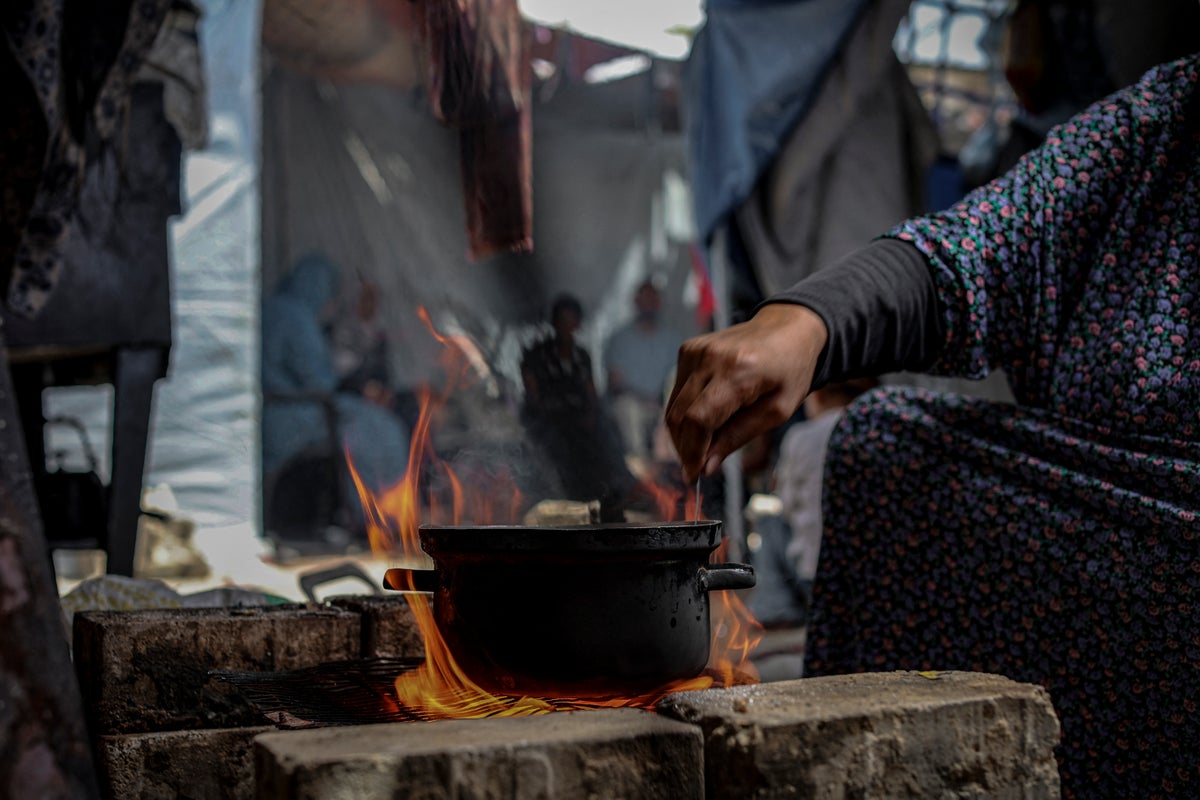
Displaced families in Gaza are converting used cooking oil into crude soap bars to combat an unprecedented hygiene emergency. Amid a near-total blockade on commercial goods and humanitarian aid, clean water and commercial detergents have become functional luxuries, driving a makeshift manufacturing economy where rancid frying oil serves as the primary raw material. This underground chemistry provides a temporary shield against preventable outbreaks of hepatitis, scabies, and severe skin infections. However, the desperate reliance on black-market chemicals and contaminated fats introduces severe physical risks, creating a critical secondary crisis out of a basic survival strategy.
Humanitarian blockades do not just stop food and fuel. They halt the fundamental molecular building blocks of public health, creating structural vacuums that local populations must fill using whatever resources remain in the ruins.
The Chemistry of Displaced Survival
To understand how a community shifts from buying commercially packaged hygiene products to boiling hazardous waste over open fires, one must look at the basic chemical equation of soap. Soap is produced through saponification, a chemical reaction where a triglyceride (fat or oil) reacts with a strong base, typically sodium hydroxide, to produce glycerol and a fatty acid salt.
$$ \text{Triglyceride} + 3\text{NaOH} \rightarrow \text{Glycerol} + 3\text{Soap Molecules} $$
In standard industrial configurations, this reaction is carefully monitored. The purity of the fats is verified, the precise concentration of the alkaline solution is measured down to the milligram, and the curing process allows any unreacted sodium hydroxide to fully neutralize over several weeks.
In a displacement camp, none of these controls exist. Manufacturers rely entirely on frying oil that has been reused dozens of times until it is saturated with carcinogenic compounds, carbonized food particles, and free fatty acids. The resulting bars are dark, pungent, and chemically volatile, yet they represent the only barrier between a family and a host of waterborne pathogens.
The Supply Chain of the Ruined Economy
The transformation of waste into a valuable commodity follows a strict, highly localized economic loop inside the temporary tent cities.
- Collection: Middlemen traverse camp sectors to buy used cooking oil from individual tents and collective kitchens, paying small sums or trading basic rations.
- Filtration: The collected oil undergoes rudimentary mechanical filtration through layers of dense cotton cloth or fine wire mesh to remove large particulate matter.
- Chemical Acquisition: Sodium hydroxide, known locally as caustic soda, is sourced through complex, unregulated smuggling routes or salvaged from destroyed industrial sites.
- Processing: The oil is heated over open wood fires, mixed with the caustic soda solution, and stirred manually in large metal vats until it thickens.
- Molding and Cutting: The mixture is poured into improvised wooden frames lined with plastic sheet material, allowed to solidify over 48 hours, and sliced into individual blocks using taut wire.
The cost of a single commercial bar of soap on the black market has escalated by more than one thousand percent relative to pre-war baselines. This extreme price distortion makes the cheaper, locally manufactured oil-based soap the sole viable option for hundreds of thousands of individuals living in high-density makeshift settlements.
The Toxic Tradeoff of Improvised Production
While this informal industrial pivot demonstrates profound tactical ingenuity, it carries severe physical liabilities that external observers routinely overlook. The primary danger stems from the lack of precise measurement tools, specifically pH testing strips and analytical scales.
When the ratio of oil to sodium hydroxide is incorrect, the resulting soap can easily become unreacted and highly alkaline. Using soap with a pH significantly higher than the human skin's natural, slightly acidic barrier causes severe chemical irritation. It strips away essential epidermal lipids, causing deep cracking, chemical burns, and open fissures.
In an environment characterized by dense overcrowding, raw sewage accumulation, and lack of clean running water, these skin fissures become immediate entry points for highly infectious bacteria. The product meant to guarantee cleanliness frequently ends up accelerating the spread of deep tissue infections.
Furthermore, heating degraded cooking oils over open fires releases highly toxic volatile organic compounds and thick particulate matter. Because women and children typically manage these small-scale boiling operations inside enclosed tents or poorly ventilated concrete ruins, respiratory complications are skyrocketing alongside the skin conditions the soap is intended to treat.
The Structural Limits of Informal Autarky
International aid agencies frequently highlight these micro-enterprises as inspiring examples of community resilience. That framing is a dangerous misinterpretation of a catastrophic systemic failure.
Improvised soap manufacturing is not a sustainable business model, nor is it a genuine victory of local innovation. It is an act of absolute physiological desperation. The operation remains entirely dependent on a finite, dwindling supply of salvaged chemicals and cooking oil. As those inputs disappear, the informal market will contract, leaving displaced populations without even this hazardous alternative.
Relying on decentralized, toxic chemical processing to solve a regional health crisis is a strategy of diminishing returns. Without the immediate restoration of commercial shipping corridors, bulk imports of standard surfactants, and large-scale water purification infrastructure, the makeshift factories of Gaza are simply delaying an inevitable, systemic collapse of basic public hygiene.