Silence does not always mean peace. Sometimes, it is merely the heavy, suffocating pressure before a steel door gives way.
Consider the geography of a front line that has frozen into a permanent scar. For over a decade, the peninsula of Crimea has functioned as an enormous, heavily militarized fortress under occupation. To look at it from a satellite is to see neat lines of logistics, supply depots, and barracks carved into ancient vineyards and tourist towns. To live inside it, however, is to inhabit an environment where the ordinary rules of human society have been systematically compressed until they shatter.
In military sociology, we talk about stress loads. We measure them in months deployed, kilometers advanced, and shells expended. What we rarely quantify is the invisible erosion of the human mind when it is trapped inside a machine that only knows how to consume.
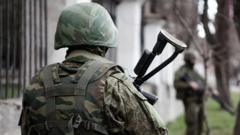
A Russian serviceman stood inside a temporary deployment point in that occupied territory. Around him, the walls were concrete. The air smelled of cheap tobacco, damp wool, and stale tea. Outside, the Black Sea sparkled with an indifference that only nature can manage, completely unbothered by the iron parked along its shores.
What happened next was not an act of geopolitical strategy. It was a domestic collapse of the human spirit played out with automatic weapons.
Four lives ended in a matter of seconds.
The official reports from that day are brief, clinical, and scrubbed of blood. They use administrative language. They speak of an unsanctioned shooting, an internal conflict, a perpetrator neutralized or detained. The wire services pick it up, translate it into English, and push it out to a world that scrolls past it between breakfast and a morning commute. Another statistic. Another casualty of a war that generates numbers faster than humanity can mourn them.
But statistics do not bleed.
To understand the reality of what occurred in that Russian-occupied garrison, we have to strip away the uniform and look at the animal beneath. Imagine the sheer, compounding weight of isolation. Imagine being told that you are part of an unstoppable historic mission while your boots leak, your pay is delayed or pocketed by a cynical quartermaster, and the letters from home grow increasingly thin and panicked.
Stress is a solvent. It dissolves judgment, empathy, and the fragile social contracts that keep men from tearing each other apart in cramped quarters.
Military historians often point to the phenomenon of fragging during periods of prolonged, unpopular conflict. When command structures become tyrannical or completely disconnected from the reality of the trenches, the violence sometimes turns inward. The enemy is miles away, hidden behind ridges or drone screens, untouchable. The person snoring in the bunk three feet away is right there. Their breathing is loud. Their presence is an insult. Their existence becomes the focal point for every ounce of accumulated rage, fear, and powerlessness.
We know from sparse details emerging from occupied territories that discipline within these units has deteriorated into something resembling medieval feudalism. Commanders rule through intimidation and arbitrary punishment. New recruits are thrown into the grinder with minimal preparation, serving as human shock absorbers for a military doctrine that values territory far above individual breath.
When a soldier turns a rifle on his own comrades, it is the ultimate systemic failure. It is a scream into a void that has refused to answer for years.
Think about the sound of gunfire inside an enclosed space. It is not the clean pop you hear in action films. It is a deafening, concussive roar that rattles teeth and turns the air thick with the smell of cordite and copper. In that room in Crimea, four men went to sleep or sat talking about nothing—food, weather, the absurdity of their situation—and within a heartbeat, they were part of the soil they had been sent to conquer and hold.
The shooter did not escape into legend. In stories like this, there are no heroes, only survivors who wish they were anywhere else. The machinery of occupation immediately swallowed the incident, trying to stitch the torn skin of its discipline back together before morale could curdle into outright mutiny.
Yet, incidents like this leak out through local channels, encrypted chat groups, and the quiet grief of families back in provincial towns across Russia who are told their sons died of heart failure or training accidents. The truth is too heavy to mail in an envelope.
We look at maps to understand wars. We count tanks, track supply lines, and debate political legitimacy. We rarely look at the eyes of the eighteen-year-old conscript staring at a concrete wall, wondering if he will survive the week, let alone the year.
The gun rampage in Crimea was not an anomaly. It was a symptom. It was the sound of a pressure cooker finally ripping its seams apart from the inside.
The sea outside the barracks continues to roll against the shore, indifferent to the blood soaking the floorboards. But inside the wire, the damage is permanent. Every cracked relationship, every unravelling mind, and every silenced voice brings the entire structure closer to its inevitable, shattering conclusion.
The last shot echoed against the stone, and then, once again, there was silence.

.png?itok=1mb05mKJ)

