The traditional narrative of the American mass shooting usually involves a solitary, deeply alienated individual targeting random strangers to settle a grievance with society. What happened at the Old West End Festival in Toledo, Ohio, offers a different, far more complex diagnostic challenge for law enforcement and municipal leadership. When gunfire erupted into a crowd of hundreds on a warm June afternoon, it was not the work of a ideological terrorist or a workplace gunman. It was the lethal convergence of two petty, localized factions utilizing public spaces as an arena for personal grievance. Twelve people were wounded because two small groups of young men could not resolve an insult without pulling triggers.
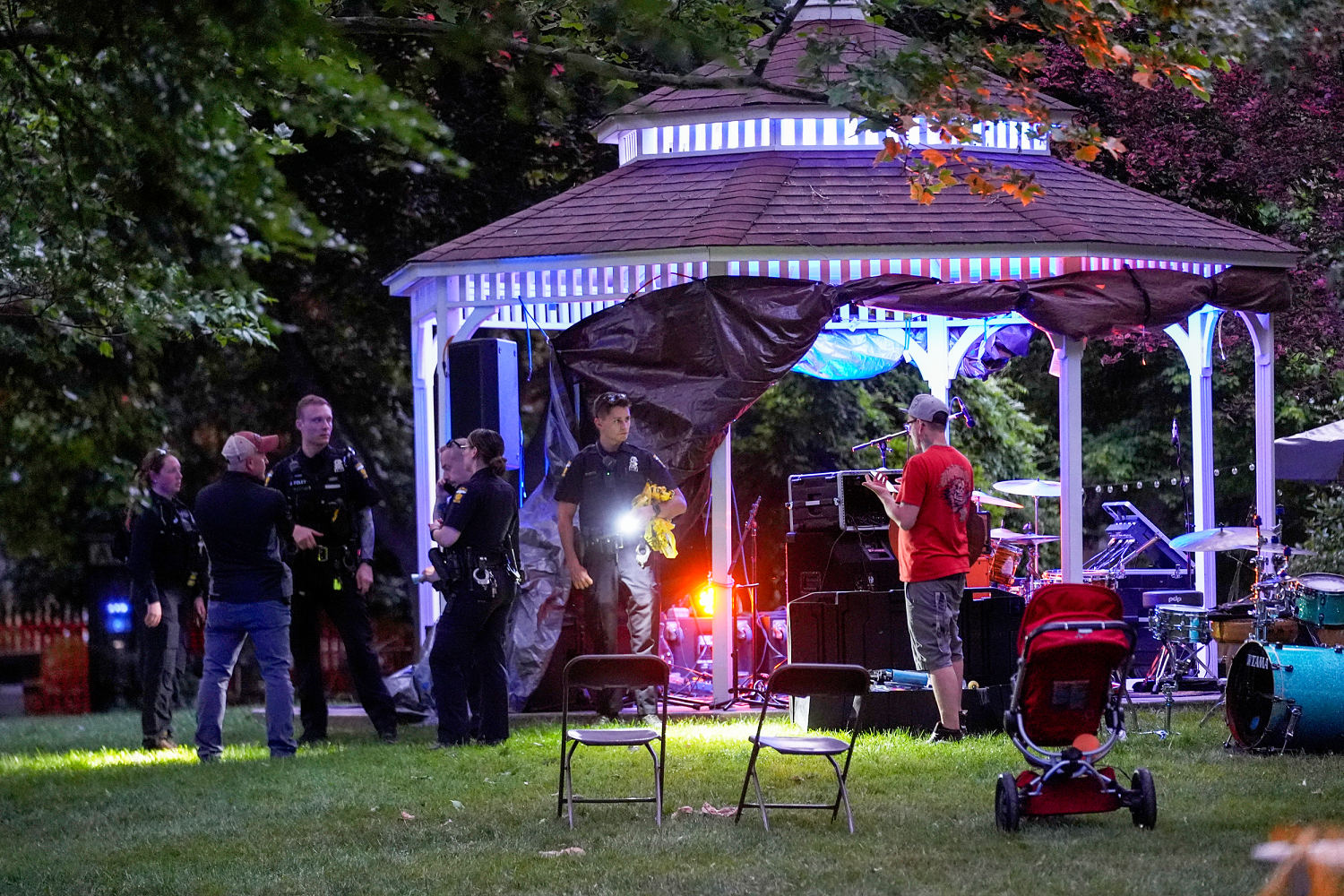
The gunfire began at approximately 5:30 p.m. near the intersection of Delaware and Glenwood avenues, a historic neighborhood known for its Victorian homes and tight-knit community spirit. Within seconds, a peaceful neighborhood tradition was transformed into a tactical casualty zone.
Investigative details revealed by Toledo Police Chief Michael Troendle paint a picture of sudden, escalating bravado. A physical altercation blossomed from a dispute between two rival groups. One individual was assaulted during a brief foot chase, prompting a firearm to be drawn and fired. A member of the opposing faction immediately drew his own weapon and returned fire.
Of the twelve individuals struck by bullets, ranging in age from 14 to 61, only three were actually involved in the initial dispute. The other nine were bystanders. They were people buying food from vendors, families listening to live music in the neighborhood arboretum, and neighbors enjoying the unofficial start of Toledo's summer festival season.
The Anatomy of the Escalation
For decades, urban street violence was heavily dictated by turf, drug distribution networks, and formalized gang hierarchies. Modern street conflicts operate under an entirely different mechanism. Today's rivalries are decentralized, highly fluid, and driven by instantaneous social friction rather than organized criminal enterprise.
A dispute that begins online or through casual disrespect on a street corner can transition to physical violence within minutes. In the case of the Old West End shooting, the presence of firearms converted a low-level fistfight into a mass casualty event. The shooters did not care that hundreds of innocent citizens stood directly in their line of fire. They cared only about the immediate, performative retaliation demanded by their peer groups.
The logistical reality of the scene complicated the immediate aftermath. While local law enforcement had a significant presence at the festival—including both on-duty patrols and off-duty officers hired for security—the sheer volume of panicked attendees fleeing the area created a bottleneck. Traffic jammed the narrow residential streets of the historic district. Toledo Fire Chief Allison Armstrong noted that while closed roads and heavy traffic initially impeded hospital transports, emergency responders managed to clear all wounded individuals from the scene within an hour.
The Failure of Deterrence in Public Spaces
The Toledo shooting highlights a systemic vulnerability that municipal governments across the country are struggling to address. Traditional policing models rely heavily on visibility to deter crime. If officers are present, the logic goes, criminals will withhold their violence.
Yet, the Old West End Festival was heavily policed. Mobile security cameras were active, and dozens of law enforcement personnel were scattered throughout the venue. The presence of uniforms did nothing to stop the initial foot chase or the subsequent exchange of gunfire.
When individuals carry firearms with the explicit expectation of using them over minor personal disputes, the concept of deterrence changes entirely. The risk of immediate arrest or confrontation with police is secondary to the immediate social cost of backing down from a fight. This shift places an immense burden on mid-sized cities like Toledo, where resource allocation must constantly balance proactive community policing with reactive tactical response.
A Community Left to Process the Trauma
The physical wounds of the victims are stabilizing. According to city officials and hospital updates, nine of the twelve victims have been released, while the remaining three continue to recover. The psychological damage to the neighborhood, however, will persist far longer.
The Old West End Association cancelled the remainder of the two-day festival immediately following the incident, citing a lack of compassion and responsibility should they try to force a celebration in a neighborhood that had just become a crime scene. Lucas County Prosecutor Julia Bates expressed an outrage that echoed throughout the city, noting that the historic district was her home, and the victims were her neighbors.
The immediate task for investigators is translating video evidence and ballistics into arrests. Two firearms have been recovered from the scene, and detectives are processing shell casings to link the weapons to the specific individuals involved. Several persons of interest have been interviewed, but the primary shooters remain at large. The suspects are believed to be two young males between the ages of 18 and 24.
The larger task for Toledo, and cities like it, is determining how to protect the civic fabric when the threat is no longer a predictable criminal enterprise, but a spontaneous explosion of personal animosity carried out with military-grade efficiency in the middle of a crowd.
The realization that a half-century-old family tradition can be permanently altered by a handful of seconds and twenty rounds of ammunition is a bitter pill for a city already struggling against the perception of urban decay. If public spaces cannot be guaranteed safe from the impulsive actions of rival groups, the nature of community gatherings will inevitably shift toward hyper-securitized, restricted environments. That reality represents a quiet, devastating loss for the ordinary citizens who simply wanted to spend a Saturday afternoon listening to music in a park.