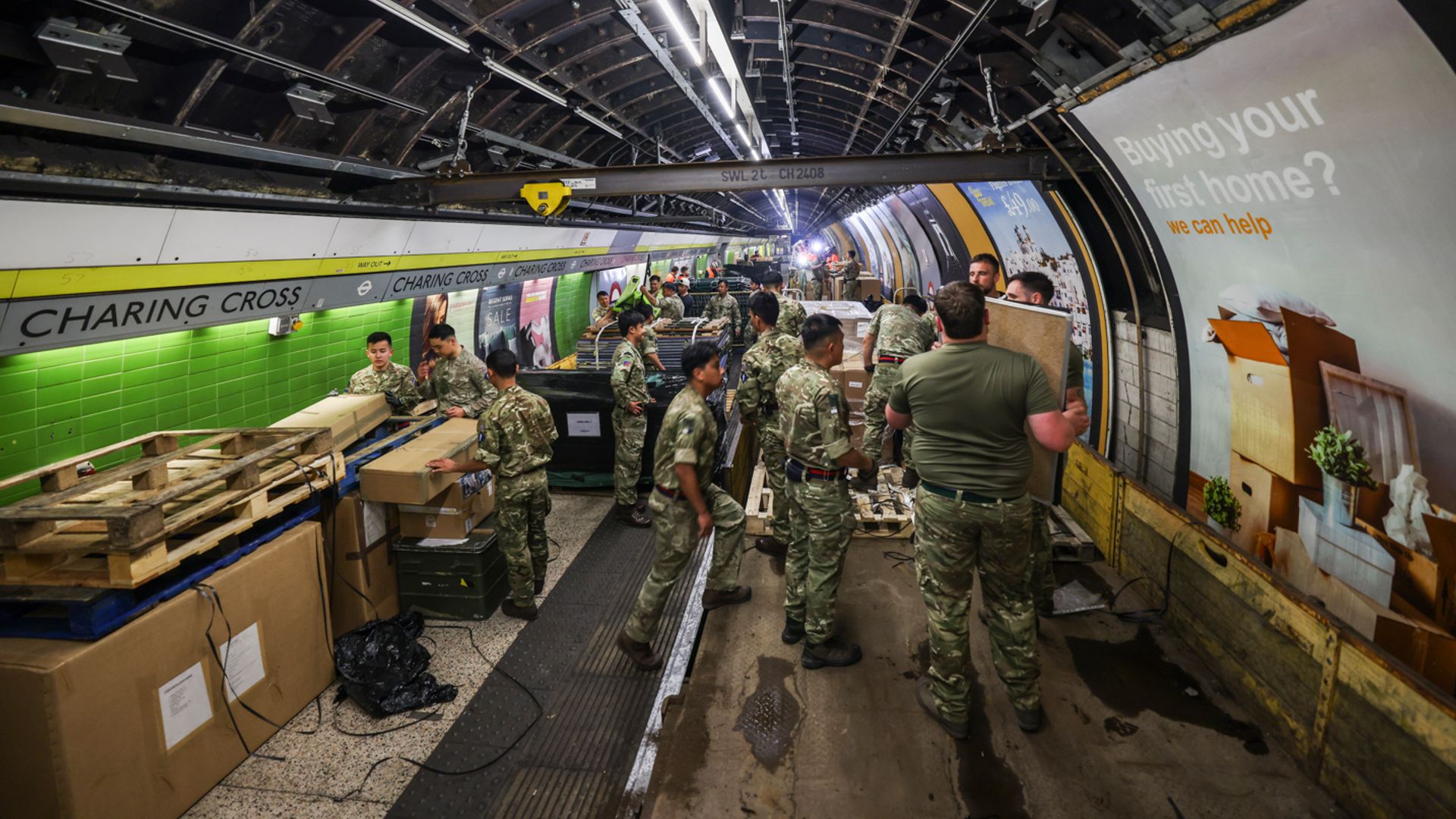
The British Army is quiet about its most unusual training grounds. They don't publicize the fact that elite soldiers have been moving through the dark, disused tunnels of the London Underground. This isn't a PR stunt. It is a grim, necessary preparation for a modern conflict that could easily spill into the subterranean infrastructure of Europe's major cities. If a large-scale war breaks out with a near-peer adversary like Russia, the surface will become a death trap. The real fight will move below.
Most people think of trench warfare when they picture a clash between NATO and Russia. They look at eastern Ukraine and see mud, artillery, and drones. That is only half the story. If conflict spreads to Western Europe, cities become the fortresses. Beneath those cities lie hundreds of miles of transit tunnels, utility corridors, and sewer networks. The Ministry of Defence knows that whoever controls the underground controls the city above it.
This specific training program uses London’s abandoned Tube stations to replicate the chaotic, subterranean environments soldiers would face in places like Kyiv, Warsaw, or even Berlin. It is cold, claustrophobic, and incredibly dangerous.
Inside the Subterranean Strategy
Urban warfare is notoriously brutal, but going underground magnifies every single danger by a factor of ten. The British Army's deployment of troops into the London Underground focuses heavily on subterranean tactics, techniques, and procedures. These sessions are grueling. Soldiers carry full combat loads through pitch-black tunnels where the air is thick with decades of dust and the temperature fluctuates wildly.
The environments mimic the complex metro systems found throughout Eastern Europe. The goal is simple. Troops must learn to navigate, fight, and survive in spaces where traditional military gear fails completely. They are practicing close-quarters battle maneuvers, tunnel clearing, and casualty evacuation in confined spaces.
Think about trying to move a wounded soldier up a steep, narrow escalator shaft while under fire. It is a logistical nightmare. The physical strain is immense, but the psychological toll is worse. The sensory deprivation breaks people quickly. You cannot see, you cannot breathe easily, and every sound is distorted.
The Shocking Reality of Communications Breakdown
The biggest shock for troops entering the tunnels is the immediate loss of technology. The digital tools modern armies rely on become useless brick weights the moment you step below the concrete line.
- GPS is dead: Satellite signals cannot penetrate meters of reinforced concrete and soil. Soldiers must rely on physical mapping and compasses that are often disrupted by massive amounts of iron and electrical cabling.
- Radio failure: Standard military radios rely on line-of-sight or ionospheric reflection. In a winding tunnel, your signal dies after the first two bends. Troops are forced to experiment with specialized tactical radios, leaky feeder cables, or old-fashioned runner systems.
- Night vision limitations: True night vision requires ambient light to amplify. In the absolute blackness of a deep-level subway tunnel, traditional night vision goggles see nothing. Soldiers must use thermal imaging or infrared illuminators, which instantly give away their position to any enemy with similar gear.
This communication blackout means units are entirely on their own. A squad leader cannot call for air support, artillery, or a quick extraction. If you get into trouble five stories beneath the surface, nobody is coming to save you unless they happen to walk down the same tunnel.
Why Russia Forces NATO Beneath the Surface
Russia has spent decades studying urban denial strategies. During the battle for the Azovstal steelworks in Mariupol, Ukrainian defenders held off a massively superior Russian force for weeks purely by utilizing the vast network of underground tunnels beneath the industrial complex. The Kremlin learned from that frustration. Their current military doctrine emphasizes the seizure or destruction of critical underground infrastructure early in a campaign.
Metro systems are not just transit lines during a war. They are bomb shelters, command posts, supply routes, and concealment zones. A subterranean network allows an adversary to move entire battalions across a city completely undetected by overhead drones or satellite reconnaissance.
If British troops are deployed to defend a NATO ally, they will not just be holding a frontline in a field. They will be clearing subway platforms and railway junctions. If you don't know how to fight in the dark against an enemy who does, your unit will be wiped out before they ever see the sun.
The Physical and Psychological Toll of Tunnel Warfare
Fighting in the London Underground forces a total rewrite of standard infantry tactics. Ricochets are a constant threat. A single stray bullet fired down a concrete tunnel can bounce unpredictably, striking friendly troops far behind the frontline. The acoustic signature of a gunshot inside a small tunnel is deafening. Without advanced electronic hearing protection that suppresses gunfire while amplifying whispers, soldiers are deafened after the first exchange of clips.
Then there is the air quality. Tunnels are static environments. Flashbangs, smoke grenades, and the simple act of firing rifles quickly fills the air with toxic lead dust and thick smoke. Without proper ventilation, carbon monoxide builds up fast. Troops are training to operate while wearing heavy respirators, which restricts their oxygen intake and speeds up physical exhaustion.
The claustrophobia is a silent killer of morale. Soldiers are trained to look up and scan the skies for threats. Subterranean training forces them to look down at their feet for booby traps and wires while constantly worrying about the ceiling collapsing from artillery impacts on the surface. It requires a specific breed of mental toughness to stay calm when you know millions of tons of dirt and concrete are hanging directly over your head.
What Needs to Happen Next
The training in the London Underground reveals a massive gap between conventional military readiness and the reality of future conflicts. To ensure British forces are genuinely prepared for this brutal style of warfare, the military establishment needs to shift its priorities immediately.
First, invest heavily in low-frequency communication systems that can penetrate solid earth. Relying on line-of-sight radios in a subway network is a recipe for disaster.
Second, every infantry unit needs standardized training in confined-space navigation and gas mask endurance. This cannot remain a niche skill reserved for specialized units or elite regiments.
Finally, update tactical gear to include lightweight, high-output thermal optics and non-line-of-sight drone technology designed specifically for tight spaces. The surface war is rapidly changing, but the fight beneath our feet will be decided by raw endurance, basic navigation, and the willingness to enter the dark.