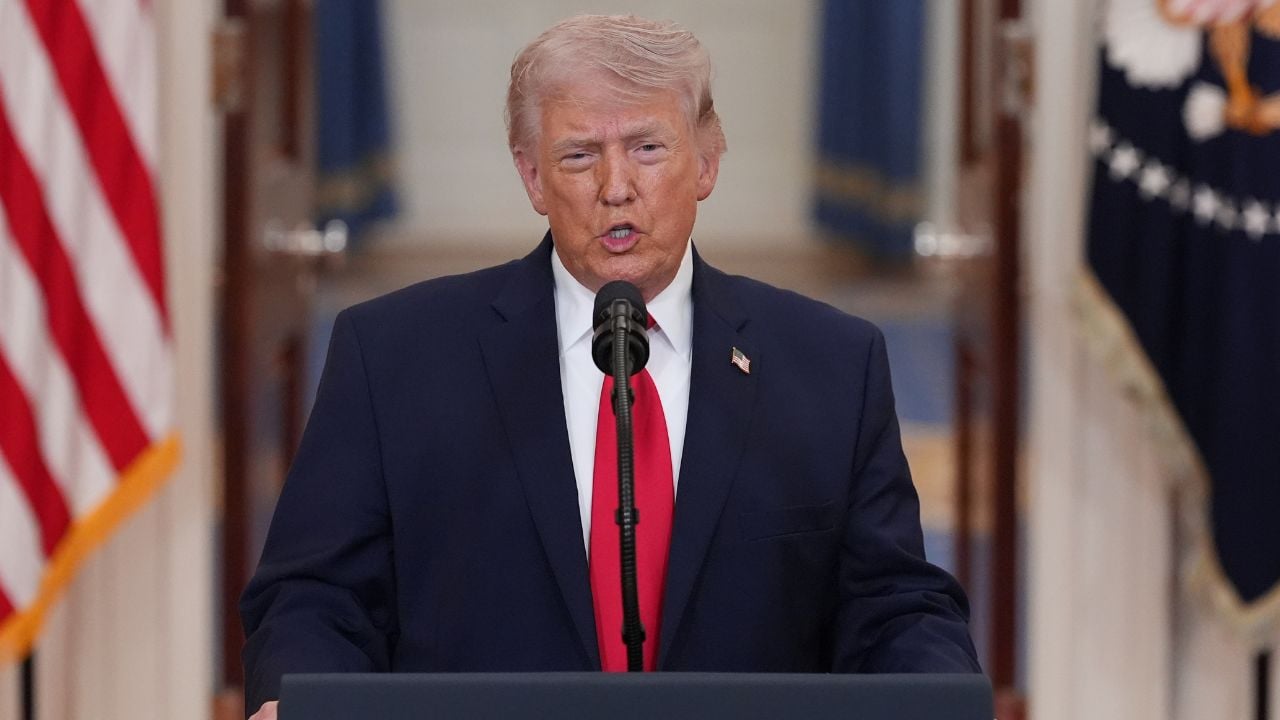
The United States military will not leave the Persian Gulf until Tehran signs a "real pact" that permanently dismantles its nuclear ambitions. That is the ultimatum issued by President Donald Trump as a fragile two-week ceasefire takes hold. On April 7, 2026, the White House halted a blistering campaign of aerial strikes just hours before a deadline that threatened to level Iran’s civilian infrastructure. While the guns are silent for the moment, the strategic posture is louder than ever. Thousands of American troops remain stationed across the region, not as a peacekeeping force, but as the ultimate leverage in a high-stakes poker game where the pot is the survival of the Iranian state.
This isn't just about a return to the 2015 nuclear deal that Trump famously torched during his first term. The "real pact" now demanded by the administration includes total cessation of ballistic missile development and an end to all regional proxy funding. By keeping the military engine idling on Iran’s doorstep, the administration is betting that the threat of "annihilation"—a word used by the President on February 28—will force a concession that decades of diplomacy could not achieve.
The Ceasefire of Necessity
The pause in hostilities, mediated by Pakistan and Oman, came after 22 days of intensive strikes that reportedly targeted Iranian missile sites and command centers. The White House describes this as a "total victory," yet the reality on the ground is more nuanced. Iran agreed to reopen the Strait of Hormuz, a critical artery for global oil, but only under a temporary two-week arrangement.
Skeptics argue the ceasefire is less a victory and more a strategic reset. The U.S. military has expended significant munitions, and the strain on regional logistics is showing. By agreeing to the pause, Tehran has bought itself time to assess the damage to its "immune" underground facilities. For Trump, the pause serves as a proof of concept for his "Peace Through Strength" doctrine. He is using the military as a permanent fixture of the negotiating table, ensuring that any Iranian official sitting across from U.S. Special Envoy Steve Witkoff in Islamabad this Friday knows exactly what happens if the talks fail.
Why Maximum Pressure 2.0 is Different
In 2018, maximum pressure was primarily an economic engine. In 2026, it is a kinetic reality. The administration has moved beyond mere sanctions, implementing a system of global tariffs on any nation that dares to trade with Tehran. This secondary strike on the global economy is designed to isolate the regime until it has no choice but to fold.
Key differences in the current strategy include:
- Direct Military Integration: Negotiations are no longer handled solely by diplomats. Figures like CENTCOM Commander Admiral Brad Cooper are now central to the process, signaling that the military's withdrawal is the only currency the U.S. is willing to spend.
- Targeted Attrition: The strikes launched in late February were not random. They focused on the "head of the snake," aiming to decapitate the command structure rather than engaging in a protracted ground war.
- The Hormuz Toll: In a startling concession to get the ceasefire moving, reports suggest Iran may be allowed to charge transit fees in the Strait for the next fourteen days. This "toll" is a bitter pill for many in Washington, but it served as the friction-reducer needed to stop the immediate bombing of Iranian power grids.
The Cost of Staying
Maintaining a massive armada in the Persian Gulf is an expensive insurance policy. Critics within the Pentagon have voiced concerns over the depletion of precision-guided missile stockpiles and the vulnerability of U.S. bases to "suicide" drone swarms. While the U.S. has the clear technological advantage, the cost of intercepting a $20,000 drone with a $2 million missile is a math problem that favors the insurgent.
Furthermore, the regional coalition is not as airtight as it once was. While Israel remains a staunch partner in the "Epic Fury" operations, traditional Gulf allies have shown hesitation. Some have restricted the use of their airspace for offensive strikes, fearing Iranian retaliation on their own desalination plants and oil refineries. This has forced the U.S. to rely more heavily on distant bases like Diego Garcia and RAF Fairford, complicating the logistics of a "sustained and intensified" response.
The Real Pact vs. The Reality
The Iranian government remains deeply divided. Hardliners in Tehran view any deal signed under the shadow of American B-2 bombers as a death warrant for the Islamic Republic. Conversely, a population exhausted by rolling blackouts and hyperinflation is increasingly vocal in its demand for a resolution. The U.S. gamble hinges on the belief that the regime will value its own survival over its nuclear program.
However, historical precedent suggests that regimes under existential threat often double down. If the Islamabad talks do not produce a framework that satisfies the White House by the end of the two-week window, the transition back to "major combat operations" could be instantaneous. The military isn't just staying until a pact is reached; it is staying to ensure the pact is written on American terms.
The clock is ticking toward the April 21 expiration of the ceasefire. If no "real pact" emerges, the transition from a diplomatic pause to a regional conflagration may be unavoidable. The U.S. military is ready. The question is whether the Iranian leadership believes Trump is willing to use it to the fullest extent.
The move to Islamabad marks the final attempt to trade a military exit for a total Iranian capitulation. If the doors close on Friday without a breakthrough, the "real pact" may never happen, leaving only the "real war" as the remaining option. Use the next ten days to watch the movement of the second aircraft carrier group currently entering the Gulf; its position will tell you more about the negotiations than any official press release.