London in 1929 was a city still listening for the echoes of cannons that had fallen silent a decade prior. It was a place where gas lamps flickered over damp cobblestones, casting long shadows across alleys where children with hollow cheeks played with hoops made of rusted iron. In the wards of Great Ormond Street Hospital, the air smelled of carbolic soap, cold stone, and quiet desperation. Little beds stood in long, unbroken rows, each holding a small life flickering low like a candle in a drafty hallway.
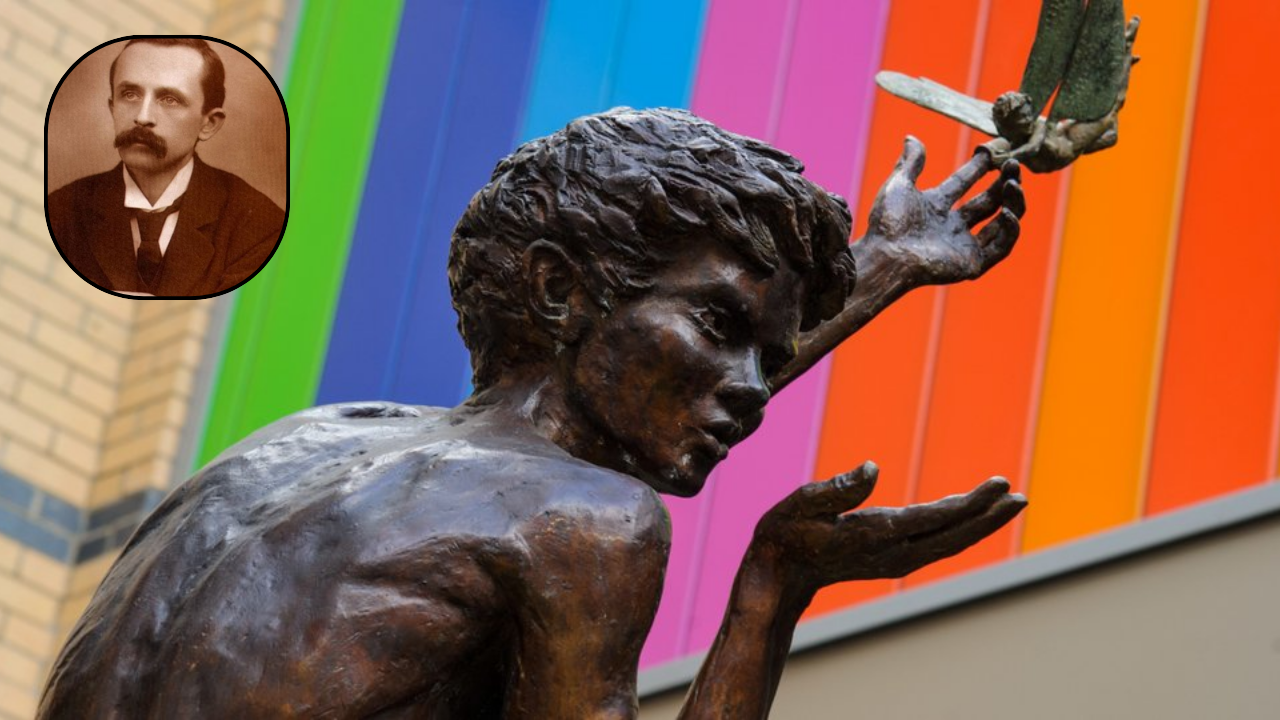
Into this austere reality stepped a quiet, melancholic man. His name was J. M. Barrie.
He did not walk with the bounce of the boy he had given to the world. He walked slowly, his hands tucked deep into his pockets, carrying a secret that he had guarded for decades. Years earlier, Barrie had done something extraordinary. He had legally signed away the copyright of Peter Pan—his golden goose, his mischievous sprite, his literary child—not to an estate, not to a greedy publisher, but to a place of healing. He gave the boy who wouldn't grow up to the children who might not get the chance.
Most people know the fairy tale. Few understand the math of mercy.
The Copyright That Kept the Lights On
Imagine sitting in a drafty office in Bloomsbury, watching the ledger books balance on a razor's edge. Hospitals do not run on good intentions alone. They require gauze, morphine, iron lungs, scalpels, clean linen, and hands steady enough to stitch a beating heart back together. In the early twentieth century, voluntary hospitals relied entirely on the charity of strangers. Sometimes, the charity dried up. Sometimes, the coin collection boxes rattled empty.
Barrie knew this. He had no biological children of his own, yet he was surrounded by them—the Llewelyn Davies boys who inspired the Lost Boys, and thousands of readers across the globe who fell head over heels for Neverland. He realized that Peter Pan was immortal, and by extension, the revenue stream could be immortal too.
By gifting the rights to Great Ormond Street Hospital, Barrie ensured that every staging of the play, every reprinting of the book, and every adaptation funneled coins straight into the pockets of pediatric care. It was an unprecedented act of literary philanthropy. But copyright has a lifespan. Laws expire. Ink fades.
Normally, a copyright dies fifty or seventy years after the creator draws their last breath. Barrie passed away in 1937. By standard calculations, Peter Pan should have flown safely into the public domain decades ago, leaving the hospital empty-handed and vulnerable to the cold winds of free enterprise.
The Parliamentary Exception
Laws can be written by ordinary mortals, but sometimes they are rewritten by the sheer weight of public affection.
When the expiration date loomed closer, a quiet panic rippled through British legal circles. If the rights lapsed, the hospital—by then a world-renowned institution of medical excellence—would lose its primary financial safety net. What happened next is a rare collision of bureaucracy and sentimentality.
Parliament did something extraordinary. They created a perpetual copyright clause specifically for Peter Pan.
Under UK law, Great Ormond Street Hospital holds a unique, eternal right to royalties from any performance or publication of the play within the United Kingdom. Even today, long after the original texts entered the public domain in other parts of the world, whenever a local theater troupe in Cornwall or a West End production stages Barrie’s timeless work, a fraction of every ticket sold goes toward buying medical equipment and funding pediatric research.
It is a legal anomaly. It is a fairy tale loophole written into statute.
The Cost of Healing
Walk down the corridors of Great Ormond Street today, and you will find an environment transformed from Barrie’s era. High-tech imaging machines hum softly. Researchers in crisp white coats analyze genetic sequences on glowing monitors. Tiny patients in colorful pajamas ride in red wagon beds down brightly lit hallways, laughing as nurses adjust their intravenous drips.
Yet the core struggle remains unchanged. Medicine marches forward, but the price of innovation is staggering.
Every single day, doctors face impossible choices. They look at tiny hearts beating irregularly, at rare neurological disorders that baffle textbooks, at lungs struggling to pull in London air. They need specialized tools that cost small fortunes. They need dedicated research teams working around the clock to find cures for diseases that steal childhoods before they can truly begin.
This is where Peter Pan still flies.
When people ask why a fictional character created over a century ago matters in a modern metropolis, they are missing the invisible architecture of survival. Every time a child hears about Wendy, John, Michael, and the boy in green tights, a financial gear turns somewhere in the background. It pays for the nurse holding a frightened mother's hand. It funds the microscope lens zooming in on a rogue cell. It keeps the heating on in the winter wards.
Neverland in the Real World
We live in an age that loves to monetize everything. Intellectual property is bought, sold, sliced into digital tokens, and traded across fiber-optic cables in milliseconds. Franchises are milked dry until nothing remains of the original spark.
Barrie’s gift stands in stark, beautiful defiance of that cynical machinery. He took a piece of pure imagination—dust, starlight, and a second star to the right—and anchored it permanently to the real, bleeding, breathing world.
He understood something profound about stories. Stories are not just entertainment; they are shelter. They are how we make sense of the dark, how we conquer our fears of growing old, and how we find our way home when we are lost in the woods.
By tying his creation to the physical survival of sick children, Barrie ensured that Peter Pan would never truly age, never fade into dusty archives, and never lose his purpose. As long as children fall ill, as long as parents pray for miracles in sterile waiting rooms, and as long as actors step onto stages to shout, "Do you believe in fairies?", the magic will translate directly into medicine.
The second star to the right shines a little brighter over London. And down below, in the quiet hum of the hospital wards, the children keep flying.