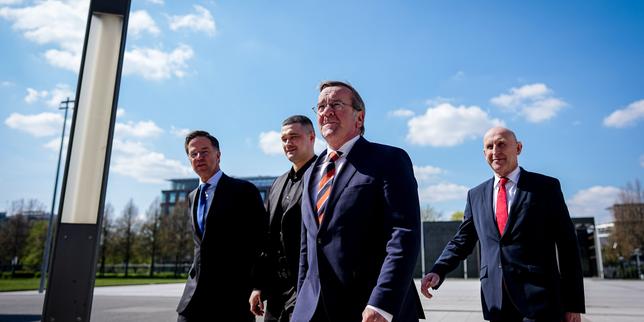
Germany isn't ready for a fight. For decades, the country treated its military like a neglected insurance policy—something you pay for but hope you never actually need to use. Then came Boris Pistorius. Since taking over as Defense Minister, he’s been shouting from the rooftops that the "peace dividend" is dead. He wants Germany kriegstüchtig. That’s a heavy word. It means "fit for war." He isn't just talking about buying a few more tanks; he’s trying to rewire the entire German psyche.
If you think this is just another politician making noise, you’re missing the point. Pistorius has consistently topped the charts as Germany’s most popular politician, outperforming Chancellor Olaf Scholz and the rest of the cabinet by a mile. That’s bizarre when you consider his message: pay more, sacrifice more, and prepare for the worst. He’s the first leader in generations to tell Germans that their comfortable, pacifist bubble is about to pop.
The urgency isn't coming from a vacuum. With Russia’s war in Ukraine grinding on and the 2026 security environment looking increasingly shaky, Pistorius knows the clock is ticking. He’s pushing for a total overhaul of the Bundeswehr, a military that has been plagued by equipment failures and bureaucratic sludge for years. But his biggest challenge isn't the budget. It's the people.
The man who broke the pacifist taboo
Germany has a complicated relationship with its military. It’s a historical hangover that isn’t going away anytime soon. For years, being a "defense minister" was considered a career-killing role. It was where political ambitions went to die. Then Pistorius stepped in and did something radical. He spoke plainly.
He didn't use the usual diplomatic fluff. He told the public that Germany needs to be able to defend itself and its NATO allies, and that it can't do that with the current setup. When he uses the term kriegstüchtig, he’s intentionally being provocative. He wants to shock the system. He knows that if he doesn't change the culture of the Ministry of Defense, no amount of money will fix the underlying problems.
His background as an interior minister in Lower Saxony gave him a reputation for being a "law and order" guy. He’s pragmatic. He doesn’t care about the ideological debates that usually paralyze the SPD (Social Democratic Party). He cares about whether a tank actually starts when you turn the key. That bluntness is exactly why the German public likes him. They’re tired of the hesitation from the Chancellery. They want someone who says what they’re thinking.
Fixing a broken military with a 100 billion euro band-aid
The Zeitenwende—the "turning point" announced by Scholz—came with a €100 billion special fund. On paper, that sounds like a lot. In reality, it’s a drop in the bucket. Decades of underfunding created a hole so deep that €100 billion barely gets the Bundeswehr back to a functional baseline.
Pistorius is fighting an uphill battle against a procurement system that is famously slow. It takes years to order ammunition. It takes even longer to get it delivered. He’s trying to cut through the red tape, but the German bureaucracy is a beast of its own making. He’s been pushing for "off-the-shelf" purchases—buying what’s available now rather than waiting a decade for a custom-made German solution.
- Ammunition shortages: Reports suggest Germany would run out of ammo in days, not weeks, if a high-intensity conflict broke out.
- Equipment readiness: A significant portion of the tank fleet and aircraft are often grounded for maintenance.
- Digitalization: The army still relies on analog radios that can't talk to modern NATO systems.
He’s been incredibly vocal about the fact that the €100 billion fund will be gone by 2027. What happens then? The regular defense budget needs a massive, permanent hike. He’s demanding billions more every year, which puts him on a collision course with the Finance Ministry and Germany’s strict "debt brake" rules. He’s basically telling the government they have to choose between their fiscal rules and their national survival.
The return of conscription is the real third rail
This is where things get spicy. Pistorius has been flirting with the idea of bringing back some form of compulsory service. Germany abolished conscription in 2011, and the military has struggled to hit recruitment targets ever since. The Bundeswehr is shrinking while the threat is growing.
He’s looking at the "Swedish model"—a selective form of service where the military only takes the most motivated and capable recruits. It’s a smart move politically. It avoids the backlash of a "total" draft while still filling the ranks. But even this is a hard sell for many in his own party. They see it as a regression. Pistorius sees it as a necessity. He knows you can’t have a credible deterrent without the boots on the ground to back it up.
It’s not just about numbers, though. It’s about the "societal resilience" he keeps talking about. He wants the average German to feel a sense of ownership over their defense. Right now, there’s a massive disconnect between the civilian population and the soldiers who protect them. By reintroducing service, he’s trying to bridge that gap.
Why his popularity is a threat to the Chancellor
The dynamic between Pistorius and Olaf Scholz is fascinating. Scholz is the "peace chancellor," always cautious, always weighing the risks of escalation. Pistorius is the guy who says we need to be ready to fight tomorrow. This creates a weird tension at the heart of the German government.
Every time Scholz hesitates on a weapon delivery or a policy shift, Pistorius is there looking like the adult in the room. The public sees the contrast. There’s already talk about whether Pistorius should be the SPD’s candidate for Chancellor in the next election. He’s the most popular man in the country, and he’s doing it by being the "war minister." That tells you everything you need to know about how much Germany has changed in the last couple of years.
But being popular and being effective are two different things. Pistorius is making enemies. The pacifist wing of the SPD hates his rhetoric. The Finance Ministry hates his spending demands. The military brass is wary of his "reform or die" attitude. He’s a man on an island, trying to steer a massive, rusting ship in a new direction.
The reality of the 2026 security gap
We’re in 2026, and the "peace dividend" is officially buried. The US is increasingly focused on the Pacific, leaving Europe to handle its own backyard. Pistorius knows that if the US pulls back, Germany has to be the backbone of European defense. There is no other option. Poland is spending like crazy, the Baltics are terrified, and they’re all looking to Berlin for leadership.
The problem is that leadership requires more than just speeches. It requires a military that actually works. Pistorius has made progress, but the structural issues are immense. The defense industry isn't scaling up fast enough. The workforce is aging. The political will to keep spending billions on defense while the economy stutters is fragile.
He’s betting his entire career on the idea that he can convince Germans to trade some of their social comfort for security. It’s a gamble. If he fails, Germany remains a paper tiger—a wealthy nation with no way to protect its wealth.
What happens if he actually succeeds
If Pistorius gets his way, Germany will become the dominant military power in Europe. That’s a sentence that would have been unthinkable twenty years ago. It changes the entire balance of power within the EU and NATO. It makes France nervous. It makes Russia think twice.
But success isn't guaranteed. He’s fighting against decades of inertia. He’s fighting against a political system designed to move slowly. He’s fighting against a public that, while they like him personally, might not like the tax hikes or the service requirements that come with his vision.
Keep an eye on the budget battles this year. That’s the real test. If he gets the permanent funding increase he’s asking for, he’s won. If he doesn't, all his talk of being kriegstüchtig is just hot air.
Stop thinking of the German military as a joke. Under Pistorius, it’s trying to grow teeth. Whether those teeth are sharp enough to actually deter an aggressor is the only question that matters now. Watch the recruitment numbers. Watch the procurement contracts for the Leopard 2A8 tanks. That’s where the real story is happening. If you want to understand where Europe is headed, you have to understand what Boris Pistorius is trying to do to the German soul. He’s not just preparing for war; he’s trying to make Germany realize that peace was never free.