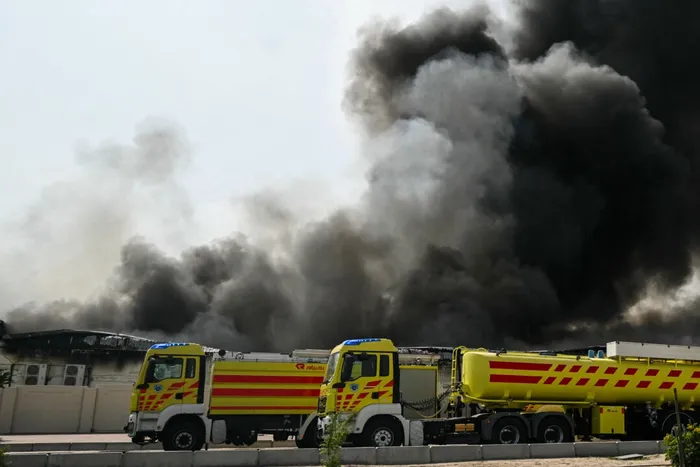
The headlines are lying to you. They speak of "escalation," "imminent regional conflagration," and "surgical strikes." They paint a picture of two titans on the brink of a world-ending collision. It’s a convenient narrative for cable news ratings and defense contractors, but it misses the cold, mechanical reality of the Levant.
What we are witnessing between Israel and Hezbollah isn’t the beginning of a war. It is the maintenance of a violent, expensive, and deeply cynical status quo. Both sides are currently engaged in a high-stakes theatrical production where the script is written in blood, but the ending is already choreographed. If you think this is about a few missiles over a fence, you’re looking at the sparks and ignoring the engine.
The Illusion of Escalation
Every time a Hezbollah rocket crosses the Blue Line and an Israeli jet flattens a shed in Southern Lebanon, the "experts" scream that the dam is about to break. They’ve been saying this since October 8. They ignore the most basic rule of asymmetric warfare: if Hezbollah wanted a full-scale war, they wouldn't have telegraphed their intentions for months. They would have used their 150,000-missile stockpile to overwhelm the Iron Dome in a single Tuesday afternoon.
Instead, we see a "tit-for-tat" rhythm. Israel strikes a specific radius; Hezbollah responds within a specific radius. It is a calibrated exchange.
The competitor articles focus on the event—the strike itself. They fail to mention the threshold. There is a literal map of "allowable" targets that both sides respect. When one side oversteps, the other "re-establishes deterrence" with a slightly larger explosion. This isn't a march toward war; it’s a violent negotiation over the price of a stalemate.
The Iron Dome Fallacy
Mainstream reporting treats the Iron Dome as a shield. It isn’t. In the context of the Lebanon border, the Iron Dome is a political pressure valve.
Without it, Israel would be forced to invade Lebanon every time a stray mortar hit a playground. The technology allows the Israeli government to "absorb" a certain level of harassment without the political suicide of a ground invasion. Conversely, Hezbollah knows exactly how many rockets it can fire to stay relevant in the "Axis of Resistance" without actually triggering the destruction of Beirut.
They are both trapped in a cycle of "manageable instability."
The Real Math of the Missiles
Let’s talk about the 150,000 rockets. The media loves that number. It sounds terrifying. But here is the nuance: 90% of those are "dumb" rockets. They are Katyushas with the accuracy of a lawn dart.
The real threat—the one the IDF actually cares about—is the precision-guided munitions (PGMs). If Hezbollah starts using those in earnest, the theater ends and the war begins. As of today, they are hoarding them. Why? Because Hezbollah isn't a suicide cult; it’s a political party with a militia attached. They know that a real war with Israel results in the "Dahiya Doctrine"—the total leveling of their power base in Beirut.
The Sovereignty Scam
We hear constantly about the Lebanese government’s "inability" to control its south. This is the biggest joke in international relations. The Lebanese state doesn't "lack control"; it has surrendered it in a dark bargain.
Hezbollah provides the social services and security that the bankrupt state cannot. In exchange, the state provides the legal veneer of a sovereign nation, protecting Hezbollah from direct international accountability. When Israel strikes "Hezbollah targets," they are hitting a shadow government that has more institutional depth than the actual cabinet in Beirut.
Stop asking when the Lebanese Army will step in. They won't. They can't. They are the audience in this play, not the actors.
Why a Ground Invasion is a Fantasy
The "lazy consensus" suggests that Israel will eventually have to "clear out" Southern Lebanon to let its citizens return to the north. I’ve spent years analyzing the tactical geography of that region. A ground invasion of Southern Lebanon in 2026 would be a meat grinder that makes the 2006 war look like a skirmish.
- The Topography: It’s a nightmare of limestone ridges and hidden valleys.
- The Tunnel Network: Hezbollah has spent twenty years digging into the bedrock. We aren't talking about Hamas-style "metro" tunnels; we are talking about hardened, ventilated, multi-story underground fortresses.
- The ATGM Threat: Hezbollah’s Kornet anti-tank missiles are world-class. They turned the Merkava tank—once thought invincible—into a liability in 2006.
Israel’s leadership knows this. They talk tough about "returning Lebanon to the Stone Age," but they are terrified of the casualty count a ground war would produce. So, they stick to the air strikes. It’s cleaner. It looks better on the evening news. It achieves almost nothing strategically, but it satisfies the domestic demand for "action."
Follow the Money (and the Gas)
Nobody wants to talk about the Karish gas field. While missiles fly, billions of dollars in energy infrastructure sit in the Mediterranean. A real war doesn't just mean dead soldiers; it means the end of Israel’s dreams of being an energy exporter to Europe and the total destruction of Lebanon’s last hope for economic solvency.
The "insider" truth? The elites on both sides are more interested in the gas than the "liberation" of any territory. The skirmishes are the tax they pay to keep their respective bases angry enough to stay loyal, but not so angry that they demand a war that burns the counting houses down.
Stop Asking "When Will War Start?"
You’re asking the wrong question. You should be asking: "Who profits from this perpetual state of near-war?"
- Benjamin Netanyahu: A quiet border means the focus shifts to his domestic legal troubles and the failures of October 7. A "hot" border keeps the country in an emergency mindset.
- Hassan Nasrallah: If he actually wins or loses, he loses his raison d'être. He needs an eternal enemy to justify his grip on Lebanon.
- Iran: They get to fight Israel to the last Lebanese soul without ever risking a strike on Tehran.
This isn't a conflict seeking a resolution. It is a system seeking equilibrium.
Every "breaking news" alert about a drone strike is just another heartbeat in a body that refuses to die but has no intention of moving. The strikes will continue. The rhetoric will escalate. The border will remain a graveyard for the poor and a playground for the powerful.
The next time you see a map of Lebanon lit up with red dots, don't look for the "strategic shift." There isn't one. It’s just the cost of doing business in a region where peace is far more dangerous to the ruling class than a controlled, eternal war.
Stop waiting for the big one. This is it. This is as "war" as it gets until someone makes a mistake they can't walk back—and both sides are currently far too professional for that.
Go back to your life. The rockets are just the background noise of a very profitable status quo.