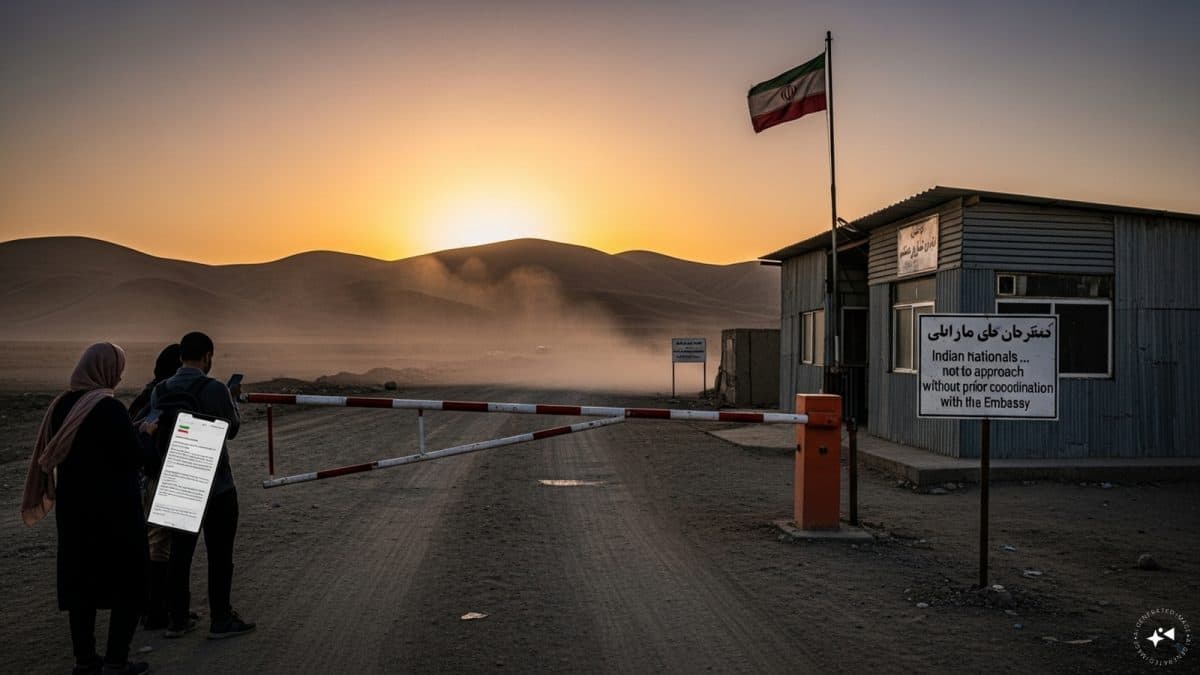
The Indian Embassy just issued another "fresh advisory" telling nationals to avoid the land borders of Iran. It is the standard, sanitized bureaucratic reflex we see every time a region gets loud. They point to the map, draw a red circle around the edges, and tell you to stay in the middle.
They are wrong. Not because the borders are safe—they aren't—but because the advisory itself is a lagging indicator that ignores how modern conflict actually functions. If you are waiting for an embassy tweet to tell you where the danger is, you have already lost the lead time required to protect your assets, your people, or your interests.
The "lazy consensus" here is that risk is a geographical line on a map. It isn't. Risk is a fluid, digital, and logistical network. Focusing on the physical soil of the Iran-Pakistan or Iran-Afghanistan border is like worrying about a leaky faucet while the foundation of the house is being swallowed by a sinkhole.
The Geography Fallacy
Embassy advisories operate on a 20th-century mental model. They assume that instability stays at the perimeter. They treat borders as the "danger zone" and the interior as a sanctuary.
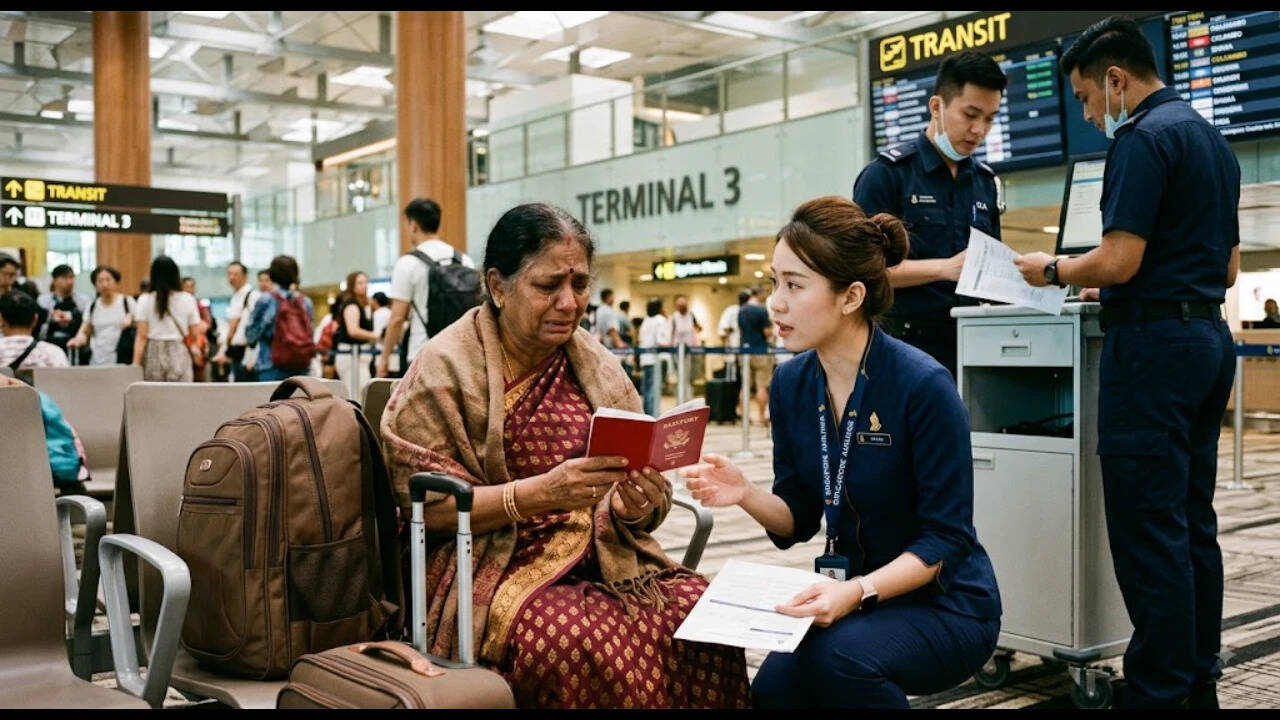
In reality, the modern Iranian theater operates through "asymmetric depth." When tensions spike, the friction doesn't just sit at a crossing in Sistan and Baluchestan. It manifests in GPS jamming that affects flight paths hundreds of miles away. It shows up in port closures at Bandar Abbas that cripple supply chains for weeks. It appears in sudden, unpredictable shifts in visa enforcement that leave "safe" travelers stranded in Tehran.
I have watched companies burn through millions in "emergency extraction" costs because they waited for an official government warning before moving. By the time the Indian Embassy—or any embassy—puts pen to paper, the tactical window has closed. The flights are booked. The roads are congested. The insurance premiums have already tripled.
The True Cost of "Caution"
The competitor articles and mainstream news outlets frame these advisories as helpful guides for the "average traveler." This is a fundamental misunderstanding of who is actually on the ground.
We aren't talking about backpackers looking for the best kebab in Zahedan. We are talking about the backbone of the regional economy:
- Logistics Managers trying to maintain the International North-South Transport Corridor (INSTC).
- Infrastructure Engineers working on energy projects.
- Trade Liaisons moving goods between South Asia and Central Asia.
For these professionals, an advisory telling them "don't go to the border" is useless noise. They know the border is volatile. What they need to know is the velocity of escalation.
When the Embassy warns against "land borders," they are usually reacting to localized insurgent activity or a temporary skirmish. But the real threat to an Indian national in Iran isn't a stray bullet at a checkpoint; it's being caught in the middle of a systemic diplomatic decoupling.
The Math of Modern Instability
Let’s look at the variables that actually matter. If we were to model the risk of remaining in a volatile corridor, the formula wouldn't be based on distance from a border ($d$). It would be based on the rate of diplomatic decay ($R$) and the availability of exit liquidity ($L$).
$$Risk = \frac{R \cdot I}{L}$$
Where:
- $R$ is the frequency of retaliatory rhetoric.
- $I$ is the importance of the region to external superpowers.
- $L$ is the number of active, non-sanctioned commercial exit routes.
When $L$ approaches zero, your location—whether you are at the border or in a high-rise in North Tehran—is irrelevant. You are trapped. The Indian Embassy’s advice fails because it focuses on the numerator while ignoring the fact that the denominator (exit liquidity) is what actually kills you.
The Myth of the "Safe Interior"
The "stay away from borders" narrative creates a false sense of security for those in urban centers. In 2024 and 2025, we’ve seen that technical disruptions and kinetic strikes are increasingly "de-territorialized."
- Cyber-Kinetic Spillover: Modern warfare involves the mass disabling of fuel pumps, banking apps, and power grids. These don't stop at the border. They hit the capital first.
- Airspace Volatility: When Iran’s borders get "hot," the first thing that happens isn't a wall going up; it's the closure of the sky. If you are in the "safe" interior when the land borders are declared a no-go, you are effectively in a gilded cage.
I’ve sat in boardrooms where executives patted themselves on the back for keeping staff in "Green Zones" during regional flares. Then, the internet goes dark, the airports freeze, and those "safe" employees become liabilities that can't be reached or moved.
Stop Reading Advisories, Start Reading Tonnage
If you want to know when to move, stop looking at embassy websites. Watch the Chahbahar port data.
India has a massive strategic stake in Chahbahar. It’s the gateway to bypassing Pakistan. When the tonnage of goods moving through that port fluctuates wildly, or when insurance underwriters for those vessels start demanding "war risk" surcharges, that is your advisory.
The Embassy’s "fresh advisory" is just the lagging echo of what the shipping markets knew three weeks ago. If you’re a business leader or a high-stakes traveler, you should be tracking:
- Currency Arbitrage: When the Rial hits a specific volatility threshold against the USD or INR, social unrest follows within 72 hours.
- Consular Staffing: Don't read what they say; watch what they do. If families of junior diplomats are quietly taking "extended vacations," you should be at the airport.
The Counter-Intuitive Reality of Border Risk
Here is the truth that will get me yelled at by the "security experts": Sometimes, the border is the safest place to be.
Imagine a scenario where a nationwide communications blackout occurs. If you are in the heart of a major city, you are blind and immobile. If you are near a land border—even a "dangerous" one—you have physical proximity to a secondary jurisdiction. You have "cross-border optionality."
By advising everyone to stay away from the fringes, the state is effectively funneling its citizens into the center of the net. In a total systemic collapse, the center is always the last place to get help and the first place to run out of resources.
The Professional’s Playbook
Stop looking for "safety" and start looking for "optionality."
If you are an Indian national in the region, or an investor with skin in the game, the Embassy's warning is a signal that you have already missed the first three stages of risk escalation.
- Stage 1: Rhetorical Shift. Leaders start using "sovereignty" as a prefix for everything.
- Stage 2: Technical Friction. Your VPN stops working. Your credit card at a "safe" hotel gets declined because the switch is down.
- Stage 3: The Advisory. The government finally admits there's a problem.
If you are waiting for Stage 3, you aren't managing risk; you're reacting to it.
The Indian Embassy’s advisory is a bureaucratic "cover-your-behind" maneuver. It’s designed to ensure that if something goes wrong, they can say, "We told you so." It isn't designed to help you navigate the complex, multi-polar reality of the modern Middle East.
Ignore the red lines on the map. Watch the data. Watch the ports. Watch the money.
If you're still waiting for the next "fresh advisory" to tell you it's time to leave, you’re already stuck.
Move before the tweet.