When the ground tore open under San Francisco on April 18, 1906, the primary catastrophe wasn't the shaking. It was the fire. For three days, a wall of flame ate through downtown, turning bricks to dust and vaporizing institutions. Among the casualities was the Mechanics’ Institute, a historic library housing a massive collection of 200,000 books. By day four, that entire library was a mountain of ash.
Everyone assumed the collection was permanently dead. They were wrong.
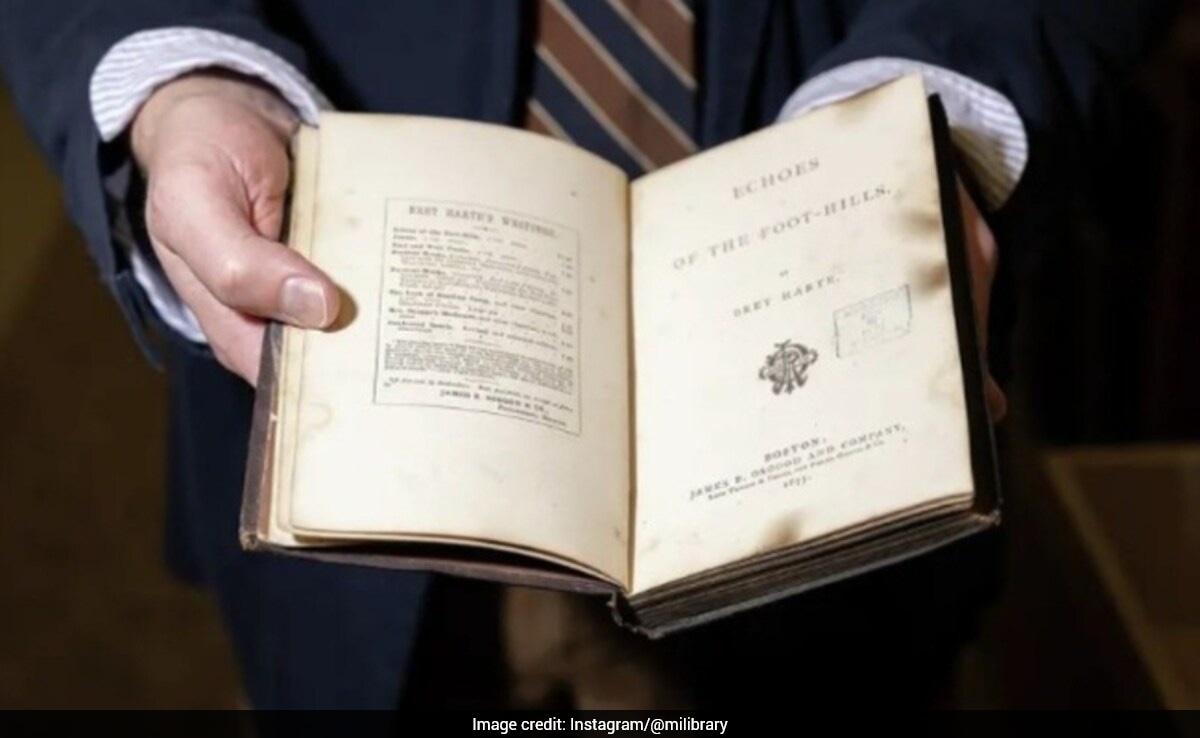
More than a century later, a single survivor walked back through the front doors. A copy of Bret Harte's Echoes of the Foot-Hills, stamped by the library in 1874, somehow escaped the inferno because someone forgot to return it on time. It sounds like a quirky piece of local trivia, but it’s actually a bizarre look into how history evades destruction.
The Day 200,000 Books Vanished
To understand how wild this survival story is, look at the sheer scale of the 1906 disaster. The inferno didn't just burn buildings; it choked out the cultural identity of early California. The Mechanics’ Institute, founded during the Gold Rush in 1854, wasn't just a place to borrow romance novels. It served as the intellectual bedrock for the West Coast's inventors, builders, and thinkers.
When the fires ripped through the Financial District, library records were wiped out instantly. The 200,000 books on the shelves basically became fuel. Librarians didn't have digital backups. They didn't have remote servers. If a book sat on a shelf downtown on April 18, it ceased to exist.
Except for the ones out on loan.
Because the library's paper checkout ledgers burned to a crisp, the institution had no record of who had borrowed what. They knew items were missing, but tracking them down was impossible. The city focused on rebuilding from the dirt up, and the forgotten books in private homes were slowly absorbed into family attics or discarded.
How a Poetry Book Defied the Odds
The volume that surfaced isn't a massive historical text. It's a modest book of poetry about the California gold country. The title page bears the handwritten name of a woman named Agnes Quigley.
We don't know if Agnes was the original rule-breaker who checked it out, or if she bought it later. The Mechanics’ Institute doesn't track historical checkout names for privacy reasons. But someone had this volume sitting in their house while the downtown district burned.
The story gets better. The book didn't just sit in a climate-controlled vault for 120 years. It drifted through the secondary book market, completely unnoticed, until a sharp-eyed collector named Randy Tarpey-Schwed spotted it on an antique bookseller’s website. The description was a dead giveaway: "outside surfaces of book blackened by fire, interior pages soot-spotted but otherwise clean."
He bought it for a whopping $35. Recognizing the property stamp from 1874, he brought it back to the reconstructed library.
Think about the timeline here. This specific copy of Echoes of the Foot-Hills survived the 1906 fire, two world wars, the dot-com boom, and decades of spring cleaning before anyone noticed its true home.
The Myth of Total Digital Preservation
People love to look at stories like this and laugh at old-school library tech. We think our current digital landscape protects us from losing our collective history. If a building burns today, the cloud keeps our data safe, right?
Not exactly. Digital formats degrade. Servers get wiped. Links rot. A physical book, even one with soot-stained edges and a cracked spine, can lie dormant in an attic for a century and remain completely readable without software updates or a power source. The survival of this poetry book proves that physical artifacts possess a stubborn resilience that digital code can't match.
Library manager Myles Cooper unlocked a special display case to put the book back on the library floor. It sits underneath an 1854 map of San Francisco that only survived the disaster because it was locked inside a massive, fireproof safe during the blaze.
What This Means for Historic Preservation
If you own old family heirlooms, local history documents, or antique volumes, you might think they belong in a garbage bin or a thrift store pile. They don't. Historic organizations rely heavily on independent collectors and everyday people noticing small details like an old ink stamp or a handwritten name.
If you want to help preserve local history, don't let old records sit in damp environments. Check your old books for library stamps, specialized bindings, or historical markings. Reach out to local historical societies before throwing away items from the early 20th century. What looks like a ruined, soot-covered piece of trash might actually be the missing link to a forgotten urban disaster.
The Mechanics’ Institute waived the century's worth of late fees for Agnes Quigley's estate. The book is back on display at their downtown location, right by the BART stop, proving that sometimes the best way to preserve a library is to lose a book in the mail.
Rare Book Checked Out Pre-1906 Returned to SF Library - This video provides local news coverage of the book's return and features footage of the text inside the Mechanics' Institute.