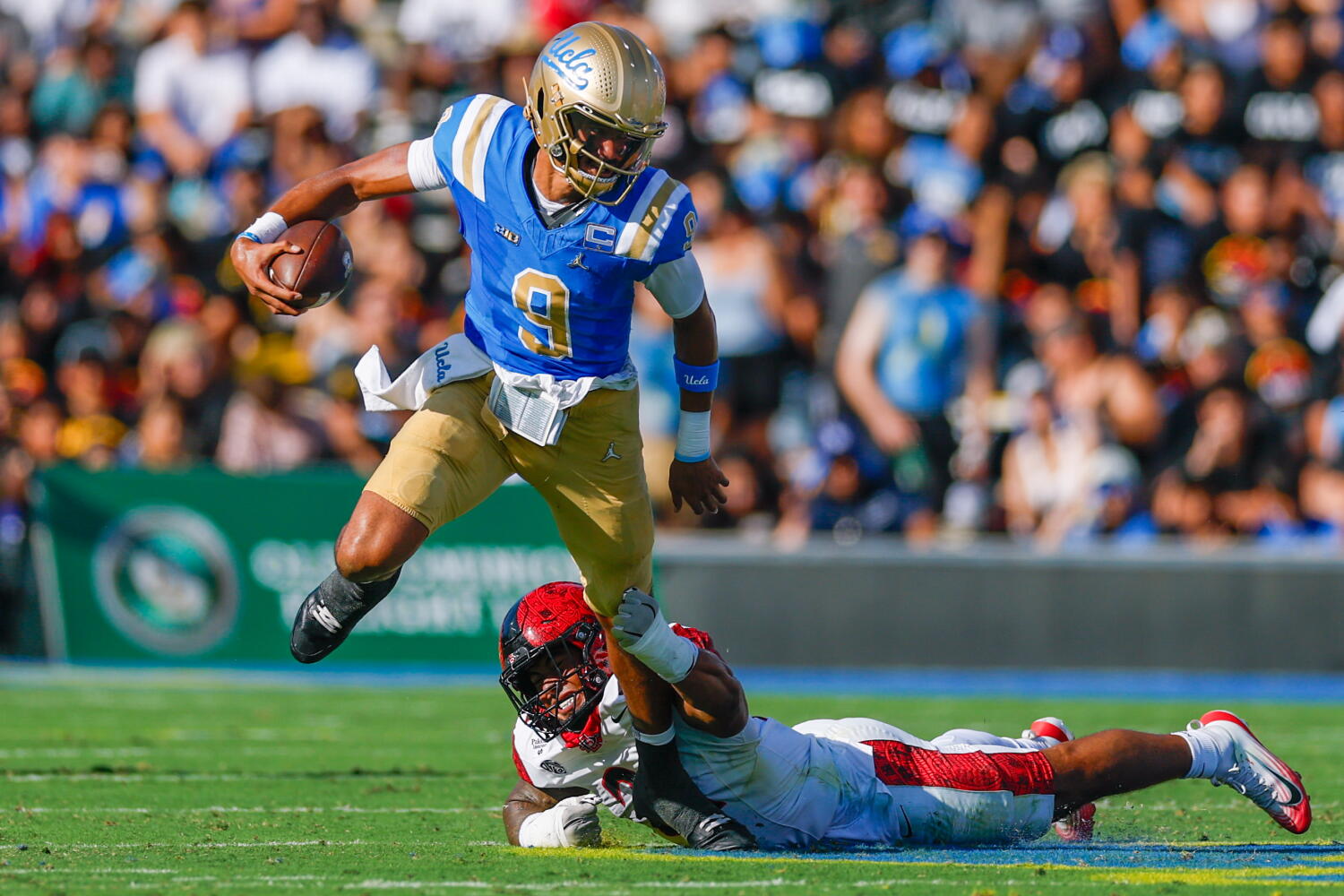
College football coaches love to talk about culture. They plaster terms like brotherhood and family across walls, stamp it onto practice jerseys, and broadcast it during introductory press conferences as if verbal repetition alone can manufacture grit. Most of the time, it is empty theater. A smokescreen designed to buy million-dollar salaries while rosters churn through the transfer portal like assembly lines.
Then there is Bob Chesney.
When UCLA athletic director Martin Jarmond pulled Chesney out of James Madison to take over a bruised program entering the meat grinder of the Big Ten, the reaction in Westwood was muted skepticism. This was not a splash hire of a disgraced former NFL coordinator or a high-profile name riding the coattails of an elite recruiting coordinator. Chesney was a builder. He won at Division III Salve Regina, at Division II Assumption, at FCS powerhouse Holy Cross, and quickly at James Madison. Moving to the West Coast to face elite Midwestern and Pacific juggernauts was supposed to be the graveyard of his methodical climb.
Instead, the Bruins did the unthinkable. They stopped talking about the transition, ignored the geographic whiplash of cross-country conference play, and simply started winning football games.
To understand why UCLA has transformed so rapidly under Chesney, you have to look past the box scores and examine the architecture of how his teams operate. While traditional powerhouses spend millions trying to buy immediate chemistry from the portal, Chesney builds from the calendar backward. Players are repeatedly reminded that autumn victories are forged in the anonymity of January workouts.
There is an obsessive attention to detail that permeates every corner of the Wasserman Football Center. It is not built on complex tactical wizardry or revolutionary offensive schemes that reinvent the sport. It is built on the elimination of panic. When starting quarterback injuries or high-stakes fourth-quarter deficits threaten to derail a season, Chesney’s locker room does not flinch. They operate with the collective calm of a unit that has already lived through worse scenarios during grueling spring practices.
The Big Ten was supposed to be the ultimate reality check for a coach climbing from the lower tiers of college football. Pundits warned that the physical trench warfare of Michigan, Ohio State, and Oregon would expose a lack of depth and high-end talent. Yet, as the calendar turns toward the final stretch of the season, UCLA stands shoulder-to-shoulder with the heavyweights of the sport. They are winning not by out-recruiting everyone on paper, but by out-preparing and out-executing opponents who are accustomed to relying purely on athletic superiority.
This brand of football is unglamorous, built on disciplined defensive structures, calculated offensive pacing, and an absolute refusal to beat oneself. When you watch a Chesney-coached team, you see eleven men executing their assignments with absolute conviction. There are no blown coverages born of confusion, no chaotic sideline meltdowns when momentum shifts.
The wider college football ecosystem is structurally volatile. Programs spend hundreds of millions on rosters only to see them implode because the locker room lacks a stabilizing force. Chesney provides that stability by anchoring the program in an authentic, old-school accountability that modern players actually buy into. He welcomes families into the facility, listens to his players, and demands total transparency.
The transition to the Big Ten was billed as a hurdle that would humble the new coaching staff. Instead, it has proven to be the exact canvas Chesney needed to showcase a masterclass in program architecture. The rest of the conference is no longer looking at UCLA as a welcoming Pacific coast road trip. They are looking up at the standings, realizing that the new standard in Westwood is here to stay.