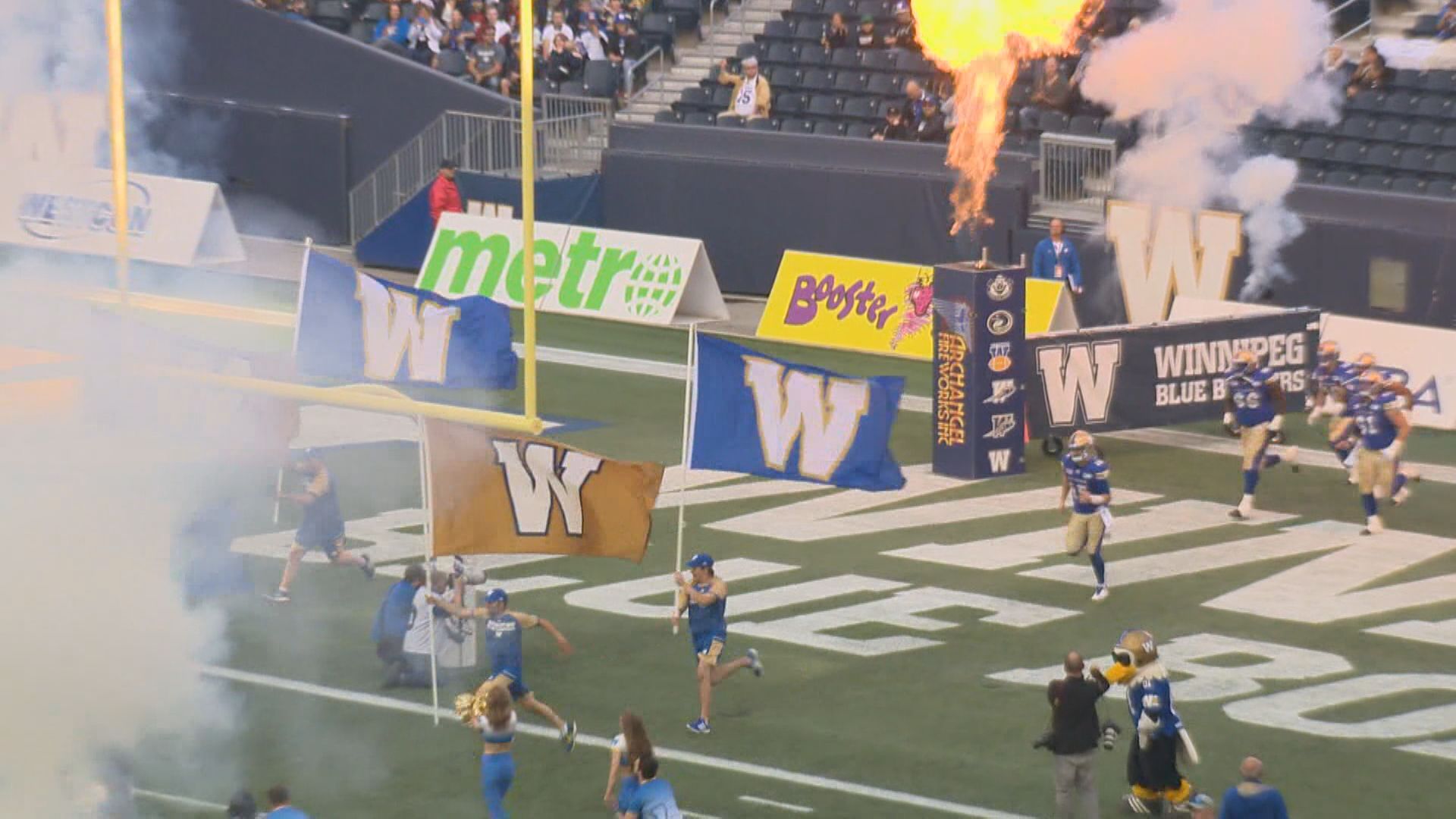
The wind in Winnipeg doesn't just blow. It bites. It carries the scent of the Red River and a thousand miles of flat, unforgiving earth. If you stand outside Princess Auto Stadium in late November, the cold feels personal. It is a physical weight. Yet, inside the ledgers of the Winnipeg Football Club, things have never been warmer.
The numbers released this week are staggering. An operating profit of $12.3 million. It is a figure that feels almost vulgar in its success, especially in a league where "breaking even" is often considered a championship win in its own right. But to understand how a community-owned team in a mid-sized Canadian city turned a pigskin into a gold mine, you have to look past the spreadsheets. You have to look at the guy in Section 104 who hasn't missed a home opener since 1982.
Money in sports is usually treated as an abstraction. We talk about "salary caps" and "revenue streams" as if they are weather patterns—things that happen to us rather than because of us. But a $12.3 million profit is not an accident of geography or a gift from a television network. It is the accumulated energy of a fan base that decided, somewhere along the line, that the Blue Bombers weren't just a weekend distraction. They were an identity.
The Anatomy of the Harvest
Every dollar in that eight-figure profit tells a story. Consider the $15.1 million brought in through gate receipts. That isn't just a number. It is the sound of turnstiles clicking 30,000 times a night. It is the ritual of the tailgate, the smell of charcoal and cheap beer, and the collective gasp of a stadium when a deep ball hangs just a second too long in the prairie air.
Then there is the merchandise. $5.1 million in hats, jerseys, and foam fingers. Imagine a hypothetical fan—let’s call him Gary. Gary already has three jerseys. He doesn’t need a fourth. But when the team is winning, when the culture feels electric, Gary buys the fourth one for his grandson. He isn't buying polyester. He’s buying a memory of a Tuesday night in July when the world felt right.
This is the "invisible stake." The club’s financial health is a direct reflection of the emotional health of the city. When the team posted a total revenue of $55.4 million, up significantly from the previous year, it wasn't because of a clever marketing gimmick. It was because the product on the field—a perennial contender, a culture of grit—justified the investment of the people.
The Weight of the Debt
Success is rarely a straight line. To appreciate the $12.3 million surplus, we have to remember the lean years. There were times when the club’s survival felt like a seasonal question mark. The move to the new stadium wasn't a victory lap; it was a gamble. It came with a mortgage that felt like a millstone around the neck of the organization.
The club made a $5 million payment toward that debt this year. This is the unglamorous part of the story. It’s the equivalent of a family finally paying off the house after decades of scraping by. For a community-owned team, this debt isn't just a corporate liability. It’s a shared burden. If the team fails, there is no billionaire owner to cut a check and make the problem go away. There is only the community.
This vulnerability is actually the team’s greatest strength. Because the fans know they are the safety net, they show up. They buy the overpriced popcorn. They stay until the fourth quarter in a driving sleet storm. They are stakeholders in the truest sense of the word.
Beyond the End Zone
The impact of this financial windfall spills over the concrete walls of the stadium. The Winnipeg Football Club isn't just a pro sports team; it’s a non-profit engine. The profit allows for the "Amateur Football Fund," a quiet, vital artery that keeps the sport alive at the grassroots level.
Think about the kid in a North End neighborhood putting on a pair of pads for the first time. The jersey might be a little too big, and the helmet might be a hand-me-down, but the opportunity to play is subsidized by those $12.3 million. When the big club wins, the kids in the park win. It is a closed-loop ecosystem of pride and participation.
We often hear that sports are a "business first." It’s a cynical phrase used to justify cutting a star player or raising ticket prices. But the Winnipeg model flips that logic on its head. In this city, the business is a tool used to protect the sport. The profit isn't the goal; the profit is the fuel. It ensures that ten years from now, fifty years from now, the lights will still be on and the "W" will still be flying.
The Risk of the Peak
There is a danger in being this successful. When a team clears $12 million in profit, the fans start to look at the price of a beer with a more critical eye. They start to wonder why the parking is so expensive or why the star linebacker didn't get a bigger raise.
The club is currently navigating a delicate tightrope. They have to reinvest in the fan experience to keep the momentum going, but they also have to hoard enough of that cash to survive the inevitable "down" years. Football is cyclical. Injuries happen. Draft picks bust. A bad season can turn a $12 million profit into a $2 million deficit faster than a Winnipeg winter turns a puddle into a skating rink.
The CFO of the club isn't just managing money; they are managing expectations. They are trying to build a fortress that can withstand the years when the stadium isn't full and the merchandise isn't flying off the shelves. It’s about sustainability. It’s about making sure the Blue Bombers remain a permanent fixture of the Manitoba skyline.
The Sound of a Full House
Walk through the concourse during halftime. It’s a crush of humanity. People from every tax bracket, every background, and every corner of the province are jammed together. For three hours, the only thing that matters is the score.
That collective energy is what the accountants are actually measuring when they tally up the revenue. They are measuring the "buy-in." They are quantifying the intangible feeling of belonging to something larger than oneself.
Winnipeg is a city that often feels overlooked by the rest of the country. We aren't Toronto. We aren't Vancouver. We don't have the mountain views or the skyscraper canyons. What we have is each other. And we have this team.
The $12.3 million isn't a trophy to be put in a case. It’s a promise. It’s a sign that the heart of the city is beating strong, fueled by a community that refuses to let its institutions fade. As the sun sets over the prairie and the stadium lights begin to hum, the money in the bank matters less than the person sitting in the seat next to you, screaming themselves hoarse for a team that belongs to them.
The ledger is balanced. The debt is shrinking. The future is funded.
But out on the field, as the wind picks up and the first flakes of snow begin to fall, the only number that really matters is the one on the scoreboard. Everything else—the millions, the debt, the spreadsheets—is just the price of admission to the greatest show in the middle of nowhere.