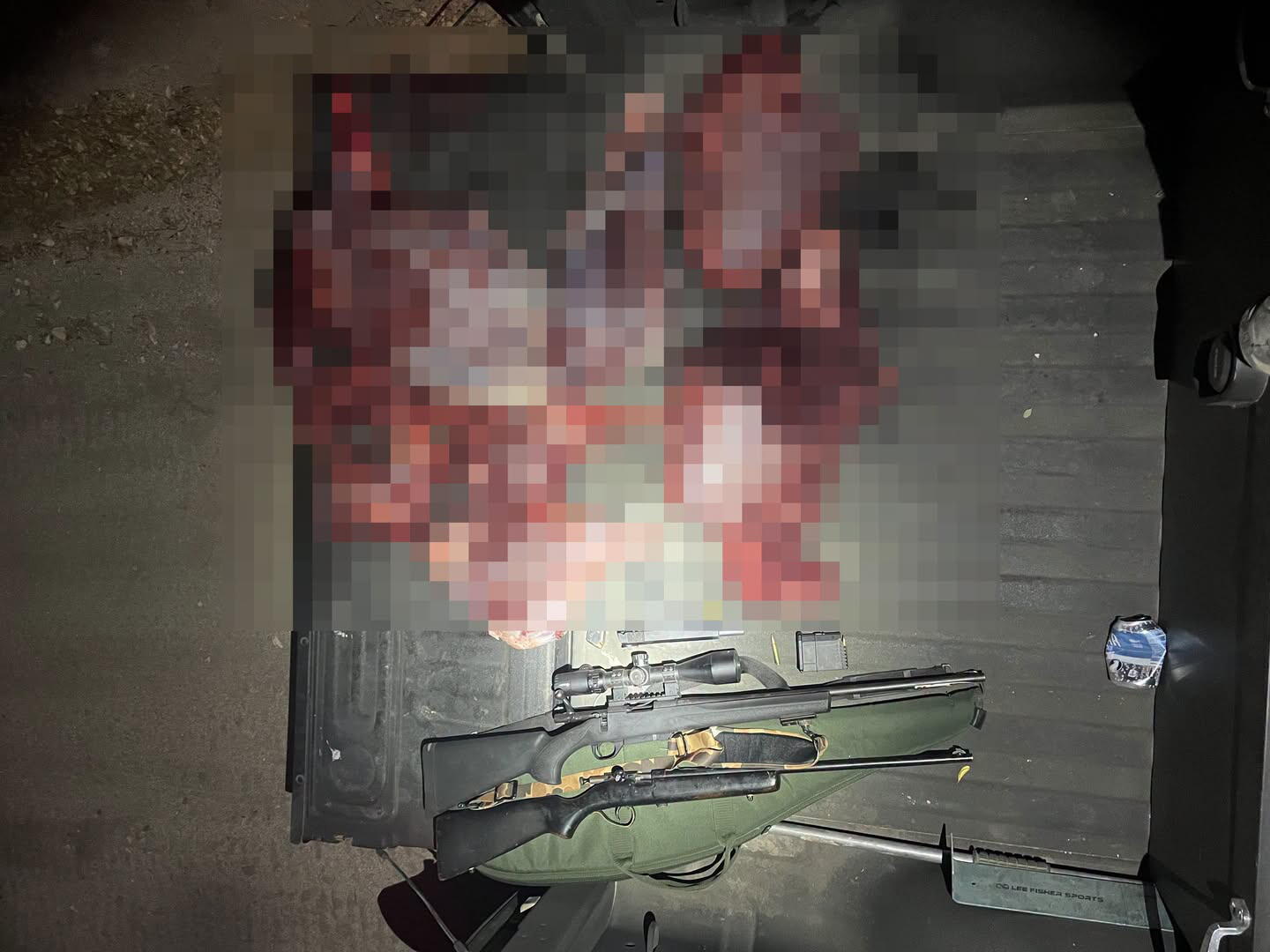
Millions of people drive past the towering ridges of the San Gabriel Mountains every single week, viewing the steep slopes as a scenic backdrop to Los Angeles traffic or a weekend escape for weary urbanites. Beneath that verdant veneer lies a darker ecosystem of lawlessness. Poaching in Angeles National Forest represents an ongoing, largely invisible crisis where illegal wildlife slaughter goes unchecked in the deep canyons and remote fire roads. When suspects are caught with bloody hands and decapitated deer carcasses, it serves as a rare, jarring public window into an underground economy that operates daily across public lands. This is not about a lone hungry camper taking an extra squirrel for survival. This is systematic, brazen wildlife theft occurring minutes away from a major metropolitan center, driven by dark economic incentives and a severe lack of enforcement muscle.
The Geography of Vulnerability
Geography dictates crime. Angeles National Forest spans roughly six hundred fifty thousand acres of rugged, fractured terrain, wedged directly against the northern edge of the Los Angeles basin. Millions of residents live within a thirty-minute drive of its trailheads. That proximity creates a massive law enforcement challenge. Poachers exploit the sheer permeability of forest boundaries. A suspect can leave a paved suburban street, drive five miles up a winding canyon road, execute an illegal kill under the cover of dense chaparral, and return to civilization within a single hour.
The terrain itself aids the perpetrator. Deep canyons block radio frequencies and cellular signals. Countless unpaved maintenance roads, utility access tracks, and unauthorized hiking trails branch off major routes like Highway 39 or the Angeles Crest Highway. Law enforcement units cannot be everywhere at once. Wildlife traffickers and illegal hunters know these blind spots intimately. They study the patrol patterns of federal forest rangers and state wildlife officers, striking when the odds of detection drop to near zero.
Furthermore, the vast acreage makes comprehensive surveillance nearly impossible without significant aerial support or advanced sensor networks. Perpetrators utilize this landscape as a shield, dropping deep into ravines where forensic evidence washes away with the next seasonal rainstorm.
The Economics of Illegal Slaughter
Why risk felony charges, heavy fines, and prison time to kill wildlife in a protected national forest? The common assumption points toward subsistence hunting, implying desperate individuals looking to put meat on the table during hard economic times. Field investigators and wildlife biologists dismiss that narrative as largely obsolete in this region.
The modern poaching trade driven into public lands operates on entirely different financial incentives. Black market wildlife parts fetch staggering sums. Antlers, specific internal organs utilized in traditional remedies, and uninspected wild game meat find ready buyers in clandestine underground networks throughout Southern California. Mule deer, native bighorn sheep, and black bears become commodities. When poachers behead a deer and leave the rest of the carcass to rot in the brush, they are often harvesting specific high-value trophies or catering to specific illicit culinary buyers who demand wild venison without paying processing fees, purchasing licenses, or adhering to seasonal limits.
The economics turn brutal indifference into a profitable enterprise. A single poached animal represents zero investment in licensing fees, conservation stamps, or regulated equipment, yielding a 100 percent profit margin for those willing to bypass wildlife laws. The perpetrators treat the forest as an open-air pantry with zero overhead, funded entirely by the destruction of a public trust resource. The financial penalty, when caught, is often treated by professional poachers merely as a cost of doing business, provided they manage to slip through the net during their unrecorded excursions.
The Thin Green Line Under Siege
Catching these criminals requires resources that simply do not exist in adequate quantities. The California Department of Fish and Wildlife operates under a severe staffing deficit. A tiny fraction of state wildlife officers patrol vast geographical regions comprising millions of acres of public and private land, facing immense duties that extend far beyond wildlife enforcement into environmental protection and boating safety.
Consider the operational math. A single wildlife officer might be responsible for patrolling an entire county or multiple massive national forest districts alone on a given shift. When emergencies occur, high-priority calls demand attention, or routine public safety duties consume hours, vast tracts of forest remain completely unmonitored for days at a time. Federal United States Forest Service law enforcement officers face similar constraints, bogged down by administrative mandates, jurisdiction overlaps, and persistent funding shortages.
This resource drought creates an environment where poachers operate with a high degree of confidence. Even when community members report suspicious gunshots echoing through canyon walls at night, response times can stretch to hours. By the time officers arrive at a remote coordinate, the suspects have vanished into the grid of Southern California freeways. Without dedicated tactical units focused specifically on wildlife crime rings, enforcement remains reactive rather than proactive.
The Cultural Disconnect and Community Complicity
Law enforcement alone cannot solve a crime wave rooted in cultural normalization and public apathy. Many urban residents moving into neighborhoods bordering the foothills view wildlife purely through an aesthetic lens, treating local deer like suburban pets while remaining oblivious to wildlife dynamics. Conversely, a distinct subculture exists within the region that views wildlife regulation not as a science-based tool for species preservation, but as an arbitrary state imposition meant to be evaded at all costs.
This attitude manifests as active non-cooperation or passive silence. Witnesses who hear gunshots near hiking trails frequently fail to report them, assuming someone else will handle it or dismissing the noise as construction work or target practice. Poachers rely on this ambient indifference. They blend into recreation areas wearing standard outdoor gear, carrying coolers and duffel bags that conceal firearms or butchered animal parts in plain sight.
Public reporting remains the most effective deterrent against wildlife crime, yet it remains desperately underutilized. Without an active network of watchful hikers, hunters, and residents who understand how to report suspicious vehicle plates and illegal firearm discharges, the forest remains a low-risk zone for criminal activity. Changing this dynamic requires community education that frames wildlife theft not as a victimless misdemeanor, but as a direct assault on the natural heritage of the region.
Ecological Shockwaves in a Fragile Habitat
The impact of rampant poaching extends far beyond the immediate cruelty inflicted upon individual animals. Angeles National Forest supports a delicate, heavily stressed ecosystem recovering from repeated catastrophic wildfires, prolonged drought, and relentless urban encroachment.
Mule deer populations within the forest serve as a vital link in the local food web, providing primary sustenance for native apex predators like mountain lions and bobcats. When illegal hunting removes prime breeding adults from a local herd, the demographic structure collapses. Genetic diversity shrinks. Predation pressure shifts onto vulnerable species or forces predators closer to urban fringes, increasing human-wildlife conflict in residential backyards.
Furthermore, indiscriminate poaching does not respect species boundaries. Poachers operating with high-powered rifles or illegal night-vision equipment frequently misidentify targets, wounding or killing protected species, including endangered bighorn sheep or localized bird populations. The ecological damage accumulates silently, eroding the biological resilience of a forest already struggling to survive the pressures of twenty-first-century climate stress. Every illegal kill strips away another layer of defense from a landscape hanging by a thread.
Rebuilding Deterrence
Halting the destruction requires a structural shift in how authorities and the public approach wildlife crimes on public lands. Treating poaching as a minor administrative infraction akin to a parking ticket invites continued law enforcement failure.
Prosecutors must pursue maximum penalties under state and federal statutes, turning felony wildlife trafficking into a high-risk financial proposition. Agencies need expanded technological deployments, including covert trail cameras, acoustic gunshot detection arrays in high-incidence canyons, and increased interagency patrols combining state wildlife officers with county sheriff deputies and federal rangers.
The forest will always remain wild and difficult to police. But leaving the backcountry entirely unprotected transforms public lands into a sanctuary for criminals who treat living ecosystems as disposable commodities.
The blood on the brush in the San Gabriel Mountains will not wash away through mere hand-wringing. It requires an aggressive, well-funded defense of the wild spaces that remain.


