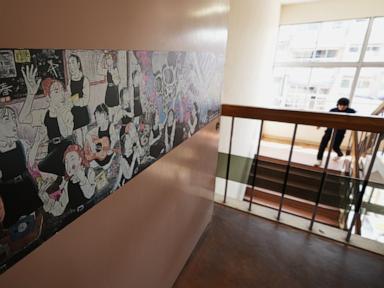
Ephemeral art has a long history in human culture, yet few modern mediums match the sheer temporary brilliance of blackboard art currently sweeping Japanese secondary schools. Driven by talented students armed with standard colored chalk and erasers, ordinary classrooms transform into massive, highly detailed canvases before inevitably being wiped clean to make room for the next morning's algebra lesson. This movement is not merely a cute social media trend or a harmless way to pass time between classes. It represents a fascinating cultural pushback against permanent digital media, proving that immense artistic expression thrives precisely because it is fleeting.
The Genesis of a Chalk Revolution
To understand how high school classrooms became galleries, we must look at the structural shift in Japanese school culture and corporate sponsorship. Major stationery manufacturers, most notably Nichigaku, launched annual high school black board art competitions to boost chalk sales and engage creative youths. These corporate backing initiatives provided official structure, material grants, and substantial media attention.
Students do not simply sketch doodles during study hall. They spend weeks planning elaborate compositions, scaling down reference images, and blending pigments directly onto slate-colored boards using layering techniques. The physical nature of the medium demands absolute precision. Chalk dust settles into the pores of the board, making corrections messy and demanding deliberate execution.
Competitors work in teams, staying late after hours while janitors sweep nearby corridors. This collaborative pressure forges tight bonds among student creators, turning a solitary visual medium into a communal performance art.
Behind the Mechanics of Chalk Dust and Pigment
Working with blackboard chalk requires mastering unique physical constraints. Standard classroom chalk consists primarily of calcium sulfate or calcium carbonate mixed with binding agents. Professional artists layering these sticks on a vertical slate face must fight gravity constantly.
[Layering Technique]
1. Base Sketch (Light pressure, minimal pigment)
2. Mid-tone Blocking (Blending with fingers and felt pads)
3. Detail Work (High-density chalk application)
4. Highlight Embellishment (Pure white accents)
Artists rely on the friction between the porous board surface and the dense chalk particles. By pressing hard, they deposit thick layers of opaque pigment. By dragging the stick lightly or smudging it with fingertips, they achieve smooth gradients, mimicking the look of oil paint or digital airbrushing.
Erasers become subtractive tools. Instead of just removing mistakes, artists carve out light sources, stray hair strands, and atmospheric haze by aggressively rubbing away pigment. The contrast between the deep black background and vibrant pastels creates an optical illusion of luminescence.
The Economics and Corporate Sponsorship Dynamic
Corporate involvement raises valid questions regarding commercial exploitation versus genuine youth expression. Nichigaku and rival whiteboard manufacturers supply free materials, sponsor cash prizes, and secure widespread media coverage across national television networks.
This corporate sponsorship changes the stakes. What starts as spontaneous school expression turns into high-stakes regional competition. Winning schools receive upgraded classroom supplies, prestige, and recruitment boosts for their arts programs.
Critics argue that corporate brands hijack authentic student culture for marketing campaigns. However, art educators point out that schools rarely possess budgets for advanced fine arts materials like professional canvases, oils, or specialized digital tablets. Commercial backing bridges this resource gap, giving teenagers access to national platforms that would otherwise remain closed to them.
The Psychology of Impermanence
Digital culture tells us that everything must be saved, archived, backed up to the cloud, and monetized infinitely. Blackboard art rejects this mandate entirely.
Every masterpiece carries an expiration date. Within days, or at most a few weeks, a damp sponge wipes away hundreds of hours of painstaking labor. The drawing ceases to exist physically, surviving only through smartphone photographs and low-resolution video clips uploaded online.
This planned destruction shifts the psychological value of the work. Viewers appreciate the drawings not for their durability, but for their vulnerability. The urgency of seeing the artwork before it vanishes creates a powerful viewing experience.
Students accept this loss with remarkable philosophical maturity. They understand that the value lies in the act of creation, the shared late nights in empty classrooms, and the communal gasp of classmates walking in on Monday morning.
Institutional Resistance and Practical Hurdles
Despite widespread public acclaim, integrating large-scale chalk projects into daily school operations creates severe logistical friction.
- Scheduling Conflicts: Preparing a massive mural requires multiple days of uninterrupted board access, conflicting directly with regular curriculum delivery and teacher lesson plans.
- Health and Maintenance: Heavy chalk use generates massive clouds of dust, triggering asthma symptoms in sensitive students and requiring frequent deep cleaning of classroom HVAC vents.
- Administrative Pushback: Some conservative principals worry that elaborate murals distract students from academic focus during core instruction hours.
Schools manage these hurdles by restricting projects to specialized art rooms, unused lecture halls, or designated weekends. Yet, this spatial segregation risks removing the art from its core context: the everyday lived environment of the standard classroom.
Global Reception and Digital Paradox
International media outlets frequently romanticize these Japanese classroom murals, framing them as proof of exceptional youthful discipline and artistic ingenuity. Viral video clips rack up millions of views across Western social platforms, inspiring imitation projects in American and European schools.
This global digital distribution creates an interesting paradox. The art form celebrates physical impermanence and local, in-person shared spaces, yet its fame relies entirely on permanent digital reproduction and algorithmic distribution. Without cameras and social media platforms, these ephemeral creations would remain localized secrets seen only by a few dozen classmates and teachers.
The artists themselves navigate this tension carefully. They know their work lives a double life: a fleeting physical object on a classroom wall, and an immortal digital asset circulating indefinitely across global data networks.
The Future of Temporary Public Expression
As interactive digital displays and smart whiteboards gradually replace traditional slate chalkboards in modern schools, the physical medium of blackboard art faces an uncertain architectural future. Modern electronic screens do not accept chalk dust, nor do they offer the tactile friction required for traditional blending techniques.
Some innovative educators have begun experimenting with stylus-based digital murals on large classroom touchscreens, yet students consistently report feeling a loss of visceral connection. Digital pixels lack the chaotic, messy reality of chalk dust settling on uniforms and fingertips.
The movement may eventually transform into a niche performance art, executed on temporary wooden panels built to mimic traditional school boards. Whatever structural changes occur in classroom architecture, the core impulse remains unchanged. Teenagers will always find a surface to mark, a way to collaborate, and a method to make their temporary presence unmistakably known before the world wipes the slate clean.


