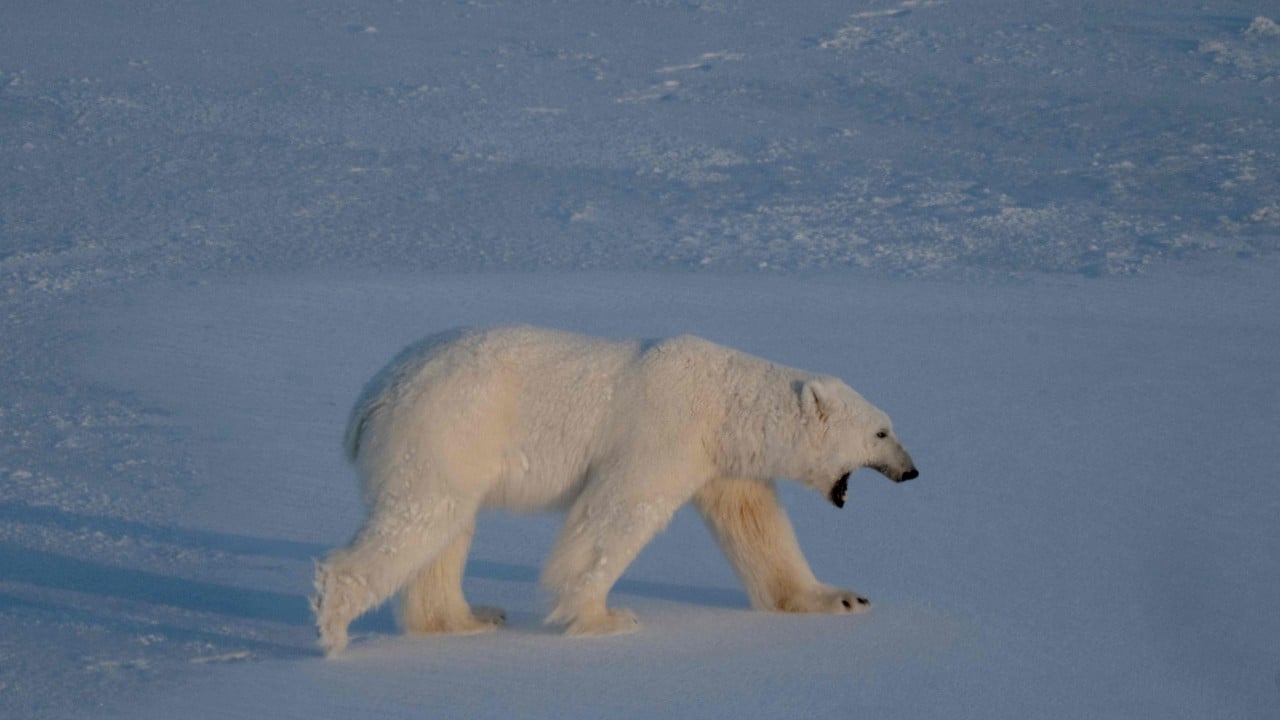
The Arctic is no longer far enough away to escape our global ecological crises.
In a sobering development from the remote Svalbard archipelago, Norwegian authorities just confirmed that a dead polar bear has tested positive for highly pathogenic avian influenza. This isn’t just a tragic footnote in wildlife biology. It is Europe’s very first recorded case of bird flu in a polar bear, and it signals a dangerous shift in how this virus behaves in the wildest corners of the planet.
For years, we viewed bird flu as a problem for factory farms and migratory geese. But the virus has mutated, expanded, and stubbornly broken through species barriers. Now, the top apex predator of the Arctic ice is falling victim. If you think this is just an isolated incident in a frozen wasteland, you are missing the bigger picture.
The Grim Discovery in Svalbard
Tourist guides exploring Raudfjorden, a fjord located in the northern stretches of the Spitsbergen island, noticed something wrong. They spotted a dead polar bear and a dead walrus. Nearby, two other polar bears were struggling, showing clear signs of lameness and paralysis in their hind legs.
The guides contacted the Norwegian Polar Institute. Given the bizarre neurological symptoms and the proximity of the carcasses, authorities knew they couldn't take chances. The Governor of Svalbard and the Norwegian Food Safety Authority brought in the Norwegian Veterinary Institute to run field tests. They had to rule out rabies.
They found no rabies. Instead, the tests revealed highly pathogenic avian influenza (HPAI) subtype H5N5 in the brains of both the dead polar bear and the walrus. The bear was a young, one-year-old male. The walrus was an adult. While the carcasses had been exposed to the elements for some time before discovery, the viral load in their brains confirmed that bird flu was the highly probable cause of death.
The H5N5 Threat is Moving Beyond Birds
We need to talk about the specific strain found here. While much of the global anxiety over the last few years has focused on the H5N1 strain, the virus found in the Svalbard polar bear is H5N5. This particular subtype isn't entirely new to the region, but its behavior is getting increasingly aggressive.
Before this discovery, H5N5 had already bubbled up in Svalbard's wild populations. It killed wild birds, showed up in Arctic foxes, and was found in a dead walrus. But breaking into the neurological system of a polar bear is a massive escalatory step.
The Norwegian Veterinary Institute is currently running intensive investigations to figure out something critical. Has this virus mutated to become specifically adapted to mammals?
Right now, we know mammals usually catch bird flu the old-fashioned way. They eat an infected bird carcass, or they come into direct, messy contact with the bodily fluids of a sick animal. Polar bears are opportunistic scavengers. If a flock of infected seabirds dies on the ice, a hungry bear will eat them.
But if the virus is mutating to spread efficiently between mammals—from walrus to bear, or bear to bear—we are looking at an entirely different crisis.
Why the Arctic is Uniquely Vulnerable
It's easy to assume the freezing cold of the Arctic acts as a natural sterile barrier against disease. The opposite is true. The Arctic ecosystem is fragile, highly interconnected, and already buckling under the weight of rapid climate change.
Polar bears are already facing a catastrophic loss of sea ice, forcing them to spend more time on land, hunt alternative food sources, and come into closer contact with coastal bird colonies. They are stressed, overworked, and nutritionally compromised. Throw a highly contagious, brain-swelling virus into that mix, and you have a recipe for an ecological disaster.
The math is simple and terrifying. Polar bears have slow reproductive cycles. A female bear raises her cubs for over two years. They cannot handle a sudden spike in mortality from an infectious disease.
Furthermore, the impact on walruses and seals—the primary food source for polar bears—creates a cascading nightmare. If bird flu sweeps through walrus haul-outs or seal colonies, it directly threatens the polar bear’s food chain while simultaneously increasing the chances that the bears ingest the virus.
What This Means for Human Health
Let's address the immediate question everyone asks when a virus jumps species. Are humans at risk?
According to the Norwegian Veterinary Institute and global health bodies, the risk of transmission to humans from this specific strain remains very low. Most avian influenza viruses are fundamentally adapted to spread between birds, lacking the specific cellular keys needed to easily bind to human respiratory tracts.
But "low risk" does not mean "zero risk."
Every time the virus replicates inside a mammal—whether it’s a dairy cow in Texas, a pig in Southeast Asia, or a polar bear in Svalbard—it gets a fresh roll of the evolutionary dice. The chief worry among virologists is that a mammalian host will allow the virus to acquire the mutations necessary for airborne or highly efficient mammal-to-mammal transmission. If that happens, the risk of a human spillover event increases exponentially.
Actionable Steps to Take Right Now
This situation requires immediate, coordinated field action and strict adherence to biosafety protocols. If you operate in the travel, research, or conservation sectors in northern latitudes, you must change how you interact with the environment.
- Implement Immediate Reporting Protocols: If you are a guide, researcher, or tourist in the Arctic regions, use formal reporting channels like the Governor of Svalbard’s dedicated portal the moment you spot a dead bird, fox, seal, or larger mammal. Do not assume someone else has reported it.
- Enforce Strict Zero-Contact Rules: Under no circumstances should anyone approach or touch an animal carcass in these regions without professional personal protective equipment (PPE). Bird flu sheds heavily in secretions and feces; simply walking through an infected area can spread the virus on your boots.
- Decontaminate Expedition Gear: Expedition operators must introduce mandatory biosecurity wash stations for footwear and gear between landings. This prevents the mechanical transport of viral particles from one pristine wildlife colony to another.
- Fund Direct Genetic Sequencing: Government bodies and wildlife funds must prioritize funding for immediate genetic sequencing of Arctic mammalian samples. We cannot afford to wait months to find out if a strain has acquired mammal-adaptive mutations.
The discovery in Svalbard proves that the boundaries of global health are entirely interconnected. What happens to a bird in a European wetland can end up in the brain of an apex predator at the edge of the world. We have to treat wildlife surveillance not as a luxury scientific pursuit, but as a core component of global health security.