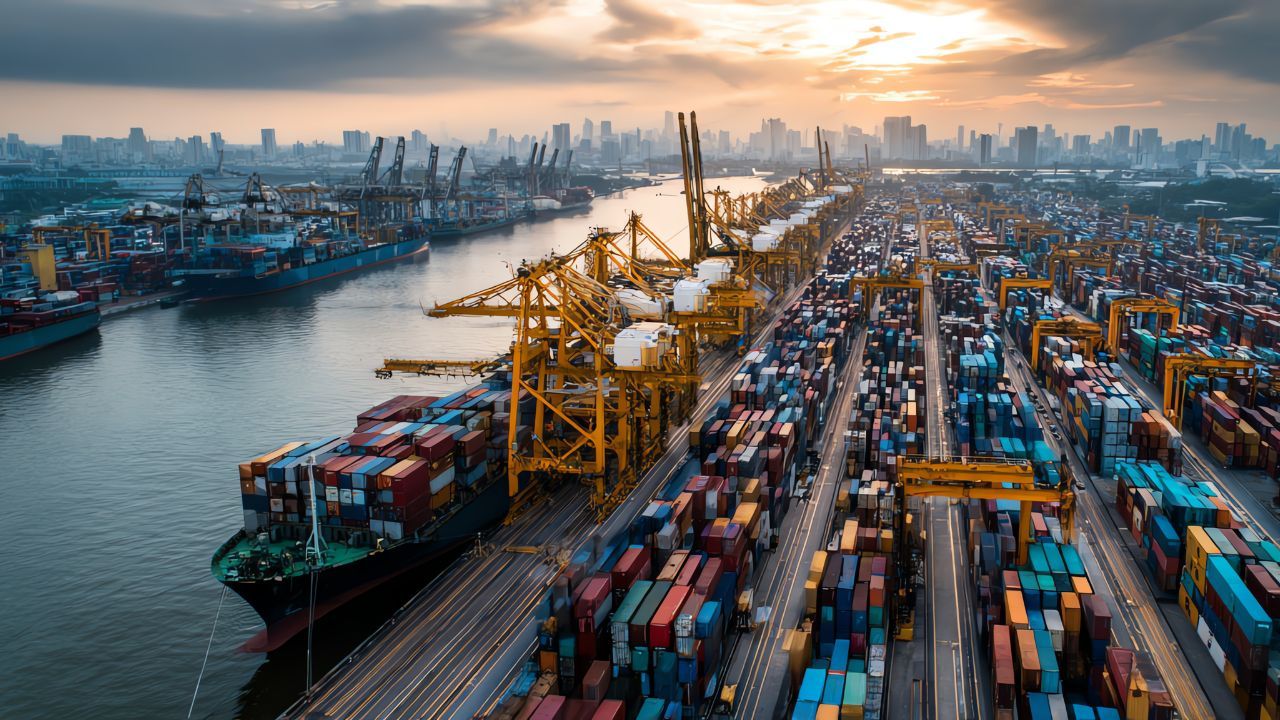
A shipping container is a cold, steel geometry of global commerce. To a customs broker in a fluorescent-lit office in New Jersey, it is a line item. To a CEO, it is a delayed promise. But for the better part of the last decade, these boxes have been something else entirely: a massive, unintended collection plate for the United States Treasury.
Inside these containers are the things that define the modern American morning. The Dyson vacuum that pulls pet hair from a suburban rug. The L’Oréal serum applied in a bathroom mirror. The Bausch + Lomb contact lenses that allow a commuter to see the road. For years, these items have carried a hidden weight—a "Section 301" tariff. It is a dry, bureaucratic term that hides a stinging reality. Don't forget to check out our previous post on this related article.
Now, more than 1,400 companies have marched into the U.S. Court of International Trade. They aren't there to debate the merits of a trade war. They are there to get their money back.
The Invisible Tax on the Vanity Mirror
Consider a hypothetical logistics manager named Sarah. She doesn't set foreign policy. She doesn't sit in the Oval Office. Her job is to make sure 50,000 units of moisturizing cream move from a port in Ningbo to a distribution center in Ohio without the math collapsing. To read more about the background here, The Motley Fool offers an in-depth summary.
When the tariffs first landed, Sarah’s spreadsheets turned red overnight. A 25% levy on components or finished goods isn't just a "cost of doing business." It is a structural earthquake. For a company like L’Oréal, which operates on the razor-thin alchemy of brand prestige and high-volume retail, that 25% has to come from somewhere. It comes from R&D budgets. It comes from the marketing team. Eventually, it comes from the consumer’s wallet.
The argument being leveled in court by these 1,400 importers is deceptively simple: The government overstepped. They contend that while the initial tariffs might have had a legal basis, the subsequent "List 3" and "List 4A" expansions—the ones that hit consumer goods, electronics, and health supplies—were a bridge too far. The plaintiffs argue the administration didn't follow the Administrative Procedure Act. They didn't listen to comments. They didn't explain their reasoning. They just turned the dial from "targeted pressure" to "blanket tax."
A Courtroom Full of Giants
It is rare to see Dyson, a titan of British engineering, standing in the same legal line as Bausch + Lomb. Their products couldn't be more different. One sucks dirt; the other helps you see. Yet, they are bound by the same grievance. They are part of a massive class of "Section 301" litigants who have spent years in a state of legal purgatory.
The stakes are staggering. We are talking about billions of dollars in potential refunds. But this isn't just about a line on a balance sheet. It’s about the fundamental unpredictability of doing business in a world where trade policy can be rewritten via social media or an afternoon memo.
When Bausch + Lomb pays a tariff on a lens component, that money leaves their ecosystem. It stops being capital that could fund a new eye-care breakthrough. It becomes a frozen asset, sitting in a government vault while lawyers argue over the definition of "retaliatory authority."
The court recently faced a massive task: wading through thousands of individual complaints that all share a single heartbeat. The judges have been asked to decide if the government’s escalation of the trade war was a reasoned response or a reflexive spasm.
The Human Cost of High Walls
We often talk about trade in the abstract. We speak of "flows," "deficits," and "surcharges." These words are designed to strip away the human element. They make it sound like water moving through a pipe.
But trade is actually a web of human relationships. It’s the factory worker in Southeast Asia, the longshoreman in Long Beach, and the family in Des Moines trying to figure out why their favorite vacuum cleaner suddenly costs $150 more than it did three years ago.
The 1,400 importers in this court case are essentially saying that the "pipe" was intentionally broken. They aren't just seeking a refund; they are seeking a return to a version of reality where the rules don't change in the middle of the game.
Imagine the boardroom of a mid-sized importer—not a giant like L’Oréal, but a smaller firm that brings in specialized medical glass. For them, the Section 301 tariffs were an existential threat. They couldn't absorb the cost. They couldn't pass it all to the customer. They spent years paying under protest, marking every check with a mental asterisk, hoping that one day a judge would agree that the government’s reach exceeded its grasp.
The Logic of the Long Game
The government’s defense has always been rooted in the "big picture." They argue that the tariffs were necessary to combat unfair trade practices, to protect intellectual property, and to force a seat at the negotiating table. In their view, the 1,400 companies are collateral damage in a much larger, much more important struggle for economic sovereignty.
But how long can "temporary" pressure last before it becomes a permanent handicap?
The Court of International Trade has been the site of an grueling marathon. There have been remands, appeals, and thousands of pages of briefings. In the most recent developments, the court has largely upheld the government’s right to impose these tariffs, dealing a heavy blow to the hopes of a quick payday for the importers. Yet, the legal battle refuses to die. The plaintiffs are pushing back, arguing that the court didn't hold the government to a high enough standard of transparency.
It is a clash of philosophies. On one side, the power of the Executive to conduct foreign policy and protect the nation’s economic interests. On the other, the right of private enterprises to operate under clear, stable, and legally justified regulations.
The Echo in the Aisles
Next time you walk down a retail aisle, look at the shelves. That bottle of shampoo, that box of contact lenses, that high-tech floor cleaner—they are all survivors. They have survived a gauntlet of logistical nightmares, global pandemics, and a legal battle that has spanned two presidential administrations.
The 1,400 importers are still waiting. Some have moved their supply chains to Vietnam or Mexico to escape the dragnet. Others have no choice but to stay and pay, clinging to the hope of a "judgment day" that will return their capital.
The money is there, somewhere in the machinery of the Treasury. It is a ghost of a refund, haunted by the complexities of international law. Until the final gavel falls, that money remains a silent tax on the American consumer, a multibillion-dollar footnote in a story about what happens when the world’s largest economies decide to stop talking and start taxing.
The containers keep arriving. The steel doors swing open. The goods flow out. But the price tag remains a reminder that in a trade war, the heaviest armor is often worn by the people who never asked to be in the fight.
The ink on the court’s latest order is dry, but the ledger is far from settled. 1,400 companies are still standing in the rain, waiting for a door to open that might remain locked forever.