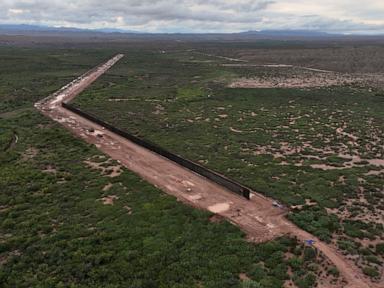
A federal court decision lifting an injunction on border wall construction in Texas’s Big Bend sector transforms a localized legal dispute into a complex civil engineering, environmental, and capital allocation problem. Removing a judicial stay does not immediately produce physical barriers; instead, it shifts the bottleneck from the courtroom to the supply chain, geological survey teams, and federal procurement offices. Understanding the true impact of this ruling requires separating legal authorization from operational execution across one of North America's most unforgiving terrains.
Most coverage of border infrastructure treats legal clearance as the finish line. In reality, a judicial green light merely initiates the pre-construction critical path. In the Big Bend sector—spanning roughly 517 miles of the Rio Grande from Sierra Blanca to the Terrell-Val Verde county line—the primary constraints are topographical and logistical rather than statutory. Standard barrier designs engineered for the flat alluvial plains of the Rio Grande Valley fail when applied to sheer limestone canyons, flash-flood arroyos, and remote desert basins lacking basic road networks. Meanwhile, you can find related stories here: Inside the Defense of Pete Hegseth as Impeachment Pressure Mounts.
The Three-Phase Execution Bottleneck
When a court clears the way for construction to resume, federal agencies like the Department of Homeland Security (DHS) and U.S. Customs and Border Protection (CBP) must navigate a rigid sequence of operational gates before a single bollard is anchored into concrete.
1. Statutory Waivers and Environmental Compliance Realignment
Legal injunctions typically pause projects based on alleged violations of the National Environmental Policy Act (NEPA), the Endangered Species Act, or administrative overreach regarding funding transfers. When a court rules in favor of the government—often hinging on the Secretary of Homeland Security’s authority under the Illegal Immigration Reform and Immigrant Responsibility Act (IIRIRA) of 1996 to waive environmental laws—the agency must still audit existing permits. Contractors cannot simply restart machinery; environmental monitors must re-verify habitat boundaries for protected species, such as the Mexican long-nosed bat or endemic cacti, if the specific construction corridor relies on remaining statutory guardrails rather than a blanket waiver. To see the bigger picture, check out the detailed report by The New York Times.
2. Geotechnical Assessment and Access Road Engineering
Big Bend’s geology presents severe structural challenges. Unlike urban border sectors in El Paso or San Diego, where heavy cranes and concrete mixers operate adjacent to existing highways, large stretches of the Big Bend sector sit dozens of miles from paved infrastructure.
- Subsurface Variability: Contractors must conduct core drilling to map karst limestone formations, subterranean voids, and shifting desert soils. Anchoring 30-foot steel bollards requires deep-foundation caissons capable of withstanding high wind loads and hydrostatic pressure during seasonal monsoons.
- Pioneer Road Construction: Before barrier materials arrive, crews must grade and reinforce miles of temporary access roads. In rugged terrain, the cost and time required to build the logistics corridor often rival the construction of the barrier itself.
3. Contract Re-Mobilization and Supply Chain Re-Indexing
Pausing federal infrastructure projects triggers severe financial friction. When injunctions halt work, contractors place equipment in standby mode, demobilize specialized labor, and liquidate perishable material allocations. Resuming work requires contract modifications—known as equitable adjustments—to account for inflation in structural steel, diesel, and concrete prices since the original bid. Re-securing steel fabrication slots and batch-plant capacity in remote West Texas creates immediate schedule drag.
The Cost Function of Remote Barrier Construction
Evaluating the efficiency of border infrastructure requires examining its unit economics. In standard civil engineering, per-mile costs scale predictably based on material volume and labor hours. In remote sectors, the cost function becomes non-linear due to distance-decay penalties and hydrological risk.
The total cost ($C$) of a remote border barrier segment is governed by four primary variables:
- Base Material and Fabrication ($M$): The fixed cost of weathering steel, concrete, and anti-climb plates.
- Logistics Multiplier ($L$): The exponential increase in transport costs as distance from railheads and concrete batch plants grows. Concrete has a strict curing window; in West Texas heat, mobile batch plants must be erected on-site, multiplying capital expenditure.
- Topographical Mitigation ($T$): The engineering premium required to bridge canyons, stabilize steep grades, and prevent erosion around foundation footings.
- Hydrological Integration ($H$): The cost of automated floodgates and drainage culverts.
The hydrological variable represents the most critical operational vulnerability in Big Bend. The Rio Grande watershed experiences violent, localized flash floods. A solid or narrowly spaced bollard wall acts as a dam when debris—uprooted brush, boulders, and silt—accumulates against the steel during a surge. Without expensive, sensor-driven automated gates that open during high-water events, hydrodynamic forces will either undermine the concrete foundation or shear the steel structure entirely. Maintenance liabilities for these mechanical systems persist indefinitely after initial capital expenditure ends.
Ecological Fragmentation and The Edge Effect
Beyond engineering mechanics, resuming construction in the Chihuahuan Desert introduces measurable ecological disruptions that carry long-term management costs. The Big Bend ecosystem relies on connectivity across the Rio Grande corridor, which functions as a critical riparian lifeline in an arid landscape.
Continuous physical barriers alter wildlife movement patterns through three distinct mechanisms:
- Genetic Isolation: Terrestrial mammals such as black bears, desert bighorn sheep, and mountain lions require expansive home ranges to maintain genetic diversity and locate seasonal water sources. Interrupting north-south migration corridors isolates subpopulations, increasing localized extinction risks during prolonged droughts.
- Hydrological Disruption: Grading access roads and compacting soil alters natural sheet-flow drainage across desert bajadas. Concentrating runoff into narrow culverts accelerates soil erosion downstream and starves adjacent desert scrub of moisture.
- Light and Acoustic Pollution: Modern border wall deployments rarely consist of passive steel alone. They integrate high-intensity stadium lighting, fiber-optic ground sensors, and mobile surveillance towers. Continuous artificial illumination disrupts nocturnal predator-prey dynamics and alters insect pollination cycles across miles of previously dark-sky territory.
Strategic Efficacy: Deterrence vs. Deflection
From a border security systems perspective, physical barriers do not eliminate unauthorized crossings; they alter the spatial distribution and operational tactics of illicit networks. Evaluating the Big Bend ruling requires applying the principle of spatial displacement.
In high-density urban corridors, a physical barrier functions as a force multiplier. It slows down individuals long enough for Border Patrol agents—operating within a dense road network and rapid-response radius—to intercept them. In an urban setting, the barrier buys time, and time translates directly into apprehension.
In the Big Bend sector, the operational math changes. Response times for patrol units are measured in hours rather than minutes due to vast distances and rugged terrain. When a barrier is constructed in a remote sector without a corresponding surge in forward-deployed personnel and persistent aerial surveillance, it ceases to be an interdiction tool and becomes a deflection mechanism.
Smuggling organizations adapt to remote barriers through predictable tactical shifts:
- Endpoint Circumvention: Traffic routes around the termini of newly constructed segments, pushing crossings into even more hazardous, inaccessible terrain. This increases search-and-rescue burdens on federal agents as migrants suffer higher rates of dehydration and exposure.
- Breaching Technology: Isolated wall segments lacking immediate camera coverage or rapid-response patrols are vulnerable to commercial battery-powered reciprocating saws and hydraulic jacks. Without rapid human interdiction, a steel bollard only delays a determined breaching crew by minutes.
- Maritime and Air Adaptation: Hardening land corridors frequently pushes high-value contraband toward low-altitude drone transport or river-based smuggling where canyon walls prevent barrier installation altogether.
Limitations of Judicial Victories in Infrastructure Policy
Relying on litigation outcomes to drive border security strategy exposes a structural flaw in federal infrastructure planning: policy volatility prevents system optimization. When projects start, stop, and restart across alternating administrations and court rulings, the government absorbs maximum financial waste for minimum operational output.
Half-completed barrier segments leave unclosed gaps that render adjacent sections tactically porous. Furthermore, emergency waivers that bypass standard environmental and engineering reviews often result in rushed designs that require costly retrofitting years later when erosion or structural settling occurs. A durable border security architecture requires synchronization between physical barriers, sensor networks, staffing levels, and diplomatic coordination—not isolated bursts of construction triggered by court filings.
Capital Allocation and Operational Priorities
For policymakers, defense contractors, and agency administrators managing the resumption of work in the Big Bend sector, executing a viable deployment requires abandoning uniform wall designs in favor of terrain-specific system architecture.
First, procurement officers must decouple barrier construction from linear mileage targets. Measuring success by miles built incentivizes contractors to pave through easy, flat terrain while leaving complex canyons open, creating strategic funnels that smugglers easily exploit. Capital should instead be directed toward securing high-probability transit corridors—specifically low-water river crossings and existing trail networks—using reinforced, flood-resilient designs.
Second, DHS and CBP must allocate at least 30 percent of the sector's infrastructure budget to non-wall force multipliers before breaking ground on remote bollard segments. Autonomous surveillance towers, subterranean seismic sensors, tethered aerostats, and upgraded tactical communication networks deliver immediate situational awareness across rugged topography without triggering the astronomical logistics penalties of concrete and steel transport.
Finally, engineering teams must mandate open-span bridge designs and automated debris-clearing gates across all major arroyos and floodplains. Failing to price hydrological maintenance into the initial capital expenditure guarantees structural failure during the next major Rio Grande flood cycle, turning a judicial victory into a recurring fiscal liability.



