Salt does not wash away the memory of teeth. It lingers in the skin long after the ocean has dried, a microscopic grit that stays behind like an uninvited guest.
Charlie Verco knew that grit intimately. Years before his name began echoing across ocean endurance circles, a shadow had risen from the green-blue depths off the coast, turning an ordinary day into a frantic battle for survival. He had stared down a shark. He had felt the crushing weight of a predator that views humans not as adversaries, but as brief, accidental intruders in an alien kingdom. Most men who look into that kind of abyss pull back. They retreat to the safety of the dry sand, trading the rhythm of the waves for the predictable quiet of concrete. You might also find this similar story useful: The Weight of Air How an OLYMPIC MEDAL Remains Beyond Reach.
Charlie did not.
Instead, he kept going back. Not out of recklessness, but out of a strange, fierce need to reclaim the water. The ocean was no longer just a playground; it was a territory he had fought to share. As extensively documented in detailed coverage by Yahoo Sports, the results are notable.
Consider what happens next: a man stands upright on a narrow slice of fiberglass, facing down horizons that stretch into infinity.
On a biting, wind-scoured morning, the numbers began to pile up. This was not a casual afternoon drift. This was an assault on human limitation. Charlie Verco gripped his paddle, his knuckles white against the carbon shaft, and pushed off into the bruising swell to shatter the world record for paddleboarding endurance.
Distance is a peculiar psychological torment. Five miles feel heroic. Fifty miles feel like a myth. By the time the horizon blurred into a grey smear of rain and salt spray, Charlie was deep into the red zone of endurance sport. The muscles in his lower back screamed in protest. Every stroke required a calculated expenditure of energy, a delicate negotiation between tearing muscle fibers and maintaining forward momentum.
We often romanticize records. We see the sleek headlines, the triumphant finish line photos, the gleaming plaques. We forget the silence. We forget the hours where the sun refuses to rise, where the arms feel like lead pipes, and where the mind begins to whisper dark, persuasive lies about giving up.
Charlie was alone out there. Even with support boats tracing his jagged path, endurance at this scale is an intensely isolated act. It is a conversation between your will and your mortality.
Why do it?
The question hangs in the damp air like sea fog. Why would a man who has already stared down the worst the ocean has to offer voluntarily subject himself to twenty-four hours of unrelenting physical punishment?
The answer refuses to fit into a neat, tidy box. It requires looking past the statistics of distance and speed. When a shark attacks, it strips away your agency. It renders you a victim of circumstance, a passenger in a sudden, violent emergency. Breaking a world record is the exact inverse of that terror. It is the absolute reclamation of agency. It is standing on the water and declaring that you write the script, not the predators, not the fatigue, not the cold.
The transition from survival to mastery is rarely graceful. It is messy. It involves blisters that rupture and reform, salt rash that burns like fire, and a profound, hollow exhaustion that settles deep inside the bone marrow.
As the hours dragged past the halfway mark, the physical toll accelerated. The rhythmic dip and pull of the paddle became a mechanical metronome marking the seconds of a long, arduous night. Supporters on the escort craft shouted encouragement, their voices thin and tinny against the roar of the surf. Charlie couldn't afford the luxury of listening. He had broken the journey down into microscopic fragments. Not twenty miles left. Not ten miles left. Just this stroke. Then the next stroke.
This is where true grit lives. It is not found in the grand, sweeping gestures of cinematic heroism. It breathes in the quiet, agonizing space between one movement and the final destination.
When the final distance marker was crossed, obliterating the previous benchmark, there was no confetti. There was no roaring stadium crowd. There was only the heavy, ragged sound of his own breathing and the steady, indifferent roll of the tide that had once tried to claim him.
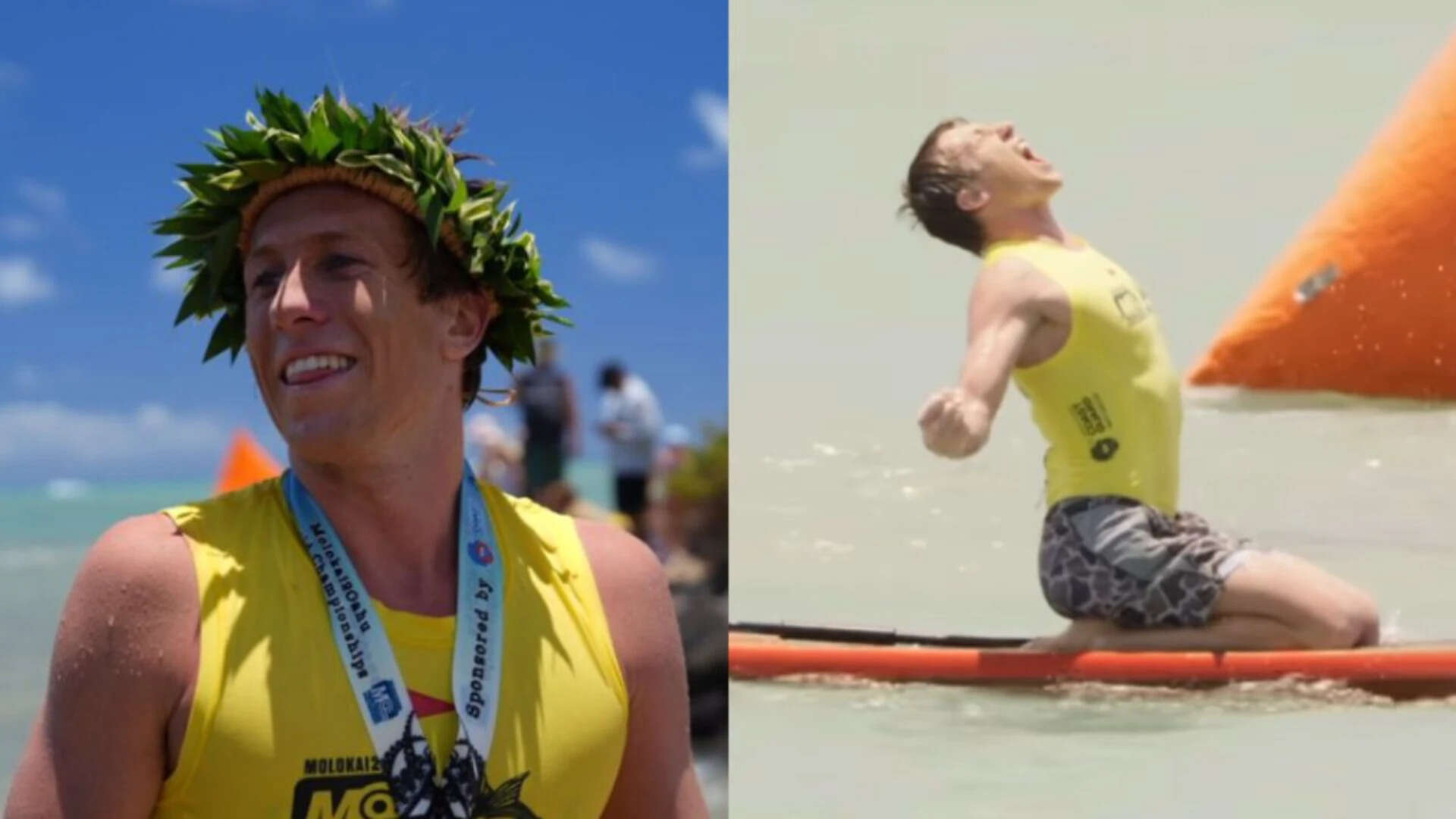
He dropped to his knees on the board, his fingers trailing in the cold water, and let out a breath that had been building for years. The ocean had not been conquered—the ocean can never be conquered. But fear had been managed. The ledger had been balanced.
The salt on his skin finally felt like home.