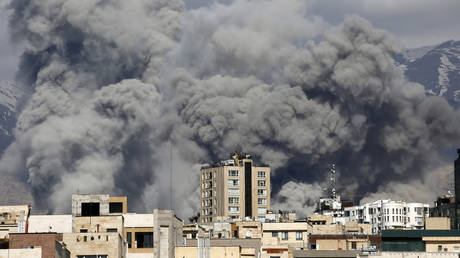
The siren did not provide enough time. When the Iranian ballistic missile struck a residential perimeter in Beit Shemesh, it did more than claim at least nine lives; it shattered the long-held assumption that Israel’s multi-layered defense shield is an impenetrable wall. For decades, the military establishment in Tel Aviv and the planners in Washington operated under the belief that sophisticated interception tech like the Arrow 3 and David’s Sling could negate the threat of a massed missile volley. They were wrong. The debris in Beit Shemesh is the physical evidence of a doctrine that has finally reached its breaking point.
This strike represents a catastrophic shift in the regional security architecture. The victims, ranging from elderly residents to children, were the collateral of a calculated escalation by Tehran. By targeting Beit Shemesh—a city with high religious and demographic significance located roughly 30 kilometers west of Jerusalem—Iran is signaling that its precision-guided munitions can now penetrate the world’s most advanced air defense network at will. This is no longer about the occasional rocket from Gaza. This is a state-to-state confrontation involving hypersonic trajectories and saturating tactics designed to overwhelm sensors and interceptors through sheer volume.
The Myth of the Iron Dome
Most of the public discourse surrounding Israeli defense focuses on the Iron Dome. This is a mistake. The Iron Dome is designed for short-range, low-velocity projectiles. When dealing with medium-range ballistic missiles (MRBMs) launched from Iranian soil, the responsibility falls on the Arrow system. The failure in Beit Shemesh indicates a saturation point that Israeli officials have privately feared for years.
When a missile battery faces a salvo of twenty or thirty incoming warheads, the math changes. Each interceptor fired costs millions of dollars. Each incoming missile costs a fraction of that. Iran has adopted a strategy of tactical exhaustion. They launch cheap decoys alongside their sophisticated precision missiles. The radar systems must identify and track every single object. If the system miscalculates for even a second, or if the magazine depth is insufficient to meet the incoming wave, a warhead gets through.
In the case of Beit Shemesh, initial reports from the ground suggest that multiple interceptors were deployed, but at least one Iranian projectile maintained its terminal velocity and struck a densely populated neighborhood. This wasn't a malfunction of a single unit. It was the statistical reality of modern warfare. No defense system is 100 percent effective, and when the stakes are nuclear-capable neighbors, "mostly effective" is a death sentence for civilians.
The Logistics of a Long Range Strike
Iran’s Islamic Revolutionary Guard Corps (IRGC) has spent the last decade refining its domestic missile production. They no longer rely on North Korean imports. They have developed solid-fuel engines that allow for rapid launches, meaning the "window of warning" for Israeli intelligence has shrunk from hours to minutes. These missiles are kept in "missile cities"—deep underground silos carved into the Iranian plateau.
The flight time from Western Iran to Central Israel is approximately 12 minutes. Within that timeframe, the Israeli Defense Forces (IDF) must detect the launch via satellite, calculate the trajectory, alert the civilian population, and launch the counter-measures. In Beit Shemesh, the warning was late. Some residents reported that the sirens began only seconds before the impact. This suggests that the missile may have utilized a depressed trajectory or maneuverable reentry vehicles (MaRVs) to skirt around the primary radar fans.
The MaRV Threat
- Maneuverability: Unlike traditional ballistic missiles that follow a predictable arc, MaRVs can change direction during their final descent.
- Speed: They re-enter the atmosphere at several times the speed of sound, making them incredibly difficult to track with ground-based radar.
- Precision: These warheads are guided by satellite and internal sensors, allowing them to hit specific coordinates with a high degree of accuracy.
The strike on Beit Shemesh was not a stray hit. It was a precise hit on a civilian center. The choice of target is telling. Beit Shemesh is not a primary military hub like Tel Aviv or a political center like Jerusalem. It is a residential city. Targeting it is a psychological operation aimed at the Israeli public's sense of safety. Tehran is betting that by killing civilians in the heart of the country, they can force the Israeli government into a defensive posture, or better yet, a political crisis.
The Cost of the Shield
The economic reality of this conflict is unsustainable. An Arrow 3 interceptor is estimated to cost around $3.5 million. An Iranian-made Fattah or Kheibar Shekan missile costs significantly less to produce. In a sustained war of attrition, the defender loses the economic battle long before they lose the military one. Israel’s defense budget is heavily subsidized by the United States, but even the deepest pockets have limits when the "burn rate" of interceptors exceeds production capacity.
Moreover, the manufacturing of these interceptors takes time. You cannot simply "print" more David’s Sling missiles. The supply chain involves specialized sensors, rare earth metals, and highly trained technicians. If Iran can force Israel to deplete its stockpile in a week of heavy fire, the country becomes vulnerable to a second, more devastating wave. The strike on Beit Shemesh may have been a probe—a way to test how many interceptors the IDF is willing to expend on a single incoming threat.
The Intelligence Gap
There is a glaring question that remains unanswered: Why was the launch not neutralized on the ground? The IDF’s "First Strike" doctrine suggests that if a major Iranian attack is imminent, the Air Force should be destroying the launchers before the missiles leave the pad. The fact that nine people are dead in Beit Shemesh proves that Israeli intelligence either missed the launch preparations or was unable to reach the launchers in time.
Iran has mastered the art of camouflage and mobile launching. They use standard commercial trucks as "TELs" (Transporter Erector Launchers). These vehicles can pull out of a warehouse, fire, and disappear back into a tunnel system within five minutes. Satellite surveillance is good, but it is not omniscient. When you are looking for a single truck in a country the size of Iran, the odds are in the launcher’s favor.
The Humanitarian Fallout
The scenes in Beit Shemesh are horrific. Emergency responders are dealing with structural collapses in apartment blocks that were never designed to withstand a ballistic impact. Most Israeli homes have "Mamads"—fortified safe rooms. However, these rooms are built to protect against rocket fire from Lebanon or Gaza, which usually involves smaller warheads. A ballistic missile carrying 500 kilograms of high explosives is a different beast entirely.
When a warhead of that size hits a residential building, the kinetic energy alone is enough to pancake the floors. The survivors are left with more than just physical wounds; they are left with the realization that their "safe room" is no longer a guarantee of survival. This psychological trauma is exactly what the IRGC intended. They want to trigger a mass exodus from the peripheral cities toward the center, creating a logistical and humanitarian nightmare for the Israeli government.
Casualties and Damage Assessment
- Fatalities: Nine confirmed, with several more missing in the rubble.
- Injuries: Over 40 treated for shrapnel wounds and shock.
- Infrastructure: Three residential buildings destroyed; significant damage to local power and water lines.
The Global Response
The international community’s reaction has been predictably fractured. Washington has condemned the strike in the strongest possible terms, promising "ironclad" support. However, behind closed doors, there is an increasing frustration with the lack of a diplomatic off-ramp. Every time a missile hits a target like Beit Shemesh, the pressure for a massive Israeli retaliation grows. If Israel responds by hitting Iranian oil refineries or nuclear sites, the conflict goes from a regional skirmish to a global energy crisis.
Russia and China have remained conspicuously quiet, or have issued vague calls for "restraint on both sides." This silence is a tacit endorsement of the Iranian strategy. By keeping Israel pinned down and bleeding resources, Tehran is serving the interests of those who wish to see Western influence in the Middle East diminished.
Moving Toward a New Reality
We are entering an era where the technological advantage of the West is being leveled by the mass production of "good enough" weaponry. You don't need the world's best missile if you have 10,000 decent ones. The tragedy in Beit Shemesh is a warning to every nation that relies on a "technological fix" for a geopolitical problem.
The immediate next step for the IDF will be a massive retaliatory strike, likely targeting the IRGC's logistics hubs. But retaliation is not a strategy. It is a reflex. Until the fundamental imbalance between the cost of defense and the ease of offense is addressed, cities like Beit Shemesh will remain on the front line. The era of the "unbreakable shield" is over. What comes next will be defined by who can endure the most pain, rather than who has the most expensive radar.
Check the structural integrity of your local shelters and demand a transparent audit of civilian defense readiness.